
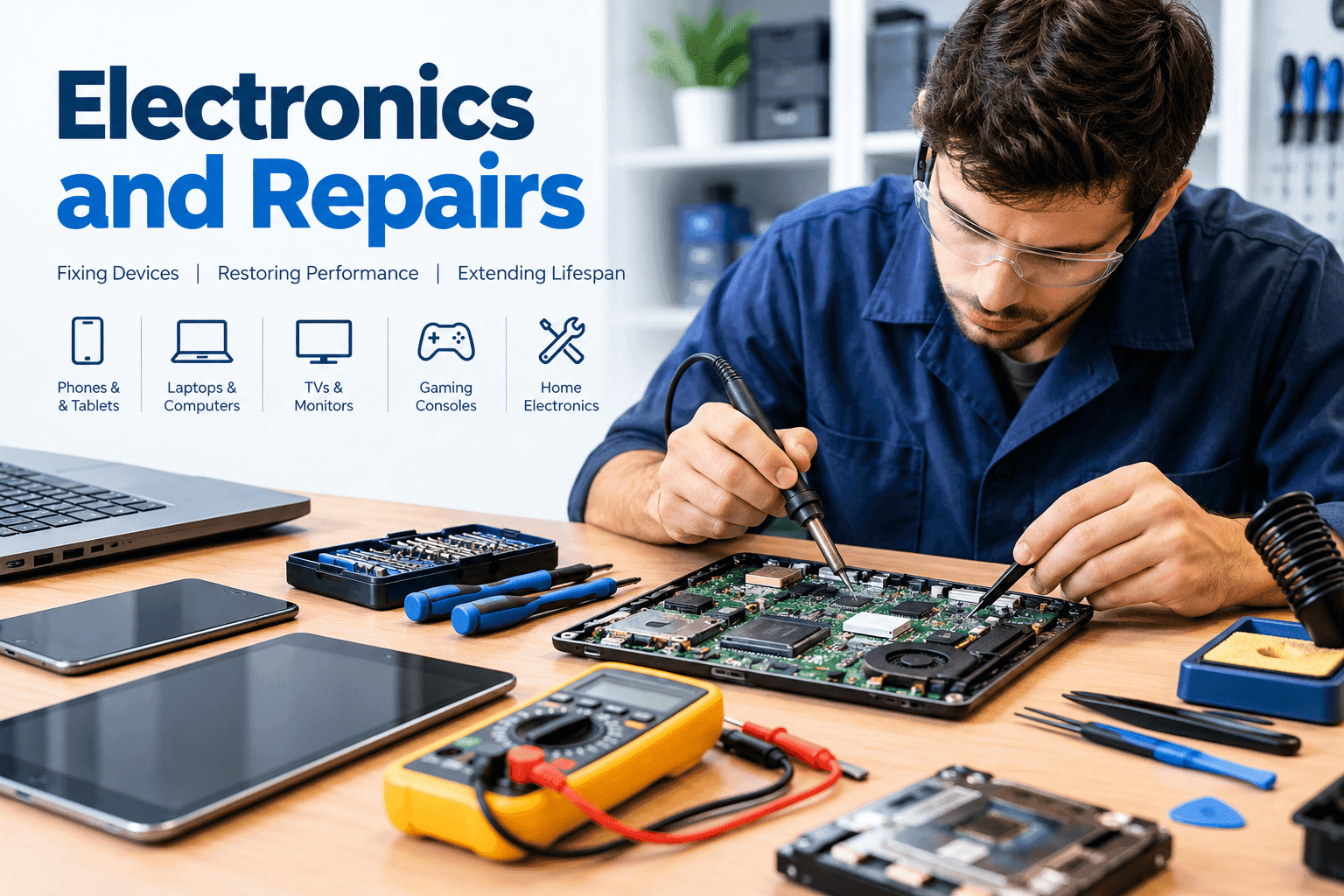
Electronics are an essential part of modern life. From smartphones and laptops to televisions, gaming consoles, home appliances, and audio systems, electronic devices make everyday tasks faster, easier, and more convenient. However, electronic products can develop faults because of regular use, accidental damage, electrical problems, aging components, or poor maintenance. When this happens, electronics and repairs become an important solution.
Instead of replacing a device as soon as it develops a problem, repairing it can often save money and extend its useful life. Professional electronics repair services can diagnose faults, replace damaged components, restore circuit boards, and return devices to proper working condition. Understanding electronics repair can help consumers make informed decisions about maintaining and fixing their valuable devices.
What Are Electronics and Repairs?
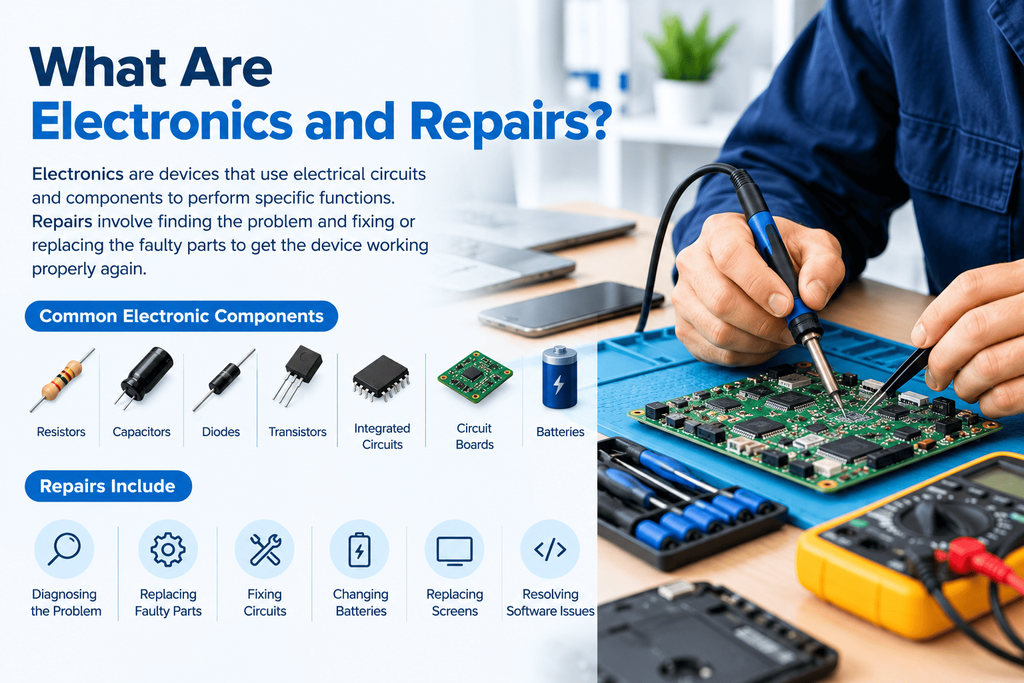
Electronics refers to devices and systems that use electrical circuits and components to perform specific functions. These components work together to control electrical signals and provide functions such as communication, computing, entertainment, measurement, and automation.
Common electronic components include resistors, capacitors, diodes, transistors, integrated circuits, batteries, switches, connectors, sensors, and circuit boards.
Electronics repair is the process of identifying a fault and correcting it. A repair technician may replace a damaged component, repair a circuit, reconnect a loose wire, replace a battery, fix a charging port, or troubleshoot software and hardware problems.
Electronics repair services can cover a wide range of products, including:
- Smartphones and tablets
- Laptops and desktop computers
- Televisions and monitors
- Gaming consoles
- Cameras
- Speakers and audio systems
- Printers and scanners
- Chargers and power supplies
- Home electronics
- Circuit boards and control systems
Why Electronics Repair Is Important
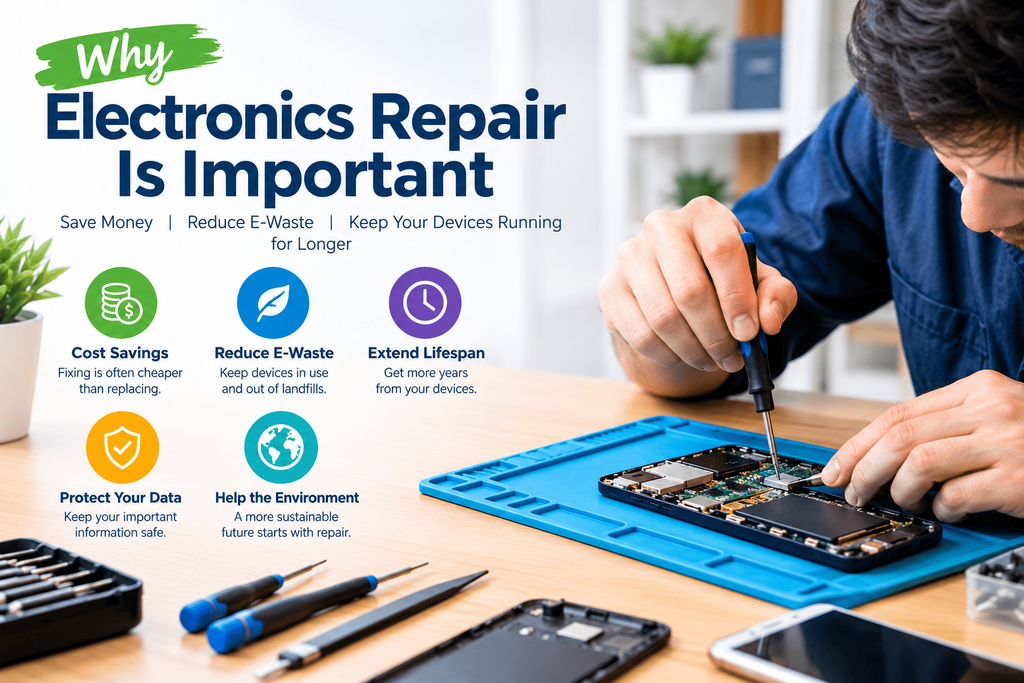
Repairing electronics has many benefits. One of the most obvious is cost savings. Buying a new device whenever something goes wrong can be expensive, especially when the original problem is caused by a single replaceable component.
For example, a laptop may work perfectly except for a worn-out battery. A smartphone may have a cracked screen but otherwise function normally. A television may have a power-supply fault that can be repaired without replacing the entire unit.
Repairing these devices can be considerably more affordable than purchasing replacements.
Electronics repair also helps extend the life of products. Instead of discarding a device after a minor failure, consumers can continue using it for several more years.
Another important benefit is the reduction of electronic waste. Discarded electronics contribute to the growing global e-waste problem. Repairing, reusing, and refurbishing devices can help reduce unnecessary waste and make better use of existing resources.
Common Electronics Problems
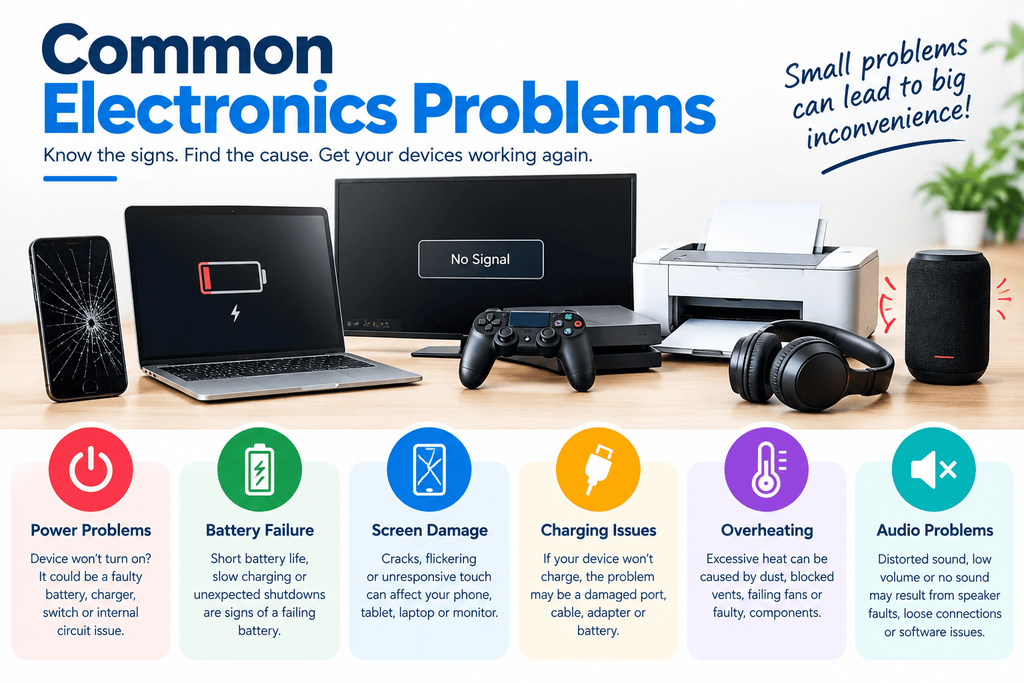
Electronic devices can experience many different types of problems. Some faults are easy to recognize, while others require specialized diagnostic equipment.
Power Problems
A device that will not turn on may have a dead battery, damaged power adapter, broken power button, faulty charging port, or internal circuit problem.
Technicians usually begin by checking the power source and external connections before inspecting internal components. A proper diagnosis helps prevent unnecessary part replacement.
Battery Failure
Batteries gradually lose their ability to hold a charge. Older batteries may drain quickly, charge slowly, become unusually warm, or cause unexpected shutdowns.
Battery replacement is common in smartphones, laptops, tablets, cameras, wireless speakers, and other portable electronics.
Only compatible and properly rated batteries should be used. Damaged or swollen batteries should be handled by qualified professionals because they can present safety risks.
Screen Damage
Screens are among the most frequently damaged components in portable electronics. Smartphones and tablets can develop cracked displays after being dropped, while laptops and monitors can suffer damage from pressure or impact.
Depending on the device, repairing a screen may involve replacing the display panel, touch layer, connector, or complete display assembly.
Charging Problems
Charging problems can be caused by damaged cables, defective adapters, dirty or damaged charging ports, worn batteries, or internal circuit faults.
Users can sometimes identify a simple problem by testing a compatible cable or charger. If the device still does not charge, professional diagnosis may be necessary.
Overheating
Overheating can affect computers, gaming consoles, televisions, power supplies, and other electronic equipment.
Dust buildup, blocked ventilation, damaged cooling fans, or faulty components can prevent a device from releasing heat properly. Continued overheating may reduce performance and shorten the life of internal components.
Audio Problems
Electronic devices may develop audio issues such as distorted sound, low volume, buzzing, crackling, or complete loss of sound.
The cause could be damaged speakers, loose connections, faulty amplifiers, circuit-board problems, or software settings. A technician can test the system to determine the source of the issue.
How Electronics Repair Works
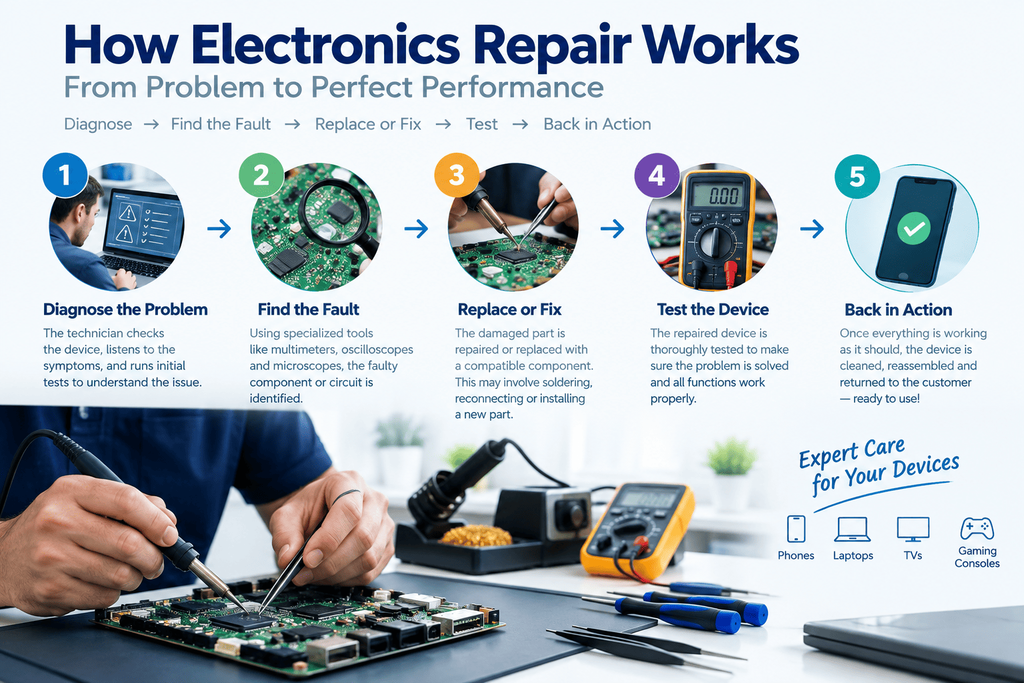
A professional electronics repair normally begins with diagnosis. The technician examines the device, discusses the symptoms with the customer, and performs appropriate tests.
Diagnostic tools may include:
- Digital multimeters
- Oscilloscopes
- Power supplies
- Soldering stations
- Hot-air rework stations
- Component testers
- Microscopes
- Diagnostic software
A multimeter is particularly useful for checking voltage, resistance, continuity, and other electrical characteristics.
Once the technician identifies the faulty component, they determine whether it can be repaired or needs to be replaced. Small components on a circuit board may require precision soldering equipment.
After the repair is completed, the device should be tested thoroughly. Testing confirms that the original problem has been resolved and that other functions remain operational.
Preventive Electronics Maintenance
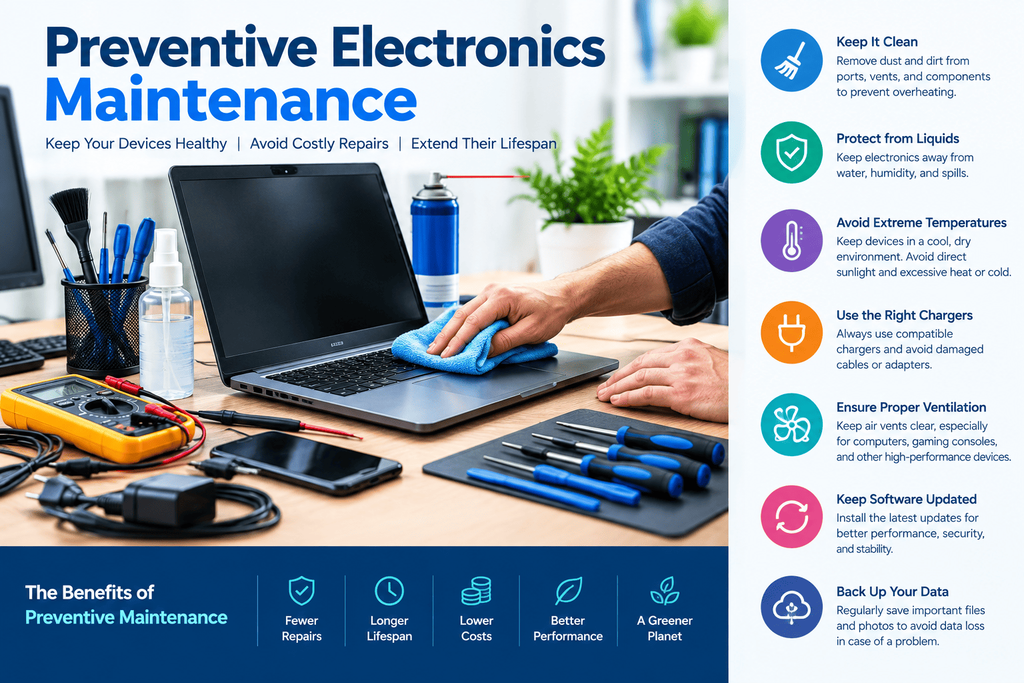
Regular maintenance can prevent many common electronic problems. Taking care of devices is generally easier and less expensive than repairing serious damage.
Keeping electronics clean is an important maintenance step. Dust can accumulate around vents, fans, connectors, and other areas. Regular cleaning can help improve airflow and prevent overheating.
Electronic devices should also be protected from moisture. Water and other liquids can cause corrosion, electrical shorts, and permanent circuit damage.
Using compatible chargers and power adapters is another important practice. Poor-quality or incompatible accessories may cause charging problems or damage sensitive components.
Devices should also be kept away from extreme temperatures. Excessive heat can affect batteries and circuit components, while very cold conditions can also affect certain electronic systems.
DIY Repairs and Professional Services
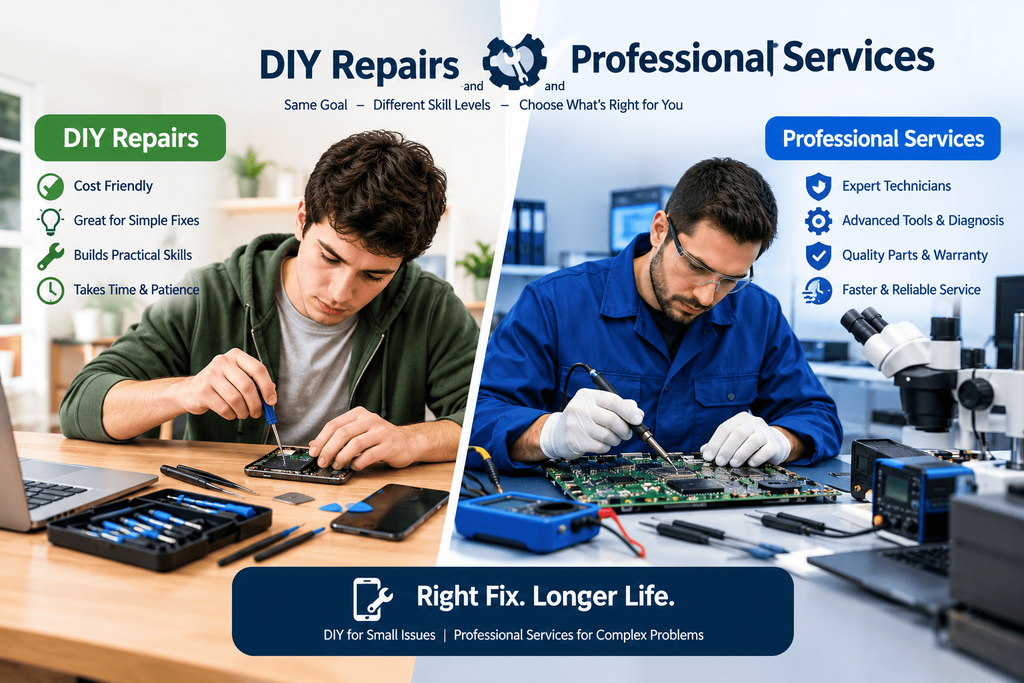
Some simple maintenance tasks can be performed at home. Cleaning external surfaces, replacing cables, changing certain accessories, and performing software updates are examples of relatively simple tasks.
However, internal electronics repair is more complicated. Modern devices contain small components and tightly integrated circuit boards that can be easily damaged.
Professional repair is recommended for problems involving internal circuits, soldering, liquid damage, damaged batteries, high-voltage components, or complex hardware faults.
Opening an electronic device without proper knowledge can also void warranties or create additional damage. For expensive or complicated devices, professional diagnosis is usually the safer option.
Choosing the Right Electronics Repair Service
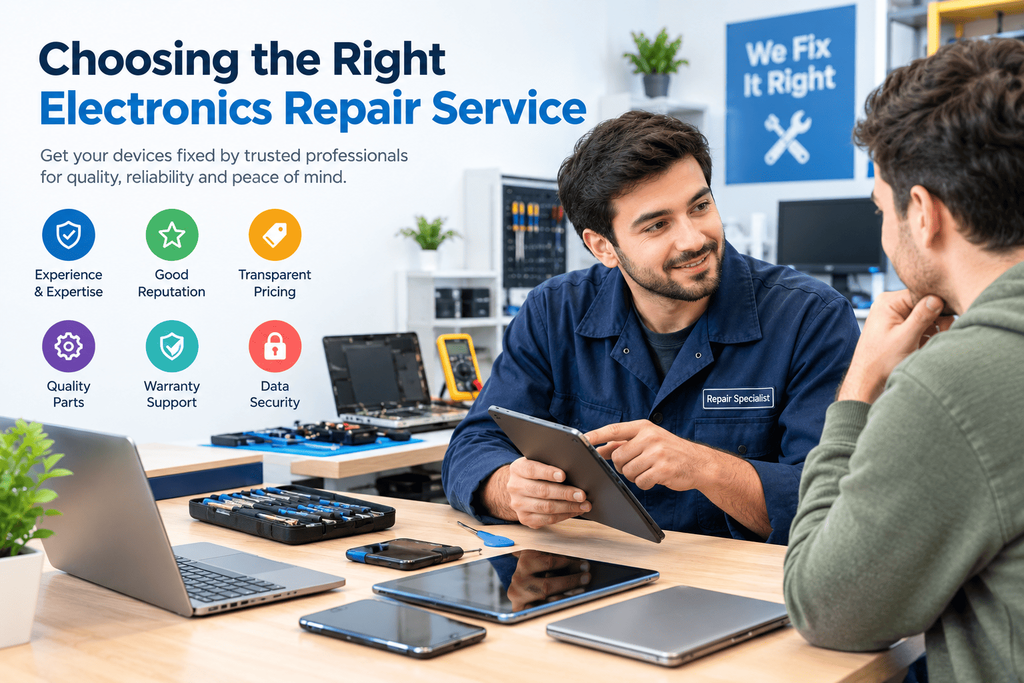
Selecting a reliable repair provider is important. A good technician should have experience with the type of device being repaired and should be able to explain the problem clearly.
Before approving a repair, customers should ask for an estimate of the expected cost. They should also ask about replacement parts and whether the repair comes with a warranty.
The quality of replacement components can affect the performance and reliability of the repaired device. Customers should understand whether parts are original manufacturer components, refurbished parts, or compatible alternatives.
Customer reviews and recommendations can also help identify trustworthy repair businesses.
A professional repair service should communicate clearly, handle devices carefully, and respect customer privacy.
Protecting Your Data During Repairs
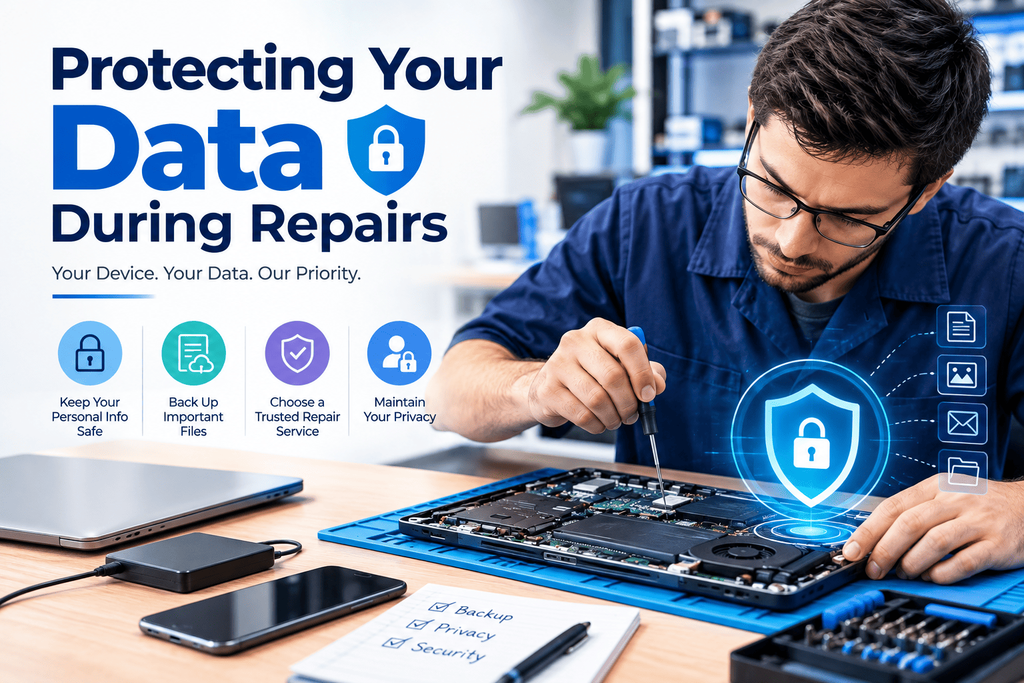
Modern electronic devices often contain important personal and professional information. Smartphones and computers may store photographs, documents, contacts, financial information, and other sensitive data.
Whenever possible, users should create a backup before sending a device for repair. This provides protection if the device needs to be reset or replaced during the repair process.
Customers should also ask repair technicians about their data-handling practices. A trustworthy repair provider should only access information that is necessary to diagnose or test the device.
Security features such as passwords, encryption, and regular backups can provide additional protection.
Environmental Benefits of Electronics Repair

Electronics repair can play an important role in environmental sustainability. Manufacturing new electronic products requires raw materials, energy, transportation, and packaging.
Extending the life of an existing device can reduce the need to manufacture a replacement immediately. Repairing electronics also keeps usable products and components out of the waste stream.
Devices that can no longer be repaired should be disposed of responsibly through appropriate electronic recycling programs. Batteries and certain electronic components may require special recycling procedures.
Repair, refurbishment, reuse, and recycling all contribute to a more sustainable approach to technology.
How to Extend the Life of Electronic Devices

Consumers can take several simple steps to keep their electronics working longer.
First, handle devices carefully and use protective cases where appropriate. Avoid dropping portable electronics and protect screens from unnecessary pressure.
Second, keep devices clean and properly ventilated. Do not cover ventilation openings on computers, gaming consoles, or other equipment that produces heat.
Third, use appropriate chargers and cables. Avoid using visibly damaged cables or poorly matched power adapters.
Fourth, keep liquids away from electronic equipment. Even a small amount of moisture can cause serious internal damage.
Finally, pay attention to warning signs. Unusual heat, strange sounds, flickering displays, sudden shutdowns, slow charging, or repeated errors may indicate an emerging problem. Addressing these issues early can prevent more expensive repairs.
The Future of Electronics and Repairs
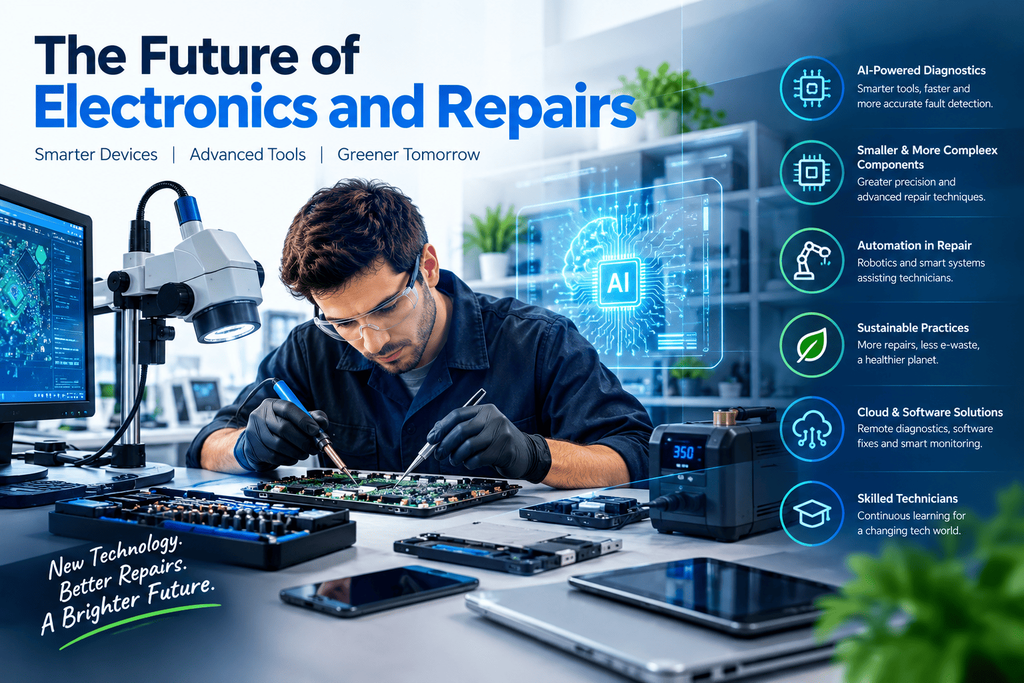
As technology continues to advance, electronics repair is becoming increasingly specialized. Modern devices contain smaller components, more complex circuit boards, advanced processors, sensors, and sophisticated software.
Repair technicians must continually develop their skills and learn new diagnostic methods. Precision tools, advanced testing equipment, and specialized software are increasingly important in modern repair workshops.
At the same time, consumers are becoming more interested in keeping their devices longer. The combination of rising technology costs, environmental concerns, and interest in sustainability is increasing the importance of repair and refurbishment services.
Conclusion
Electronics and repairs are essential for maintaining the devices people rely on every day. From smartphones and laptops to televisions, gaming systems, and home electronics, almost any electronic product can eventually require maintenance or repair.
Professional repair can save money, extend device life, reduce electronic waste, and restore valuable equipment to working condition. Regular maintenance and careful handling can further reduce the likelihood of serious problems.
When an electronic device stops working, replacement is not always the only solution. With accurate diagnosis, quality components, proper tools, and skilled workmanship, many electronic devices can be repaired and continue providing reliable service for years.
By taking better care of electronics and choosing professional repair when necessary, consumers can protect their investments while supporting a more sustainable approach to modern technology.
Frequently Asked Questions (FAQs)
Q: What types of devices do you accept for electronics and repairs?
A: We handle a broad range of consumer and commercial devices, including smartphones, laptops, desktop computers, tablets, gaming consoles, audio equipment, TVs, and custom circuit board (PCB) components.
Q: How long does a standard electronics repair service take?
A: Most common fixes—such as smartphone screen replacements, battery swaps, and simple solder jobs—are completed the same day or within 24 to 48 hours. Complex board-level diagnostics or special component orders typically take 3 to 5 business days.
Q: Do you offer a warranty on your repair fixes?
A: Yes. All professional services and replacement parts are backed by a standard 90-day warranty. This covers any functional defects or service issues related to the original repair work.
Q: Do I need to make an appointment, or do you accept drop-ins?
A: We accept walk-ins during regular business hours. However, scheduling an appointment online or calling ahead guarantees immediate intake evaluation and speeds up your overall diagnostic turnaround.
Q: What should I do to prepare my device before bringing it in?
A: Whenever possible, back up your critical data to a cloud service or external drive, remove any passcodes or lock patterns, and charge the device to at least 20% to allow for initial testing.
Q: How much does an initial repair diagnostic cost?
A: We offer a fast, initial visual evaluation for free. If your device requires advanced disassembly or detailed trace diagnostics, a minimal fee applies—which is fully credited toward the total cost if you proceed with the repair fix.