
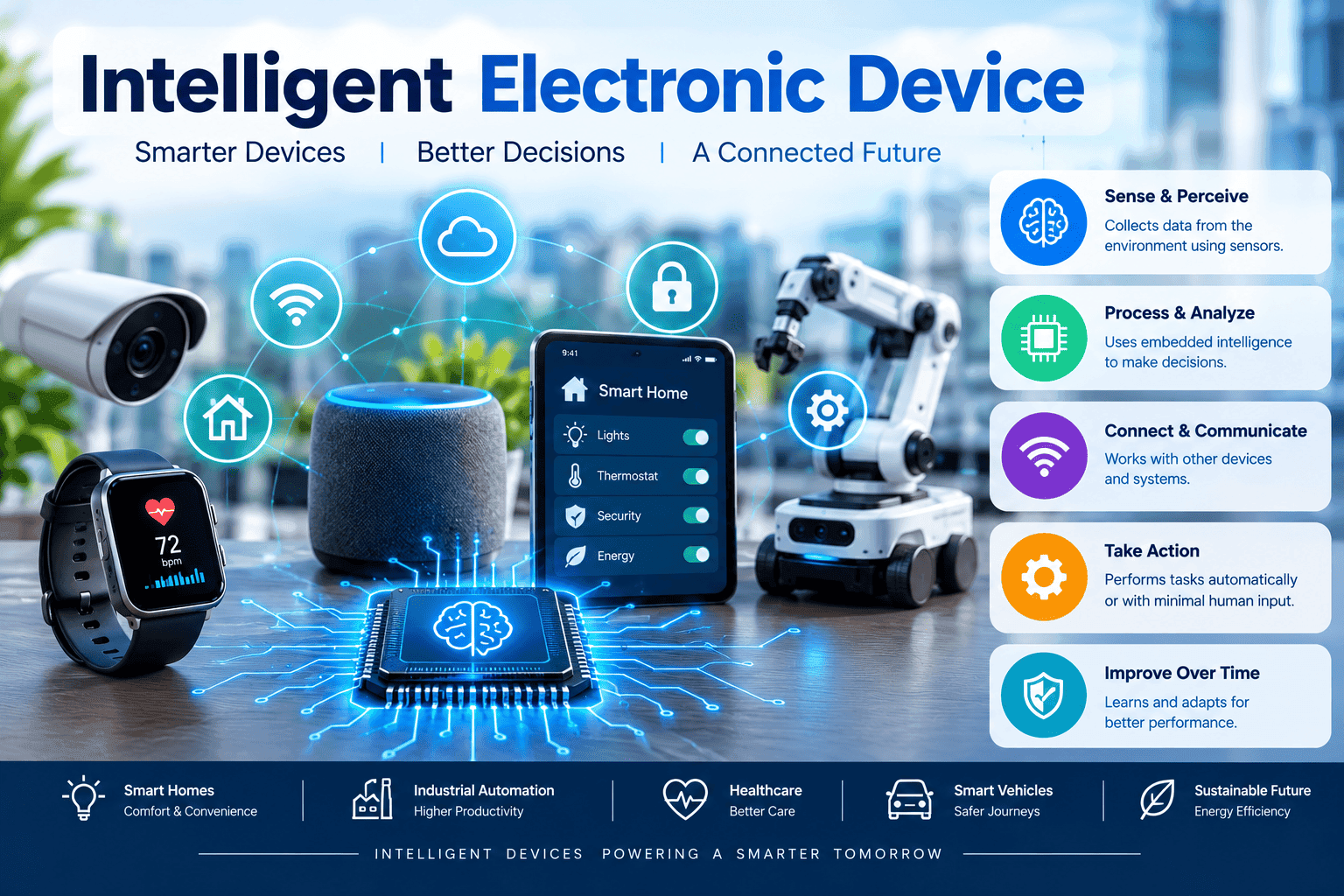
intelligent electronic device technology has become an important part of modern electrical, industrial, and automation systems. These devices can monitor electrical conditions, process information, communicate with other systems, and make decisions based on programmed instructions. Intelligent Electronic Devices, commonly called IEDs, are especially important in electrical power systems, substations, industrial automation, and smart-grid infrastructure.
Unlike traditional electrical equipment that may only perform a single basic function, an IED combines electronic hardware, sensors, processors, communication capabilities, and software. This combination allows the device to collect data, analyze conditions, send information, and sometimes automatically control connected equipment.
As industries continue moving toward automation and digital infrastructure in 2026, understanding IED technology is becoming increasingly important. This complete guide explains what an Intelligent Electronic Device is, how it works, where it is used, its major features, benefits, limitations, and its role in modern electrical systems.
What Is an Intelligent Electronic Device?
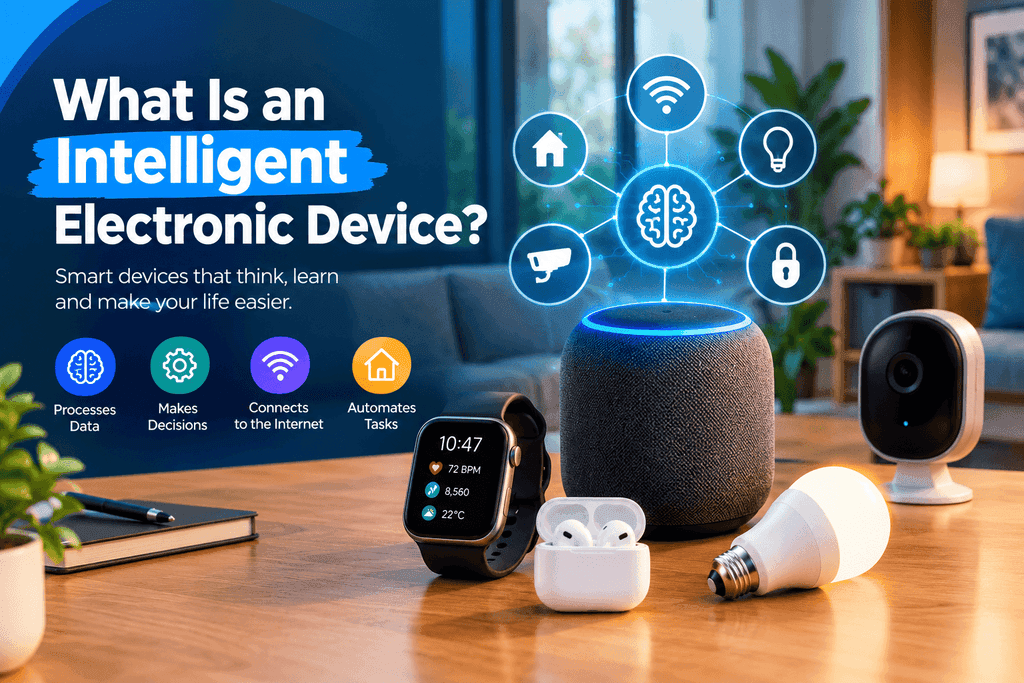
An Intelligent Electronic Device is a microprocessor-based electronic device that can monitor, control, protect, or communicate information about electrical or industrial equipment.
IEDs are commonly used in electrical power systems to monitor equipment such as circuit breakers, transformers, generators, motors, and transmission lines. They can collect information from sensors and electrical signals and then process that information using an internal processor.
For example, an IED can monitor voltage and current in an electrical system. If it detects an abnormal condition such as a short circuit or overload, it can identify the problem and send a command to a circuit breaker to disconnect the affected section.
This ability to monitor conditions and respond automatically is one of the main reasons IEDs are so important in modern electrical infrastructure.
How Does an Intelligent Electronic Device Work?
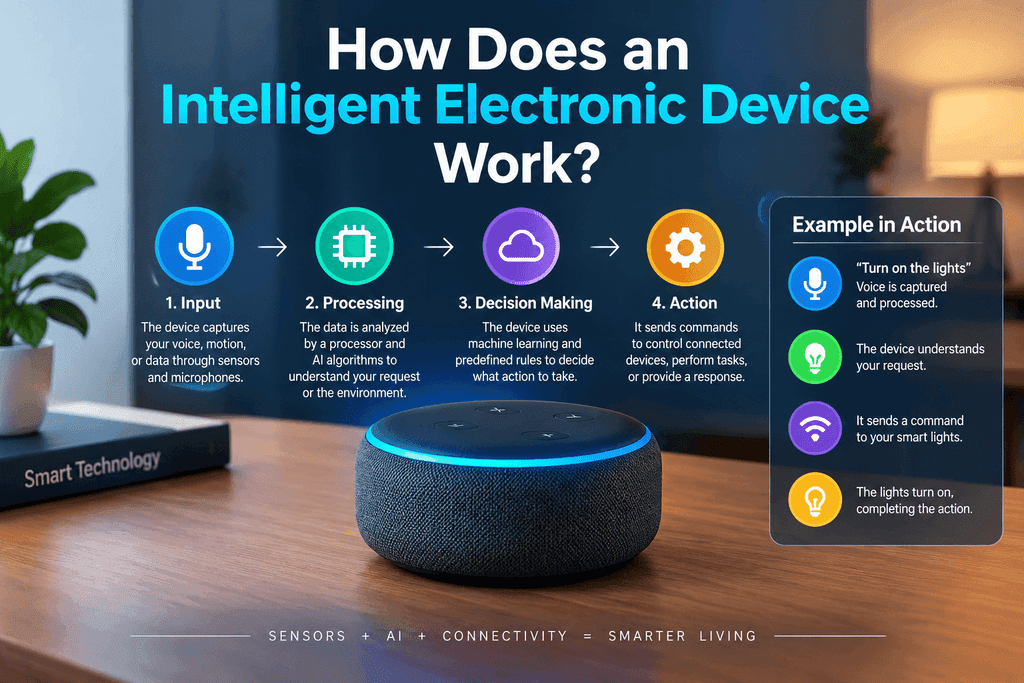
An IED generally works through several connected functions. First, it receives information from electrical sensors or connected equipment. The device then processes that information using its internal microprocessor.
The processor compares the collected data with programmed settings or protection rules. If the system is operating normally, the IED can continue monitoring conditions and recording information.
If it detects an abnormal condition, it can take an appropriate action. Depending on its design and programming, the IED may send an alarm, record an event, communicate the problem to a control center, or activate another device.
Communication is another major part of an IED. Modern devices can communicate with supervisory control systems and other intelligent equipment through industrial communication networks.
This allows operators to monitor electrical systems remotely instead of physically checking every piece of equipment.
Main Components of an IED
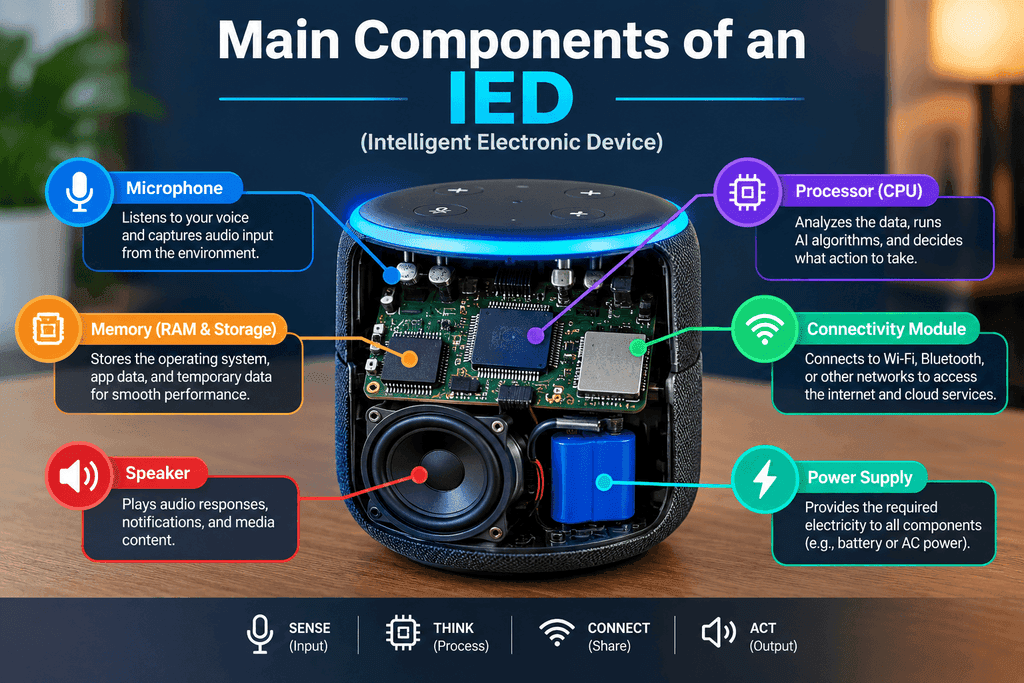
An Intelligent Electronic Device contains several important components that work together.
Microprocessor
The microprocessor is one of the most important parts of an IED. It processes incoming electrical information and performs calculations based on programmed instructions.
The processor allows the device to perform complex monitoring, protection, control, and communication tasks.
Input and Output Interfaces
IEDs need inputs to receive information from external equipment. These inputs can include electrical measurements, sensor signals, and status information.
Outputs allow the IED to send commands to equipment such as circuit breakers, switches, alarms, and control systems.
Communication Interface
Modern IEDs normally include communication interfaces that allow them to exchange information with other devices and control systems.
Depending on the application, communication can occur through different industrial networking technologies and protocols.
Memory
Memory allows an IED to store configuration settings, measurements, event records, fault information, and other important data.
Event recording is particularly useful when engineers need to understand what happened before, during, and after an electrical fault.
Software
Software controls how an IED processes information and responds to different conditions.
Engineers can configure protection settings, monitoring functions, communication parameters, and other features depending on the application.
Common Types of Intelligent Electronic Devices
IEDs are available in different forms depending on the equipment and application.
Protection Relays
Protection relays are among the most common types of IEDs used in electrical power systems. They monitor electrical conditions and can identify faults.
When a dangerous condition is detected, the relay can send a trip command to a circuit breaker.
Modern digital protection relays can perform multiple protection functions within a single device.
Bay Controllers
Bay controllers are commonly used in electrical substations. They can monitor and control equipment within a particular substation section or bay.
They can also communicate information to higher-level control systems.
Metering Devices
Intelligent metering devices measure electrical quantities such as voltage, current, power, frequency, and energy consumption.
Digital metering allows operators to collect detailed information about electrical systems and use that data for analysis and management.
Motor Protection Devices
Motor-related IEDs can monitor parameters such as current, temperature, voltage, and operating conditions.
They can identify problems such as overloads or abnormal operating conditions and provide protection for industrial motors.
Where Are IEDs Used?
IED technology is widely used across the electrical and industrial sectors.
Electrical Substations
Substations are one of the most important environments for IEDs. Modern substations use intelligent devices to monitor transformers, breakers, feeders, and other equipment.
IEDs can collect data from multiple pieces of equipment and communicate that information to a centralized control system.
Smart Grids
Smart grids rely heavily on digital communication, monitoring, automation, and real-time data. IEDs provide many of the measurement and control functions required for intelligent electrical networks.
They can help utilities understand system conditions and respond more quickly to problems.
Industrial Automation
Factories and industrial facilities use IEDs to monitor and control electrical equipment.
By connecting intelligent devices to industrial networks, operators can monitor equipment remotely and automate certain processes.
Power Generation
Power plants use intelligent devices to monitor generators, electrical systems, protection equipment, and other critical components.
IEDs can help identify abnormal conditions before they result in serious equipment damage.
Renewable Energy Systems
Solar farms, wind farms, and other renewable energy installations increasingly use intelligent electronic equipment.
IEDs can help monitor electrical output, protection systems, grid connections, and equipment conditions.
Key Features of Modern IEDs
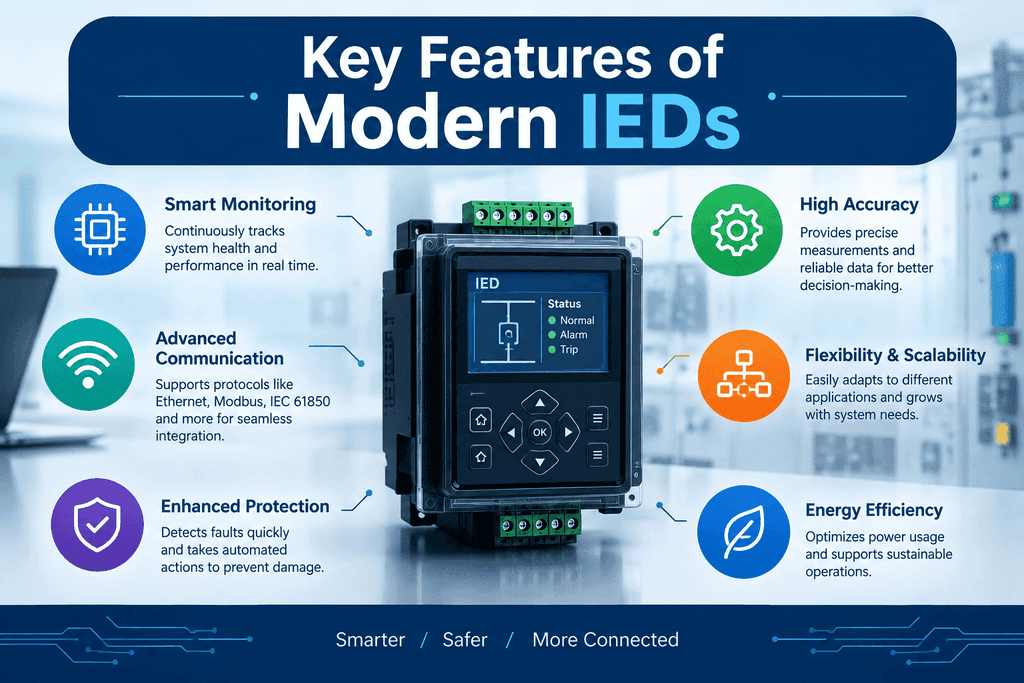
Modern IEDs provide much more functionality than older electromechanical protection equipment.
One important feature is real-time monitoring. An IED can continuously collect electrical measurements and provide operators with updated information.
Another important feature is event recording. When a fault occurs, the device can store information about the electrical conditions surrounding the event.
Communication is also a major advantage. Modern IEDs can communicate with control systems and other intelligent devices, allowing information to be shared across an electrical network.
Many IEDs also support configurable logic. Engineers can program specific responses based on different operating conditions.
Advanced diagnostics are another useful feature. Some devices can monitor their own internal condition and report problems that may affect their operation.
Benefits of Intelligent Electronic Devices
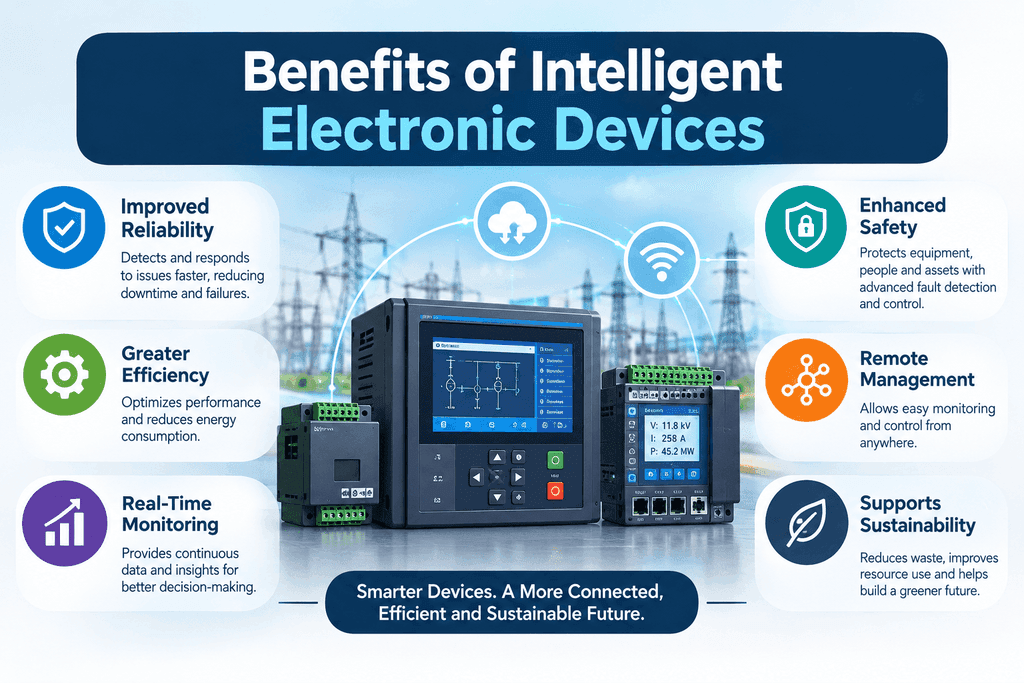
IEDs provide several benefits for modern electrical and industrial systems.
Improved Protection
IEDs can detect abnormal electrical conditions quickly and initiate protective actions. This can help reduce equipment damage and improve system safety.
Better Monitoring
Instead of relying entirely on manual inspections, operators can monitor electrical equipment using real-time digital information.
Faster Fault Analysis
Event records and stored measurements can help engineers determine what happened during a fault.
Remote Operation
IEDs can communicate with remote control systems, allowing operators to monitor and control equipment without being physically present at the location.
Automation
IEDs support automated responses to different electrical conditions. This can reduce the need for manual intervention and improve system response times.
Better Maintenance
Data collected by intelligent devices can help engineers identify unusual equipment behavior and plan maintenance more effectively.
IEDs and Communication Protocols
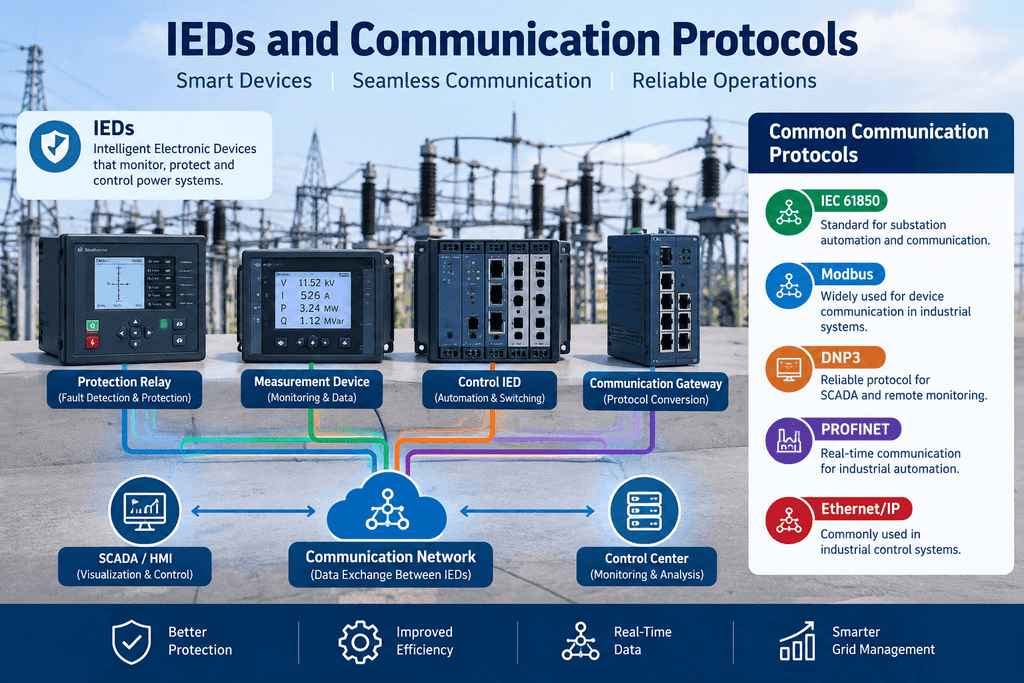
Communication is a fundamental part of modern IED technology. An IED may need to exchange information with other devices, supervisory systems, and control centers.
Different communication protocols can be used depending on the application and system architecture. In modern power systems, standards such as IEC 61850 are particularly important for digital substation communication.
Communication protocols allow devices from different parts of a system to exchange measurements, status information, commands, and event data.
The use of standardized communication technologies can also make system integration easier.
IED vs Traditional Electrical Devices
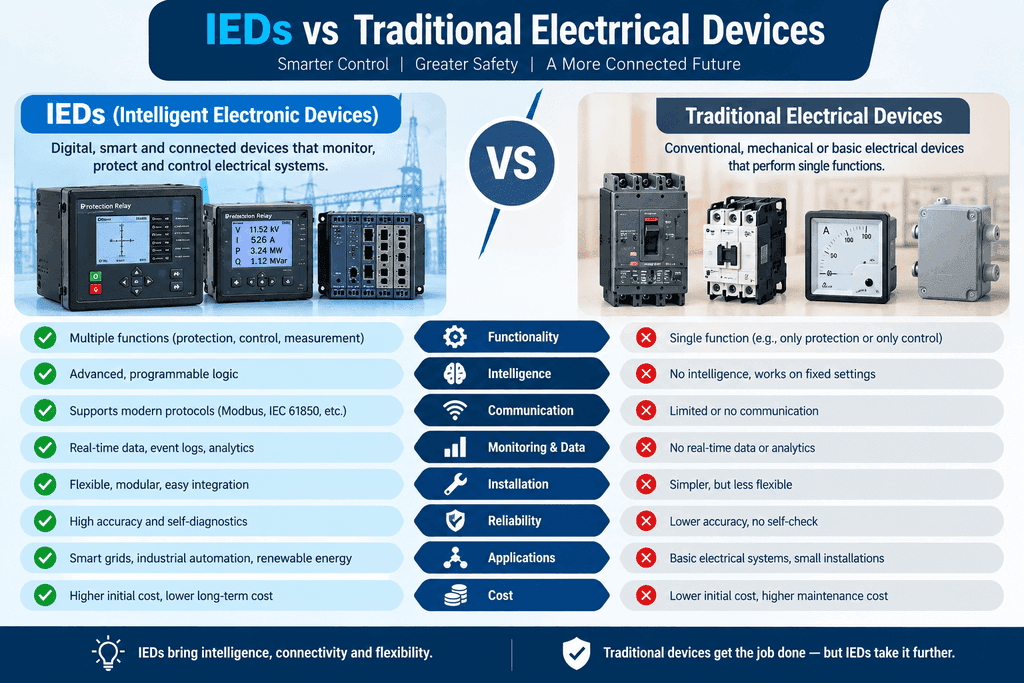
Traditional electrical devices often perform limited functions. For example, an older protection relay may have been designed primarily to detect a specific electrical fault.
An IED can combine several functions in a single digital platform. It may provide protection, measurement, event recording, diagnostics, control, and communication.
This does not mean traditional equipment has no value. Older systems can remain reliable and useful, especially where modernization is expensive or unnecessary.
However, IEDs provide greater flexibility and access to digital information, making them particularly valuable in modern automated systems.
Challenges of Using IEDs
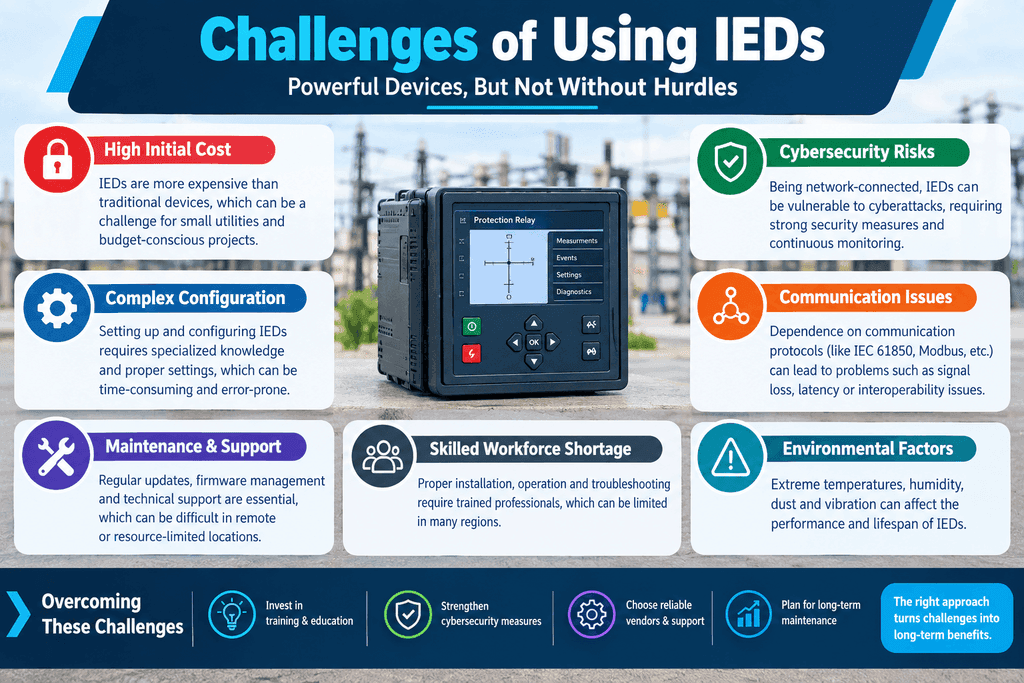
Despite their advantages, IEDs also introduce challenges.
One challenge is system complexity. Modern IEDs provide many configuration options, which means engineers need appropriate technical knowledge to configure them correctly.
Cybersecurity is another major concern. Because many IEDs communicate through networks, they must be protected against unauthorized access and malicious activity.
Software and configuration management are also important. Incorrect settings can affect system behavior, so organizations need proper testing, documentation, and maintenance procedures.
Compatibility can also be an issue when integrating newer IEDs with older electrical equipment.
The Role of IEDs in 2026
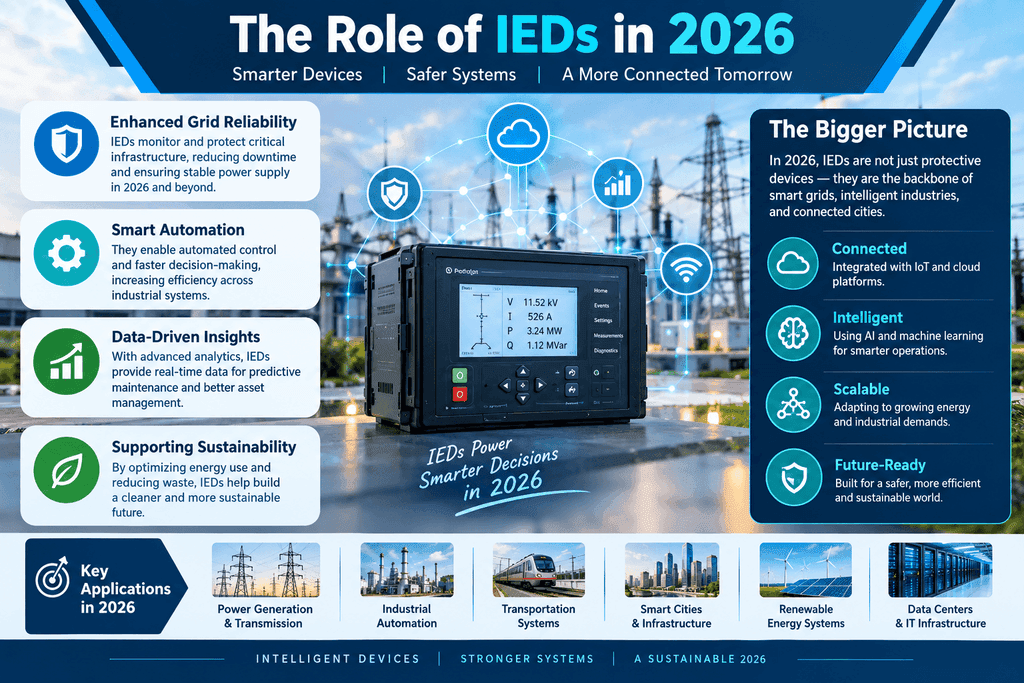
In 2026, IED technology continues to play an important role in the modernization of electrical infrastructure.
The growth of smart grids, renewable energy, automation, digital substations, and remote monitoring is increasing the importance of intelligent devices.
Modern electrical systems need more information than traditional systems could provide. Operators want real-time measurements, automated protection, event records, diagnostics, and remote access.
IEDs provide many of these capabilities in a single digital platform.
As electrical networks become more decentralized and connected, intelligent devices can also help utilities manage changing power flows and increasingly complex grid conditions.
Future of Intelligent Electronic Devices
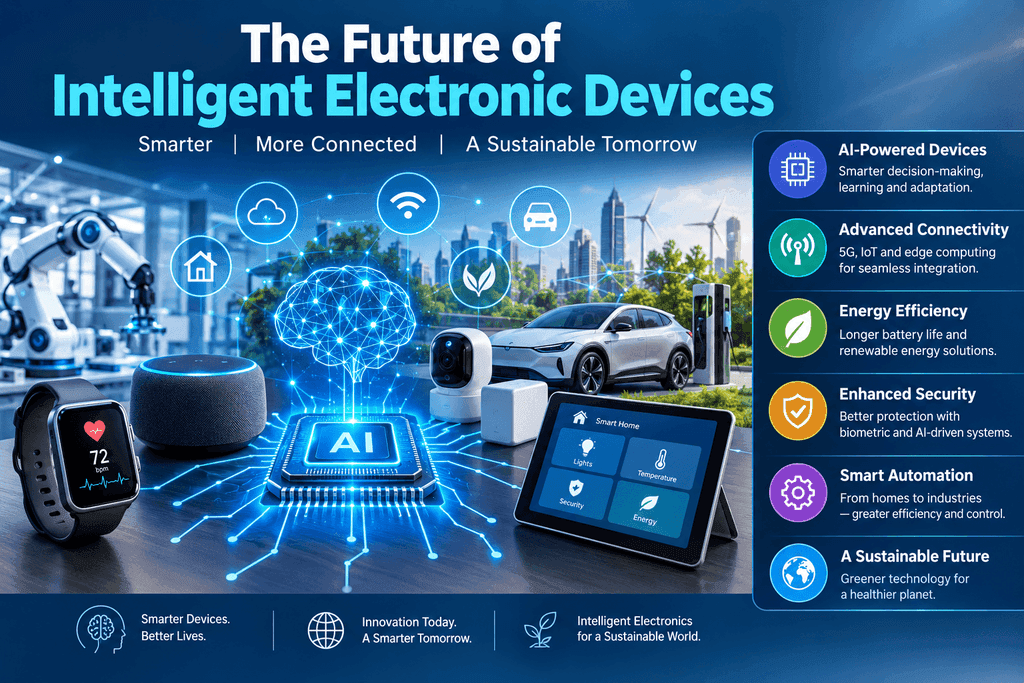
The future of IED technology is likely to involve greater connectivity, automation, cybersecurity, and data analysis.
IEDs may increasingly work with advanced analytics and intelligent automation systems to identify unusual equipment behavior and support predictive maintenance.
Edge computing can also become more important. Instead of sending every piece of information to a central system for processing, intelligent devices can perform some analysis locally and send only important information to higher-level systems.
Cybersecurity will remain a major focus as more electrical equipment becomes connected to digital networks.
The integration of renewable energy, battery storage, electric vehicles, and distributed energy resources will also create new requirements for monitoring and control.
Final Thoughts
An Intelligent Electronic Device (IED) is a powerful digital device that can monitor, protect, control, and communicate information about electrical or industrial equipment. Its combination of sensors, processing power, software, memory, and communication capabilities makes it an important part of modern electrical infrastructure.
IEDs are used in substations, smart grids, power plants, factories, renewable energy systems, and many other applications. They can improve protection, provide real-time information, support automation, simplify fault analysis, and enable remote operation.
As electrical systems become increasingly digital and connected in 2026 and beyond, IEDs will continue to play an important role. Understanding how these devices work is useful for electrical engineers, automation professionals, students, technicians, and anyone interested in modern power and control systems.
Frequently Asked Questions
An Intelligent Electronic Device (IED) is a microprocessor-based controller used in modern electrical power systems and substations. It integrates critical grid operational functions—such as protection, control, monitoring, metering, and communication—into a single electronic unit. Modern IEDs process real-time grid data locally to detect system faults and automate corrective actions.
An IED performs five main operational functions in power distribution and grid automation:
Protection: Detects overcurrent, voltage swings, or frequency anomalies and trips circuit breakers to prevent equipment damage.
Control: Handles local and remote switching commands for circuit breakers and transformers.
Monitoring: Tracks equipment health, breaker operation counts, and operating temperatures.
Metering: Measures electrical metrics including current, voltage, frequency, and harmonic distortion.
Communication: Transmits telemetry and event logs to central SCADA (Supervisory Control and Data Acquisition) systems.
To communicate with central SCADA networks, remote terminal units (RTUs), and other field controllers, IEDs rely on standardized power system protocols. The most widely adopted communication standards include:
IEC 61850 (the global standard for substation automation)
DNP3 (Distributed Network Protocol)
Modbus RTU/TCP
While PLCs (Programmable Logic Controllers) handle general-purpose industrial automation logic and RTUs (Remote Terminal Units) focus primarily on long-distance telemetry aggregation, an IED is a specialized power-system controller built with sub-millisecond, high-precision protective relay logic. IEDs combine advanced digital signal processing with dedicated power protection algorithms directly at the substation asset level.
As power grids transition toward renewable energy and decentralized generation, IEDs provide the real-time automation, fault detection, and edge computing capability needed for grid resilience. They reduce downtime by instantly isolating faulty grid segments, lower maintenance costs through predictive health monitoring, and enable remote digital grid management without requiring manual field operations.