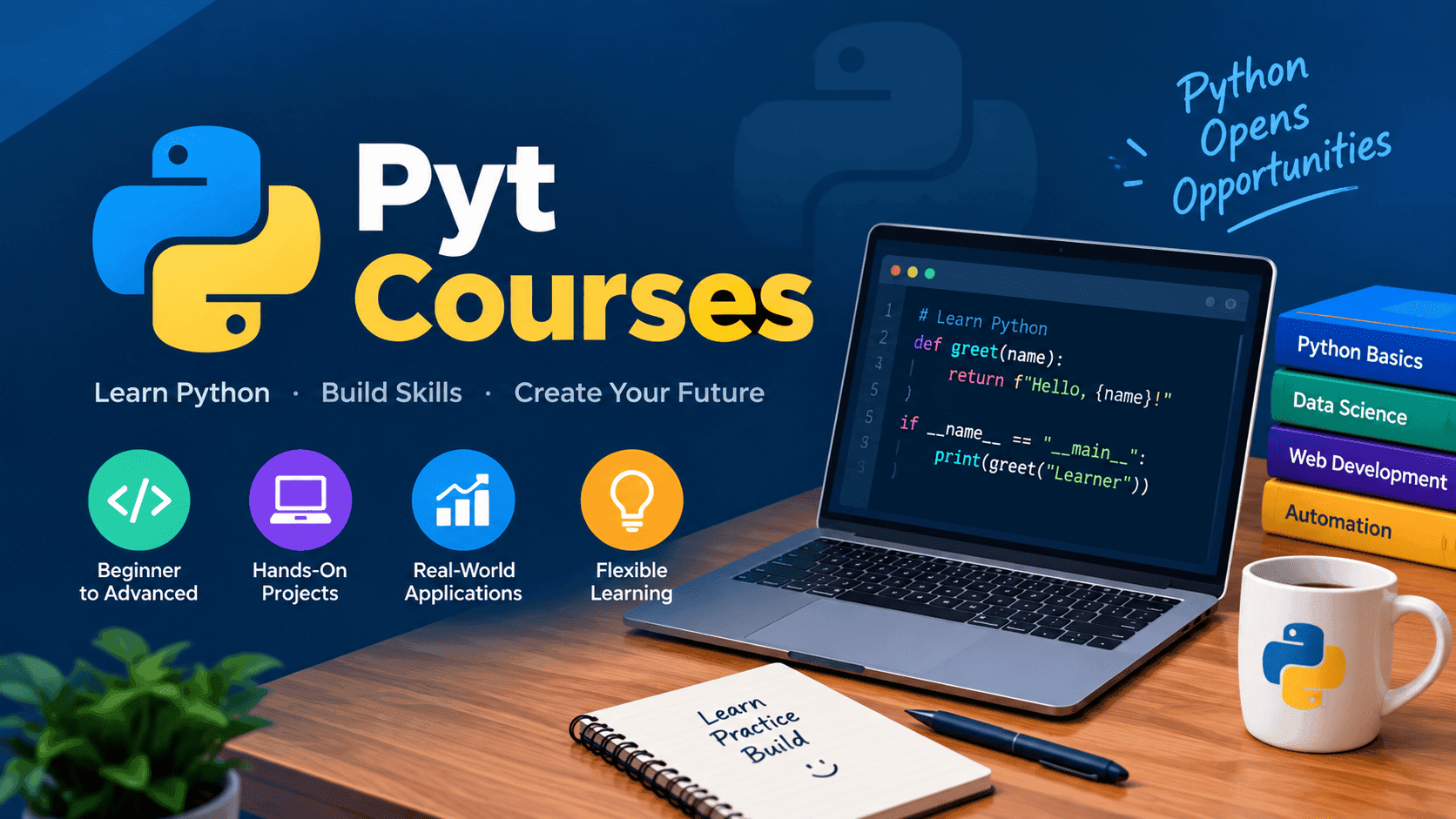
In today’s digital world, programming has become one of the most valuable skills for students, professionals, entrepreneurs, and technology enthusiasts. Among the many programming languages available, Python has become especially popular because it is easy to learn, versatile, powerful, and widely used across different industries. This growing popularity has created a huge demand for pyt courses, particularly courses that help beginners learn Python from the basics and gradually develop professional programming skills.
Whether you are a complete beginner, a university student, a software developer, or someone looking to change careers, a well-structured Python course can provide the knowledge and practical experience needed to succeed in the technology industry. This article explains what Python courses are, why they are important, what you can learn from them, and how to choose the right course for your goals.
What Are Pyt Courses?
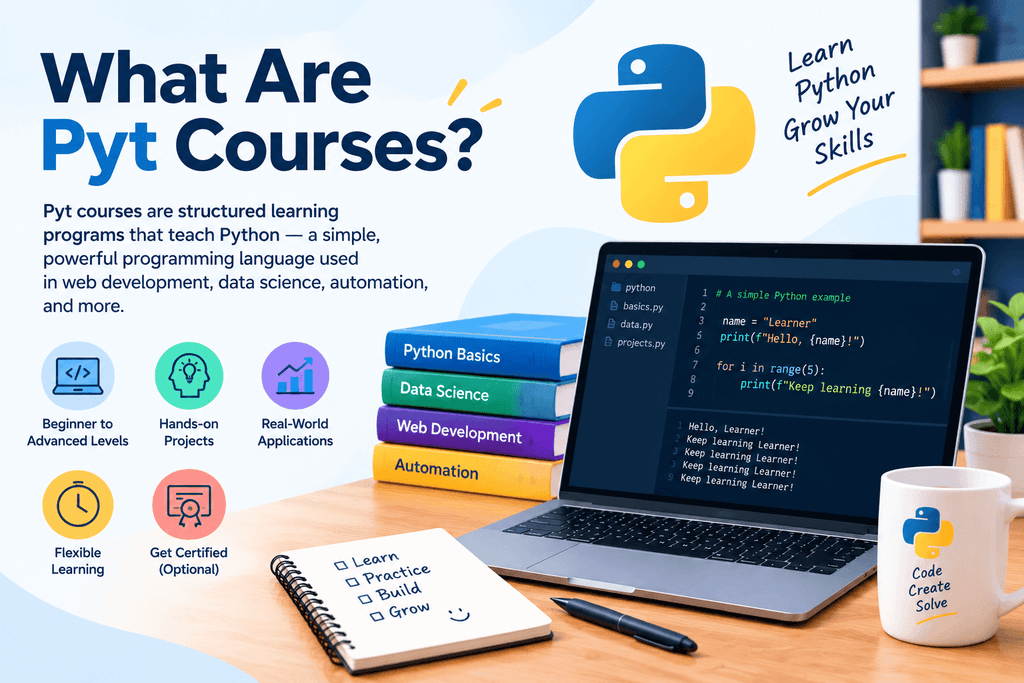
The term “pyt courses” is commonly used to refer to Python courses. These courses are designed to teach learners how to write programs using the Python programming language. Depending on the level and purpose of the course, students may learn basic programming concepts, web development, data analysis, artificial intelligence, machine learning, automation, and other advanced technologies.
Python is known for its simple and readable syntax. Unlike some programming languages that require complicated syntax and lengthy code, Python allows beginners to understand programming concepts more easily. This makes it an excellent starting point for people who have never programmed before.
Python courses are available in many formats. Students can choose online video courses, interactive coding classes, university programs, boot camps, tutorials, or self-paced learning programs. The best option depends on the learner’s previous experience, available time, budget, and career objectives.
Why Learn Python?
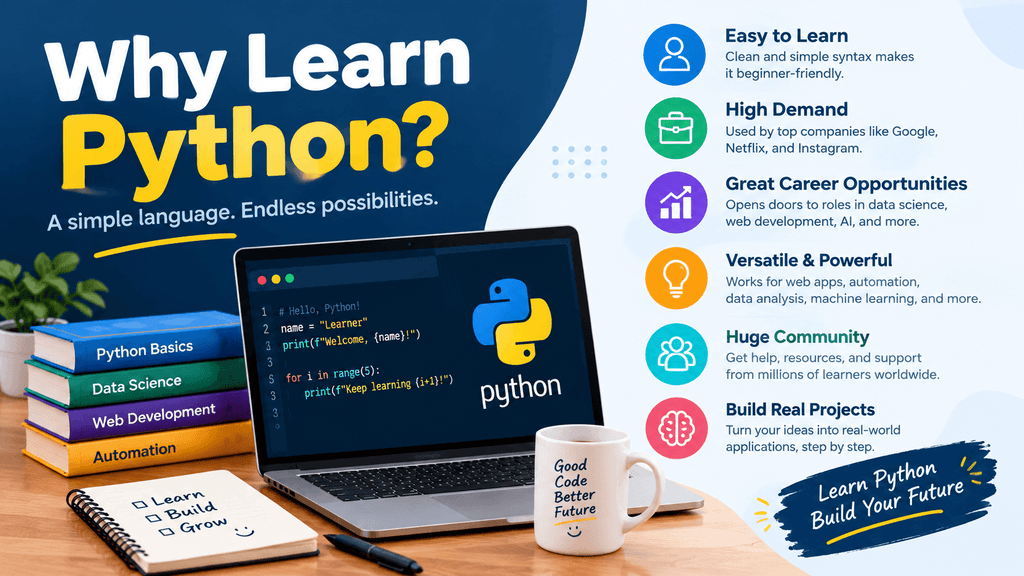
There are many reasons why Python has become one of the most widely learned programming languages. One of its biggest advantages is its simplicity. Beginners can start writing basic programs relatively quickly, which makes the learning process more engaging.
Another major advantage is Python’s versatility. The language is used in many different areas of technology. Developers use Python to create websites and applications, while data professionals use it to analyze large datasets. Researchers use Python for scientific computing, and artificial intelligence professionals use it to develop machine learning models.
Python is also supported by a large global community. Thousands of libraries, frameworks, tutorials, documentation resources, and open-source projects are available to learners and developers. If students encounter a programming problem, they can often find examples and explanations created by other members of the Python community.
For people interested in technology careers, learning Python can therefore be a strong investment in their education and professional development.
What Do You Learn in Python Courses?
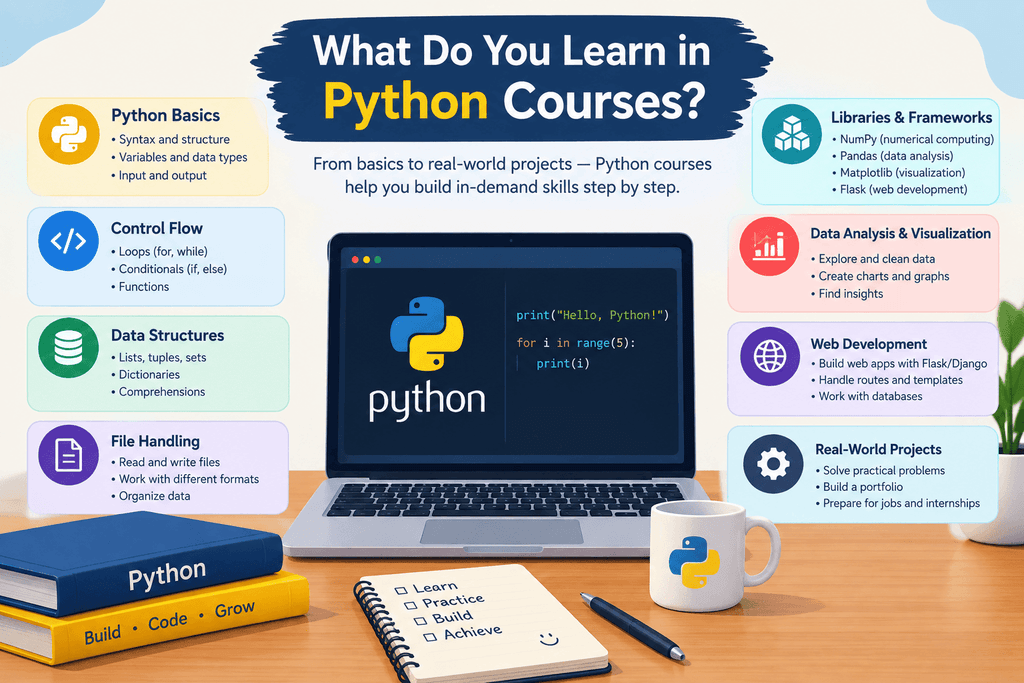
The content of a Python course depends on its level. Beginner courses generally start with fundamental programming concepts and then introduce more advanced topics.
1. Python Fundamentals
Most beginner Python courses begin with the basics. Students learn how to install Python, use a development environment, write their first program, and understand Python syntax.
Typical topics include variables, data types, operators, strings, numbers, and basic input and output. These concepts form the foundation of almost every Python program.
2. Conditional Statements
Students learn how programs make decisions using conditional statements such as if, elif, and else. These statements allow a program to perform different actions depending on specific conditions.
Understanding conditional logic is essential because it teaches learners how to make their programs respond intelligently to different situations.
3. Loops
Loops allow programmers to repeat instructions efficiently. Python courses normally introduce for and while loops and explain how they can be used to process data and automate repetitive tasks.
Students may create simple projects such as number generators, calculators, menu systems, or data-processing programs to practice loops.
4. Functions
Functions are reusable blocks of code that perform specific tasks. Learning how to create and use functions helps students organize their programs and avoid unnecessary repetition.
Python courses teach learners how to define functions, pass arguments, return values, and organize larger programs into manageable sections.
5. Lists, Tuples, Dictionaries, and Sets
Python provides several built-in data structures for storing and organizing information. Courses usually introduce lists, tuples, dictionaries, and sets and explain when each structure should be used.
These concepts become particularly important when learners move into data analysis, software development, and more advanced programming.
6. Object-Oriented Programming
Intermediate and advanced Python courses often introduce object-oriented programming, commonly known as OOP. Students learn about classes, objects, methods, inheritance, and other concepts used to design larger software applications.
Although OOP can initially seem complicated, practical examples and projects can make these concepts much easier to understand.
Python for Web Development
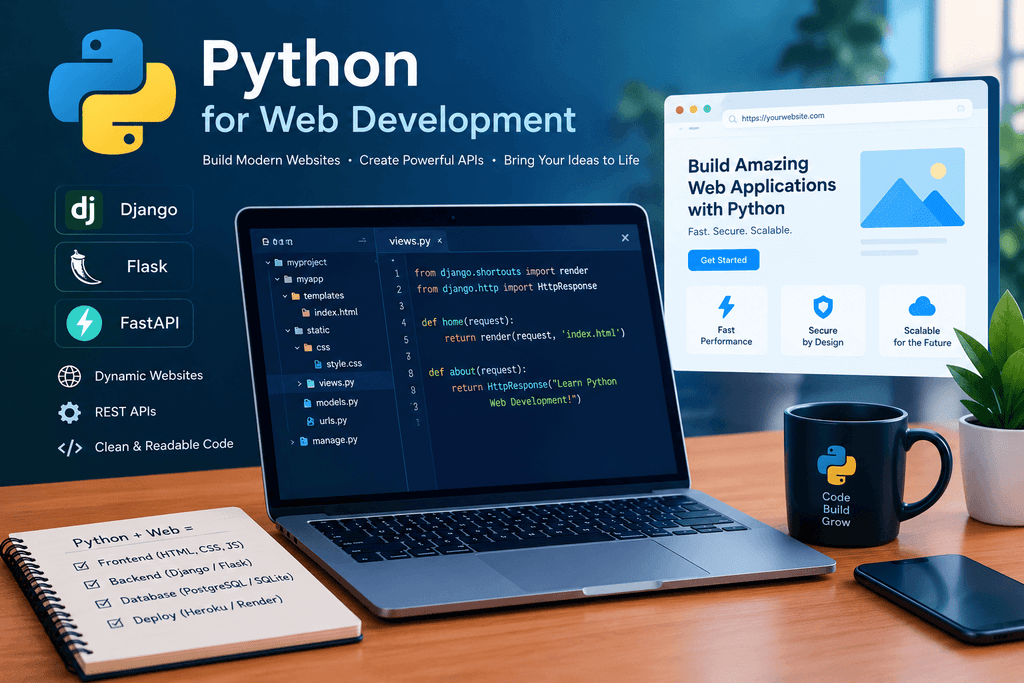
One of the major applications of Python is web development. Frameworks such as Django and Flask allow developers to create websites, web applications, APIs, and backend systems.
A Python web development course may cover databases, user authentication, application routing, APIs, HTML integration, and deployment. Students can use these skills to build practical projects such as blogs, online stores, content management systems, and business applications.
Learning web development after mastering Python fundamentals can therefore open another career path for aspiring developers.
Python for Data Science
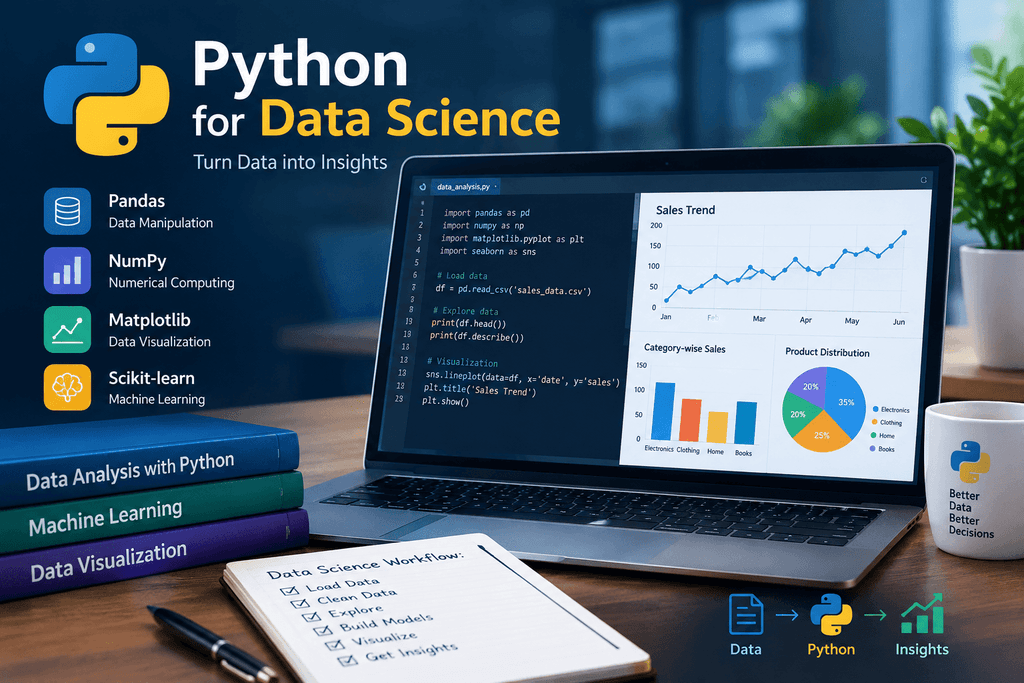
Python has become particularly important in the field of data science. Organizations generate enormous amounts of data, and professionals need programming tools to process, analyze, and visualize that information.
Python courses focused on data science often introduce popular libraries such as NumPy, pandas, and Matplotlib. Students learn how to clean datasets, perform calculations, identify patterns, create visualizations, and generate useful insights.
For learners interested in business analytics, research, finance, or technology, Python-based data science skills can be extremely valuable.
Python for Artificial Intelligence and Machine Learning
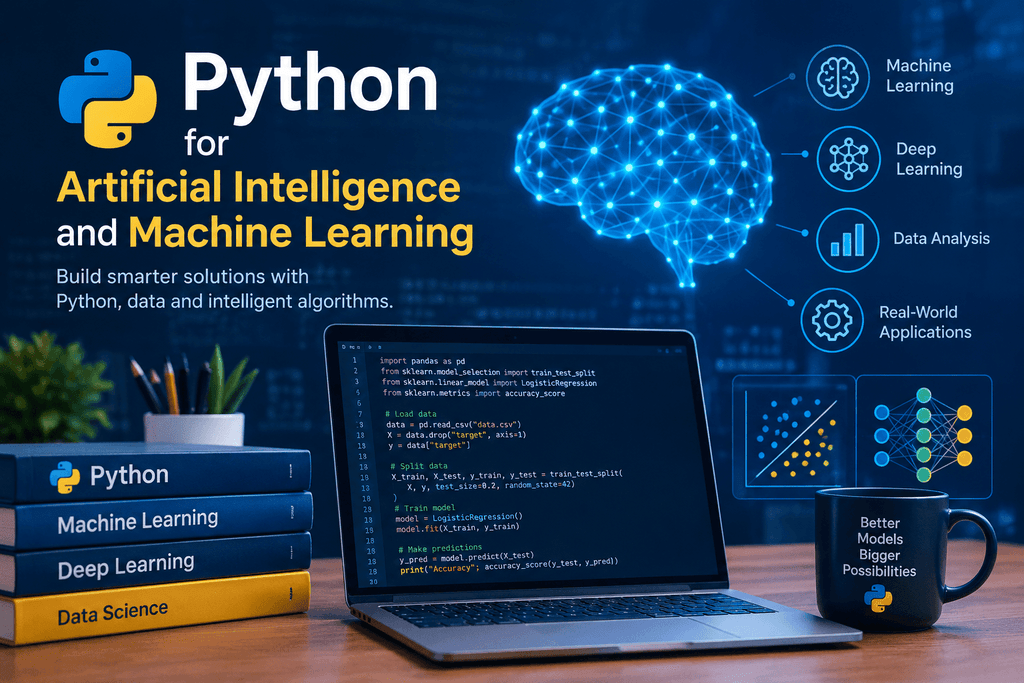
Artificial intelligence and machine learning are among the most exciting applications of Python. Many AI and machine learning tools are built around Python because of its extensive ecosystem of libraries and frameworks.
Advanced courses may introduce concepts such as supervised learning, unsupervised learning, neural networks, model training, and data preparation. Libraries such as scikit-learn, TensorFlow, and PyTorch are commonly associated with Python-based machine learning development.
However, students should first develop a strong understanding of Python programming and basic mathematics before moving into advanced machine learning topics.
Python for Automation
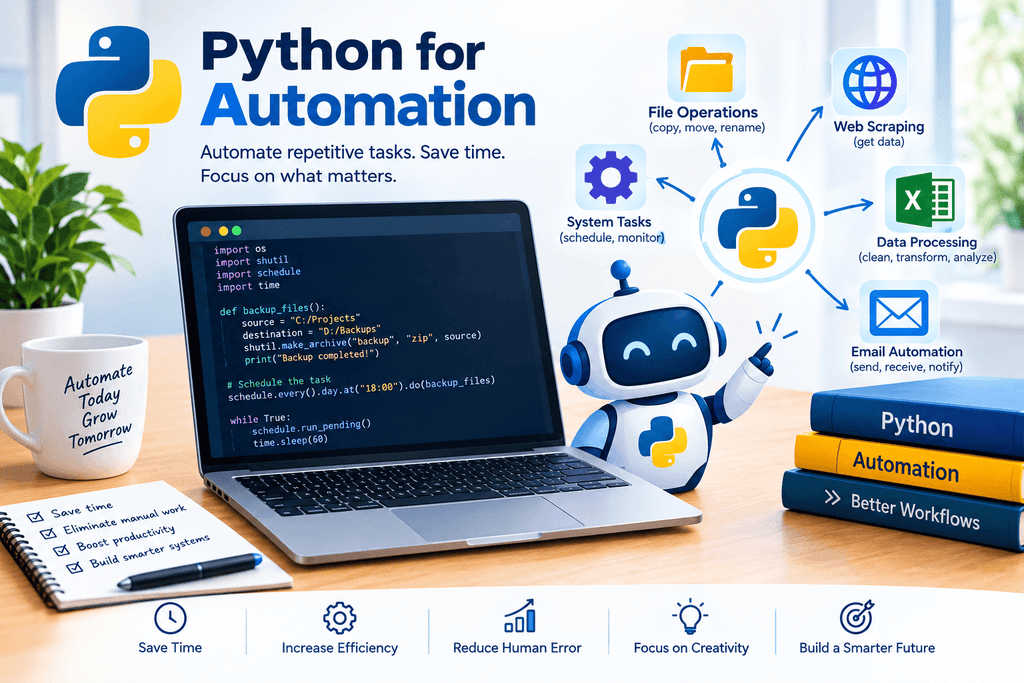
Python is also widely used for automation. Automation allows users to perform repetitive tasks with computer programs instead of completing every step manually.
For example, Python can be used to process files, organize data, generate reports, interact with websites, or perform routine administrative tasks. Learning automation can save time and improve productivity in both personal and professional environments.
This makes Python particularly useful for office workers, business owners, students, and professionals who regularly perform repetitive digital tasks.
Benefits of Taking an Online Python Course
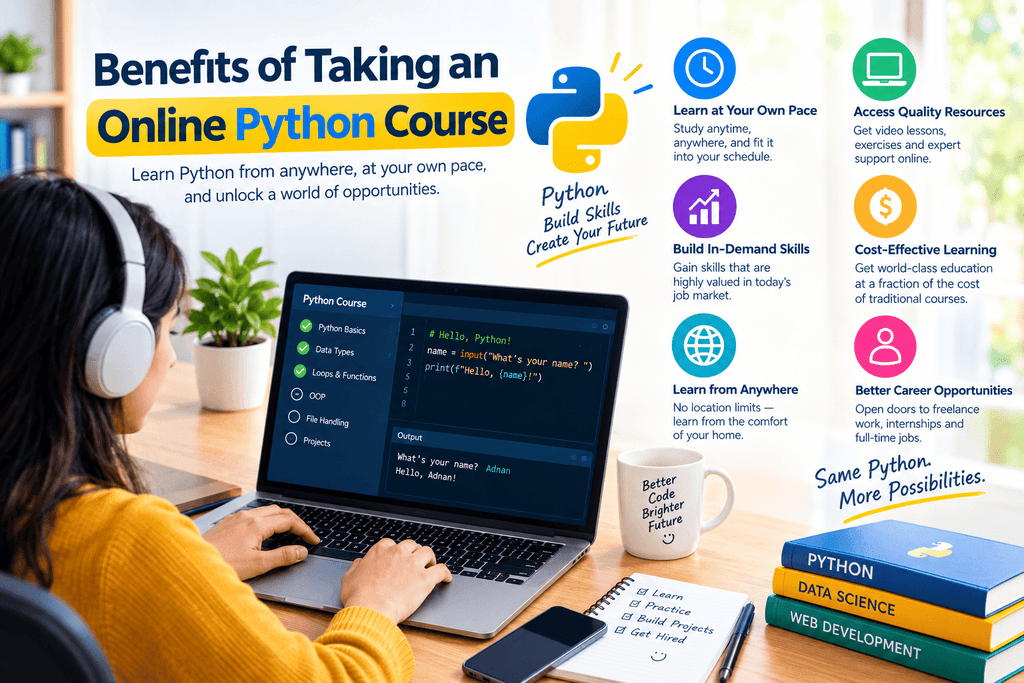
Online Python courses provide flexibility that traditional classroom learning may not always offer. Students can often learn at their own pace and study whenever they have free time.
Another advantage is the variety of available learning materials. Online courses may include video lectures, quizzes, coding exercises, assignments, projects, and downloadable resources.
Students can also repeat difficult lessons as many times as necessary. This is particularly helpful when learning programming because some concepts require repeated practice before they become familiar.
Many online courses also use project-based learning. Instead of only reading about programming concepts, students create actual applications and programs. This practical experience can help them understand how programming knowledge is applied in real-world situations.
How to Choose the Right Python Course
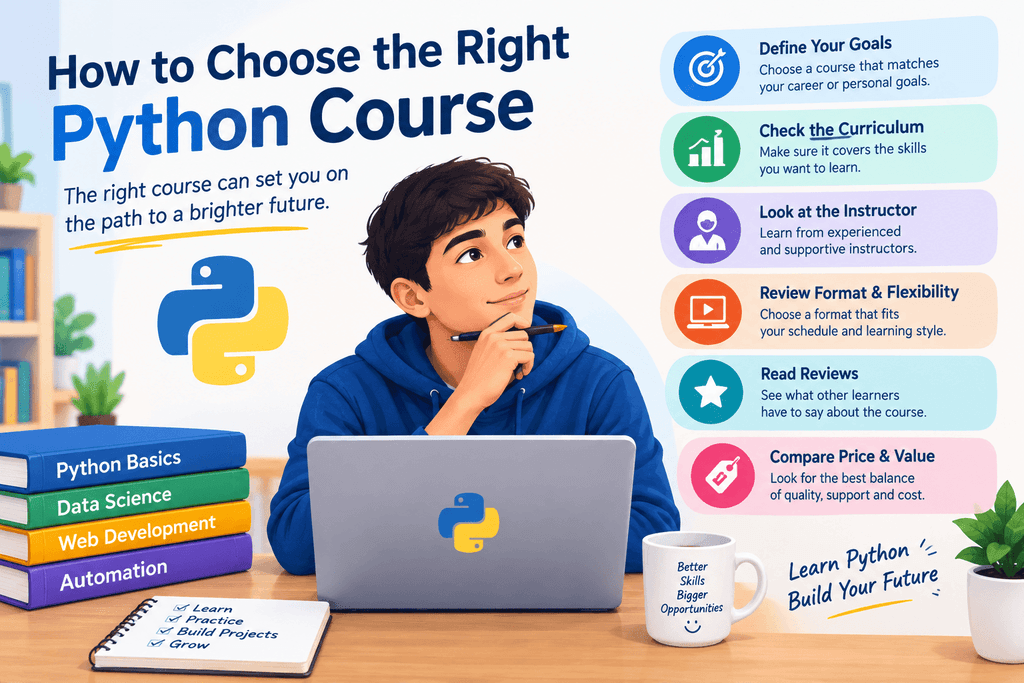
Choosing the right course is important because not every Python course is suitable for every learner. Beginners should look for courses that start with fundamental concepts and explain programming terminology clearly.
The course should also provide practical exercises. Programming cannot be mastered through watching videos alone. Students need to write code, make mistakes, solve problems, and build projects.
Another important factor is course structure. A good course should progress logically from simple concepts to more advanced topics. It should avoid introducing complicated subjects before students understand the fundamentals.
Learners should also consider their goals. Someone interested in web development may want a course focused on Django or Flask, while someone interested in data science should look for courses covering pandas, NumPy, visualization, and statistics.
Tips for Learning Python Successfully
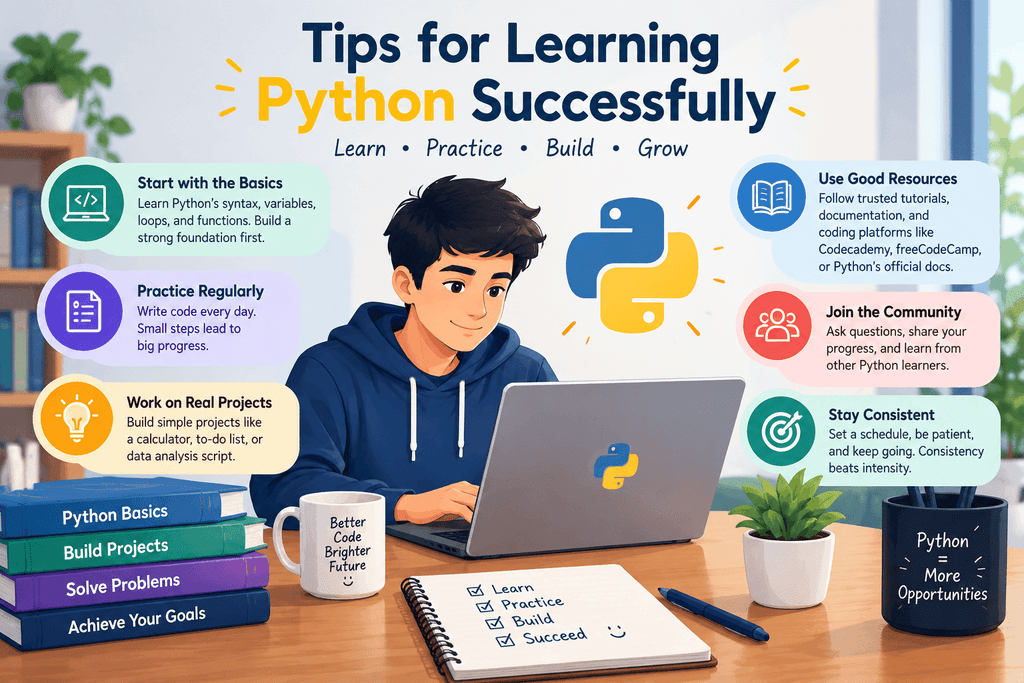
Learning programming requires consistency. Instead of studying for many hours once a week, students often benefit more from practicing for a shorter period every day.
Writing code is also more effective than simply watching tutorials. After learning a concept, try to create a small program using it. For example, after learning functions, create a calculator or a simple expense tracker.
Students should not be afraid of errors. Programming errors are a normal part of the learning process. Debugging teaches problem-solving skills and helps learners understand how programs work.
Building projects is another excellent strategy. Beginners can create calculators, quizzes, number games, to-do lists, or simple file-management tools. More advanced learners can build websites, data dashboards, APIs, automation tools, or machine learning applications.
Career Opportunities After Learning Python
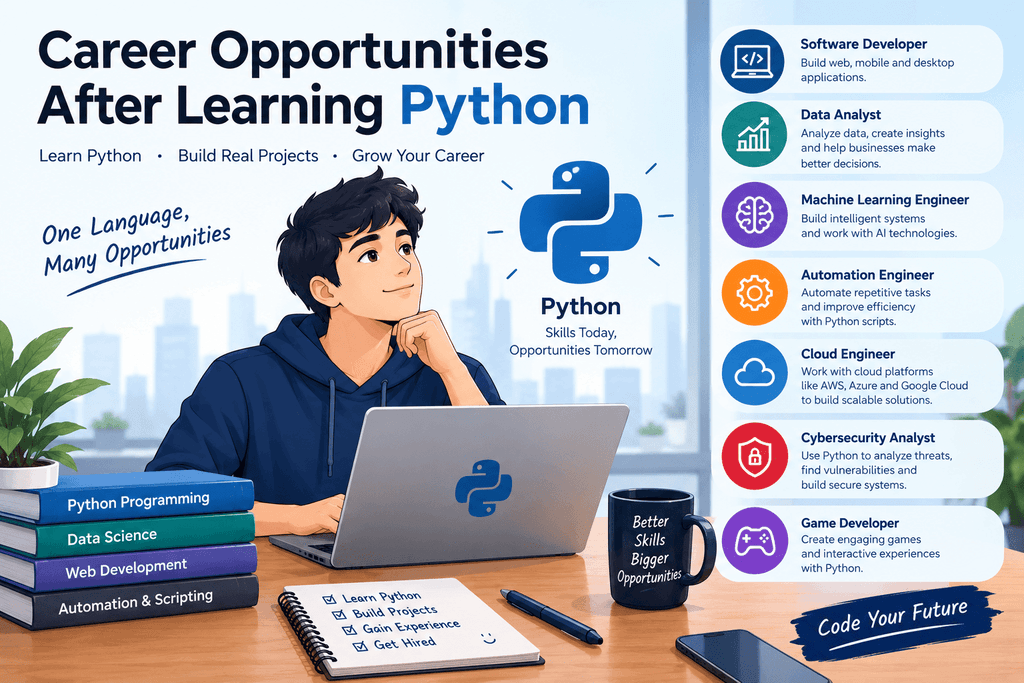
Python skills can support several technology career paths. Depending on additional skills and experience, learners may pursue roles such as Python developer, web developer, data analyst, data scientist, automation developer, software engineer, or machine learning engineer.
Python can also complement other professional skills. For example, a business analyst who learns Python may automate reports and analyze larger datasets. A researcher can use Python for scientific calculations, while a cybersecurity professional may use programming to automate certain technical tasks.
A Python course does not guarantee a job by itself, but it can provide an important technical foundation when combined with projects, problem-solving ability, communication skills, and practical experience.
Conclusion
Pyt courses, or Python courses, provide an accessible way to enter the world of programming and modern technology. From basic programming and automation to web development, data science, artificial intelligence, and machine learning, Python offers a wide range of opportunities for learners.
The best approach is to begin with the fundamentals, practice regularly, and gradually move toward an area that matches your interests and career goals. Instead of focusing only on completing a course, learners should concentrate on understanding concepts and building real projects.
With consistent practice and the right learning resources, Python can become a powerful skill that supports education, productivity, software development, and long-term career growth. Whether you are taking your first steps into programming or expanding your existing technical knowledge, a well-designed Python course can be an excellent place to start.
Frequently Asked Questions (FAQs)
Q: What are PYT Courses? A: Professional Yacht Training (PYT) courses are industry-accredited programs designed to train and certify individuals for careers aboard commercial and luxury yachts. Training covers essential maritime skills, safety protocols, seamanship, and specialized roles.
Q: What certifications will I earn upon completing a PYT Course? A: Depending on your chosen path, you can earn internationally recognized maritime credentials, including mandatory STCW (Standards of Training, Certification and Watchkeeping) certificates, MCA-approved modules, and specialized entry-level to advanced deck and interior qualifications.
Q: Do I need prior maritime experience to enroll? A: No. We offer foundational entry-level courses specifically designed for beginners with zero prior yachting or boating experience, as well as advanced training modules for experienced crew members looking to upgrade their licenses.
Q: How long does it take to complete the training? A: Entry-level packages (such as basic STCW and seamanship modules) typically take 1 to 2 weeks to complete. Advanced or specialized career paths may require multi-week modular training schedules.
Q: Are these courses internationally recognized? A: Yes. The certifications awarded meet strict international maritime standards, allowing you to seek employment on luxury superyachts, charter boats, and commercial vessels worldwide.
Q: Will this training help me secure a job on a yacht? A: Absolutely. Completing certified PYT courses provides you with the mandatory safety qualifications and practical skills required by boat captains and recruitment agencies globally, opening doors to entry-level deckhand, steward/stewardess, or engineering roles.
Q: What should I bring or prepare before starting my course? A: You will need a valid government-issued ID (such as a passport) and a basic level of physical fitness. Specific course materials, dress codes, and pre-reading requirements will be sent to you upon registration.