
In today’s digital world, websites and web applications have become essential for businesses, organizations, and individuals. From online shopping platforms to educational websites and business portals, almost every industry depends on web technology. This growing demand has created numerous career opportunities for people interested in technology, coding, and creative problem-solving.
A developer web job, commonly known as a web developer job, is one of the most popular career paths in the technology industry. Web developers design, build, maintain, and improve websites and web applications. Whether you are a beginner learning HTML and CSS or an experienced professional working with advanced programming frameworks, web development offers opportunities to grow your skills and build a successful career.
This article explores what a web developer does, the skills required, different types of web development jobs, career opportunities, and practical steps to enter this exciting field.
What Is a Web Developer Job?
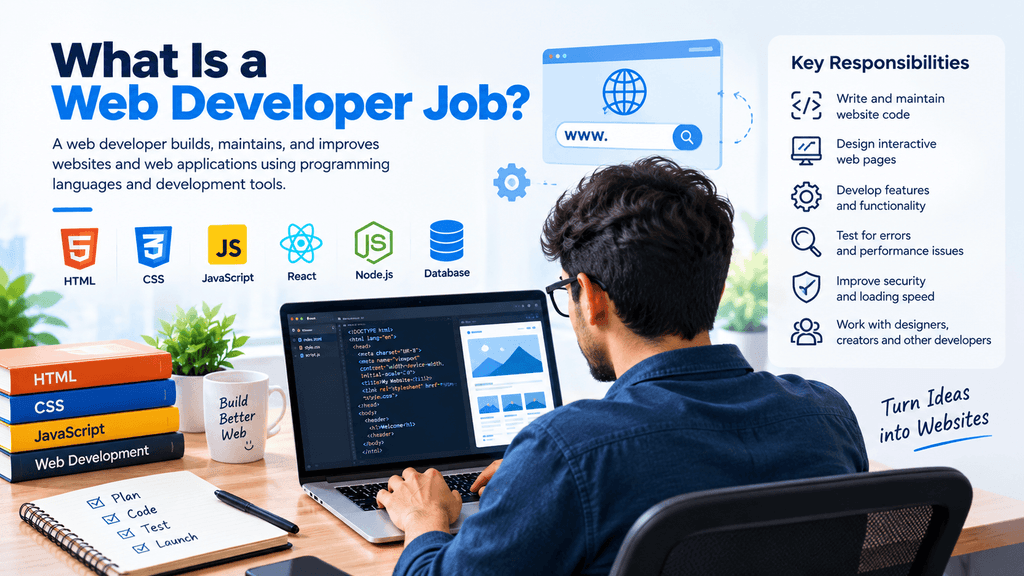
A web developer job involves creating and maintaining websites and web-based applications. Web developers use programming languages, development tools, and technical knowledge to turn ideas and designs into functional digital experiences.
A web developer may work on a simple business website, an online store, a social media platform, or a complex web application. Their responsibilities depend on their specialization, experience, and the organization they work for.
Some common responsibilities include:
- Writing and maintaining website code.
- Designing interactive and user-friendly web pages.
- Developing website features and functionality.
- Testing websites for errors and performance issues.
- Improving website security and loading speed.
- Working with designers, content creators, and other developers.
- Updating websites to support new technologies and user needs.
Web development combines technical knowledge with creativity. Developers must understand how websites work while also considering usability, accessibility, and the needs of their target audience.
Types of Web Developer Jobs
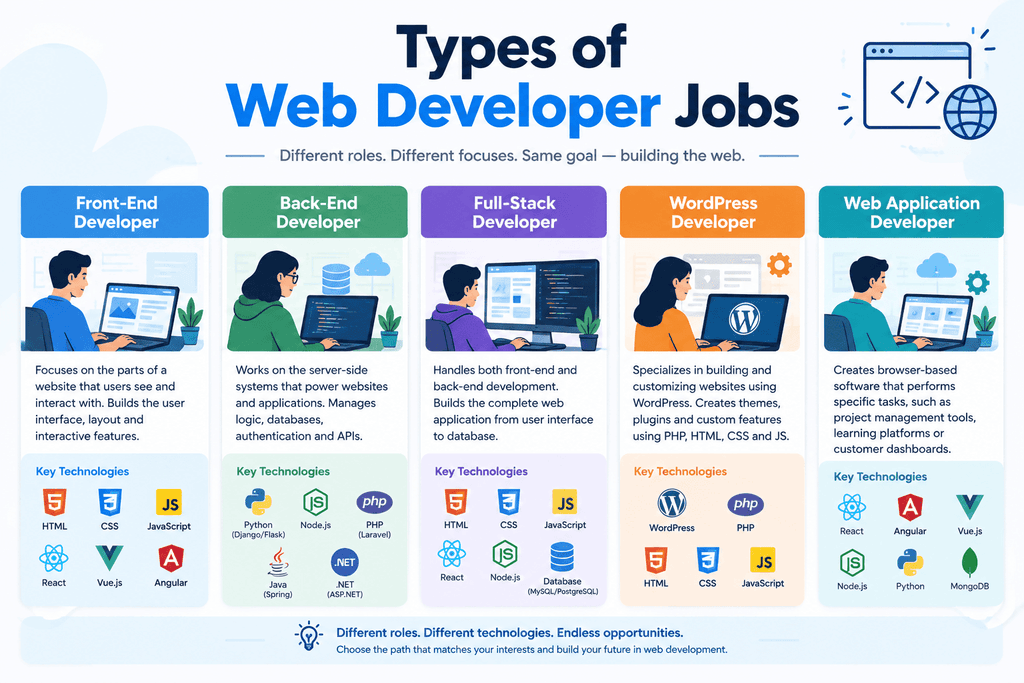
Web development is a broad field with several specializations. Understanding these roles can help students and aspiring developers choose a career path that matches their interests.
1. Front-End Developer
A front-end developer focuses on the parts of a website that users see and interact with. This includes layouts, navigation menus, buttons, forms, animations, and responsive designs.
Front-end developers commonly use:
- HTML for website structure.
- CSS for styling and layouts.
- JavaScript for interactive functionality.
- Frameworks and libraries such as React, Vue, or Angular.
For example, when you visit an online shopping website and interact with product cards, search filters, and checkout buttons, front-end development helps create that experience.
This career is suitable for people who enjoy visual design, user experience, and creating interactive websites.
2. Back-End Developer
Back-end developers work on the server-side systems that power websites and web applications. They manage the logic, databases, authentication, and communication between the website and its server.
Popular back-end technologies include:
- Python with Django or Flask.
- JavaScript with Node.js.
- PHP with Laravel.
- Java with Spring.
- C# with ASP.NET.
A back-end developer might create the system that processes online orders, stores user accounts, manages inventory, or handles payments.
This role requires an understanding of databases, APIs, server management, and programming logic.
3. Full-Stack Developer
A full-stack developer works on both front-end and back-end development. They can build user interfaces, develop server-side functionality, connect databases, and manage many parts of a web application.
For example, a full-stack developer might create an entire appointment-booking website, including:
- The website interface.
- User registration and login.
- Appointment scheduling.
- Database storage.
- Administrative dashboards.
Full-stack developers are valuable because they understand how different parts of a web application work together. However, becoming proficient in both front-end and back-end development requires consistent learning and practice.
4. WordPress Developer
A WordPress developer specializes in building and customizing websites using WordPress. This type of work is common among freelancers, agencies, bloggers, and small businesses.
WordPress developers may create themes, customize plugins, improve website performance, and develop custom features using PHP, HTML, CSS, and JavaScript.
This can be an accessible starting point for beginners because WordPress allows people to build websites while gradually learning programming and web technologies.
5. Web Application Developer
Web application developers create browser-based software that performs specific tasks. Examples include project management tools, online learning systems, customer relationship platforms, and financial dashboards.
These developers often work with advanced programming concepts, databases, APIs, authentication, and application security.
Essential Skills for a Web Developer Job
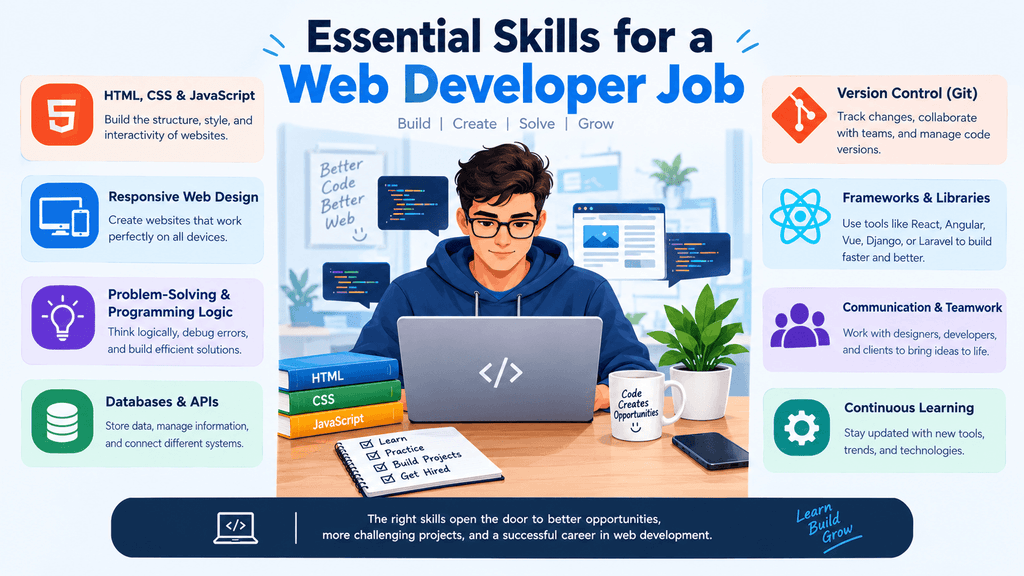
To succeed in web development, you need a combination of technical skills, problem-solving ability, and communication skills.
HTML, CSS, and JavaScript
These are the fundamental technologies of front-end web development.
HTML provides the structure of a webpage, CSS controls its appearance, and JavaScript adds dynamic behavior. Beginners should learn these technologies before moving to advanced frameworks.
A strong foundation makes it easier to understand how websites work and troubleshoot problems.
Responsive Web Design
People access websites using desktops, laptops, tablets, and smartphones. Responsive web design ensures that websites adapt to different screen sizes.
Developers should understand flexible layouts, CSS media queries, mobile navigation, and accessible design practices.
A website that works well on mobile devices provides a better user experience and can support business goals.
Programming and Problem-Solving
Web developers frequently solve technical problems. They may need to fix errors, improve application performance, or create new features.
Learning programming logic, variables, functions, loops, conditions, and data structures helps developers write better code.
Databases and APIs
Back-end and full-stack developers should understand how information is stored and exchanged.
Common database technologies include MySQL, PostgreSQL, and MongoDB. APIs allow different software systems to communicate with each other.
For example, an online store may use an API to retrieve product information from a database and display it on the website.
Version Control
Tools such as Git help developers track changes in their code. Git is especially useful when working with other developers or managing multiple versions of a project.
Learning Git and platforms such as GitHub can improve collaboration and make a developer’s portfolio more professional.
Communication and Teamwork
Web developers often work with designers, project managers, clients, and marketing teams. Clear communication helps ensure that projects meet requirements.
Professional developers should be able to explain technical concepts, ask questions, manage deadlines, and respond constructively to feedback.
Educational Requirements for Web Development
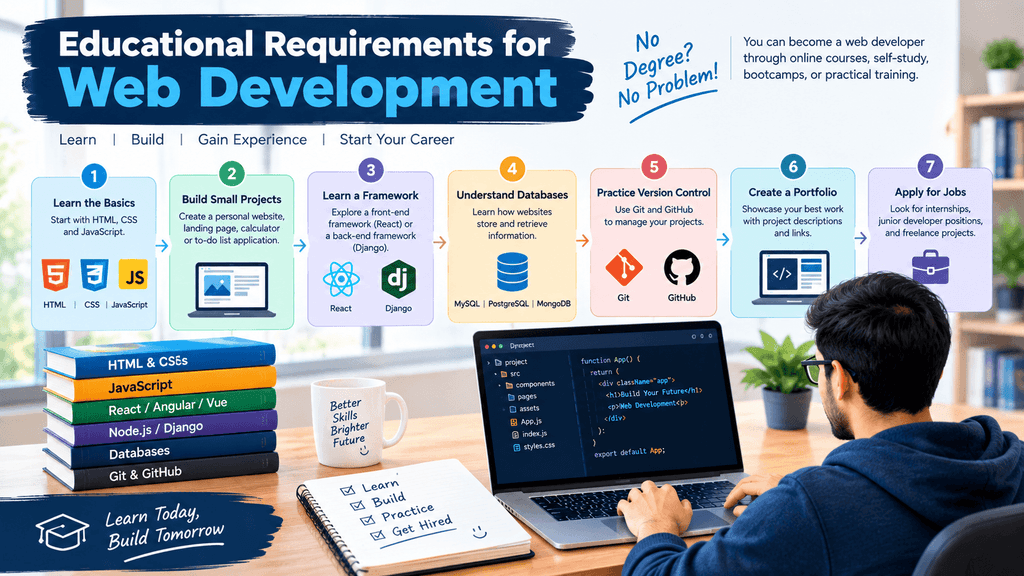
A formal computer science degree can be helpful, but it is not always required for a web developer job. Many developers enter the field through self-study, online courses, coding bootcamps, or practical training.
A typical learning path includes:
Step 1: Learn the basics. Start with HTML, CSS, and JavaScript.
Step 2: Build small projects. Create a personal website, landing page, calculator, or to-do list application.
Step 3: Learn a framework. Explore a front-end framework such as React or a back-end framework such as Django.
Step 4: Understand databases. Learn how websites store and retrieve information.
Step 5: Practice version control. Use Git and GitHub to manage your projects.
Step 6: Create a portfolio. Showcase your best work with project descriptions and links.
Step 7: Apply for jobs or freelance work. Look for internships, junior developer positions, and small client projects.
The most important factor is practical ability. Employers want to see that you can build functional websites, solve problems, and learn new technologies.
Career Opportunities in Web Development
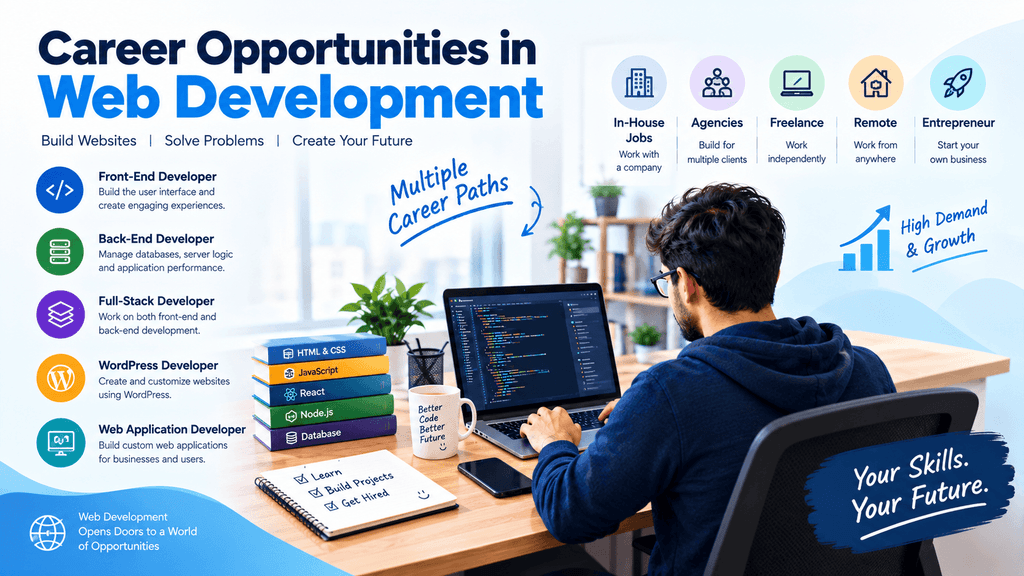
Web development offers several employment options. Your choice depends on your experience, preferred work environment, and career goals.
In-House Web Developer
An in-house developer works directly for a company or organization. They may maintain the company’s website, develop internal applications, and collaborate with other departments.
This role can provide stable employment, opportunities for teamwork, and experience working on long-term projects.
Web Development Agency
Agencies build websites and applications for multiple clients. Developers may work on different industries and projects, gaining experience with various technologies and business requirements.
Agency work can be fast-paced and provide exposure to different types of websites.
Freelance Web Developer
Freelancers work independently and provide services to clients. They may build business websites, online stores, blogs, and custom web applications.
Freelancing offers flexibility, but it also requires client communication, project management, marketing, and financial planning.
Remote Web Developer
Many web development tasks can be performed remotely. Remote developers may work with companies located in other cities or countries.
Remote work requires reliable communication, time management, and the ability to collaborate through digital tools.
Entrepreneur and Website Business Owner
Experienced developers can create their own digital products, web design agencies, or software businesses.
For example, a developer might build a specialized booking platform, educational website, or subscription-based web application.
Web Developer Job Market and Earning Potential

The demand for web development skills is influenced by the continued growth of e-commerce, digital services, mobile browsing, cloud computing, and business automation.
Earning potential varies depending on location, experience, specialization, employer, and project complexity. Junior developers typically earn less than experienced developers, while specialized professionals may command higher compensation.
In Pakistan, aspiring developers can explore opportunities with local software houses, technology companies, digital agencies, and international clients. Freelancing platforms and professional networking can also help developers find projects.
However, salary should not be the only factor when choosing a web development career. Skill development, portfolio quality, communication, and experience often have a major effect on long-term opportunities.
How to Build a Strong Web Developer Portfolio
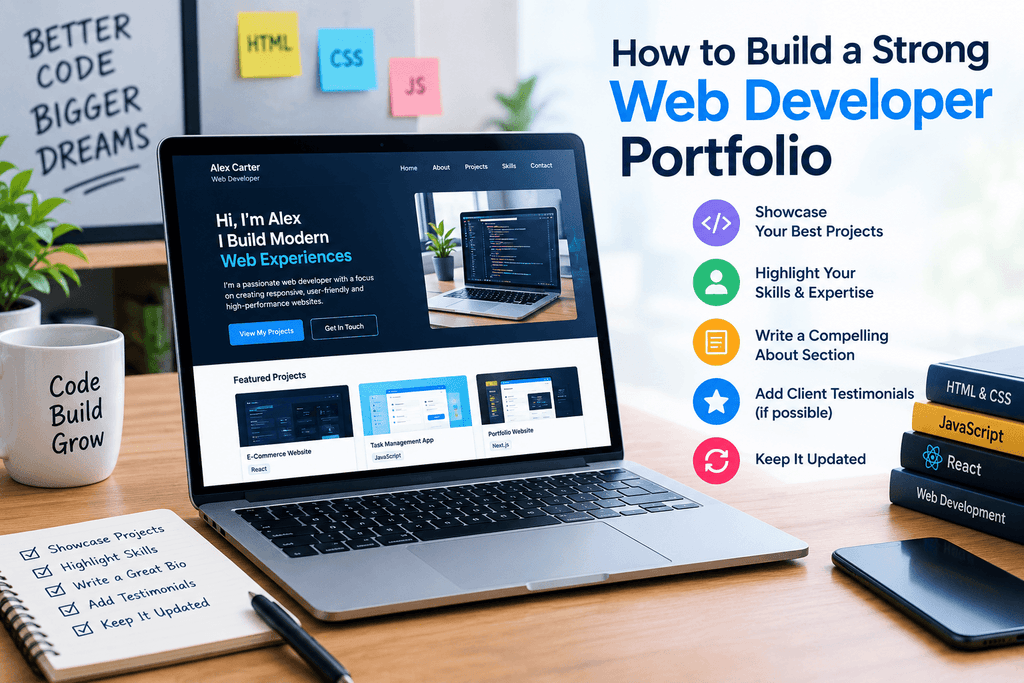
A portfolio is one of the most important tools for someone applying for a web developer job. It demonstrates your practical abilities and gives employers an opportunity to review your work.
A strong portfolio may include:
- A responsive personal website.
- A business landing page.
- An online shopping website.
- A blog or content management system.
- A web application connected to a database.
- A project that demonstrates API integration.
Each project should explain what you built, which technologies you used, and what challenges you solved.
For example, instead of simply writing “Created a website,” describe how you built a responsive interface, added a contact form, connected an API, or improved loading performance.
Publishing projects on GitHub and creating a professional LinkedIn profile can also help you present your skills to potential employers.
Tips for Getting Your First Web Developer Job

Finding your first job can be challenging, especially when you have limited professional experience. The following strategies can improve your chances.
Practice Consistently
Coding skills improve through regular practice. Set aside time each day to write code, solve problems, or work on a project.
Apply for Internships
Internships provide practical experience and help you understand professional development workflows. They can also create opportunities for future employment.
Start with Junior Positions
Look for roles such as junior front-end developer, trainee web developer, WordPress developer, or web development intern.
Improve Your Resume
Highlight technical skills, completed projects, education, certifications, and relevant experience. Include links to your portfolio and GitHub profile.
Prepare for Interviews
Review HTML, CSS, JavaScript, programming fundamentals, and common web development concepts. Practice explaining your projects and solving basic coding problems.
Keep Learning
Web technologies change regularly. Developers should continue learning new tools, security practices, frameworks, and development techniques.
Future of Web Development
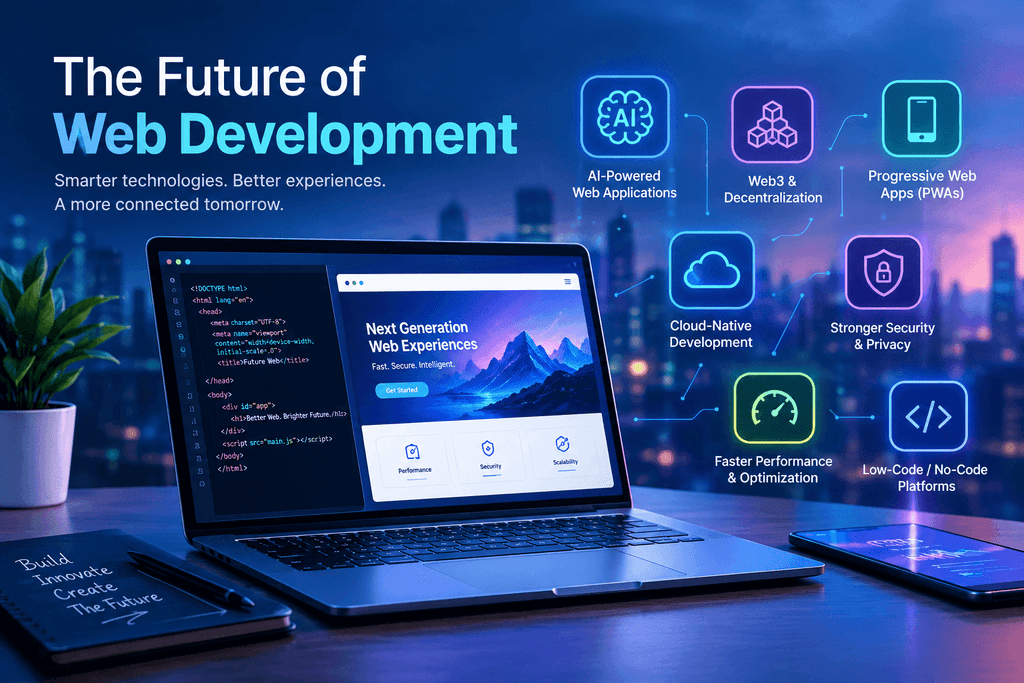
The future of web development is closely connected to artificial intelligence, cloud services, cybersecurity, automation, and improved user experiences.
Developers are increasingly using AI-assisted coding tools to generate suggestions, debug code, and speed up routine tasks. However, understanding programming fundamentals remains important because developers must review code, make technical decisions, and ensure that applications are secure and reliable.
Progressive web applications, accessibility, performance optimization, and responsive design will also remain important as users access digital services from different devices.
Developers who combine technical knowledge with creativity, communication, and continuous learning will be better prepared for changing industry requirements.
Conclusion
A developer web job offers an exciting opportunity to build a career in the technology industry. Whether you choose front-end development, back-end programming, full-stack engineering, WordPress development, or freelancing, the field provides many ways to grow.
The journey begins with learning the fundamentals of HTML, CSS, and JavaScript. From there, you can develop advanced skills, build real-world projects, create a professional portfolio, and apply for internships or junior positions.
Success in web development does not happen overnight. It requires patience, practice, and a willingness to solve problems. By staying consistent and adapting to new technologies, you can develop the skills needed to pursue rewarding opportunities in the web development industry.
If you are interested in technology and enjoy creating digital solutions, web development can be a valuable career choice for your future.
Frequently Asked Questions
What qualifications do I need to land a Web Developer job paying $45–$85/hr?
Roles paying in the $45–$85/hr range typically require 2 to 5+ years of experience, a strong portfolio of live web applications, and expertise in high-demand technologies like React, Next.js, Node.js, Python, or full-stack development. For entry-level applicants ($45/hr), a solid grasp of modern JavaScript, Git, and REST APIs alongside functional projects is often sufficient.
Are remote $45–$85/hr Web Developer jobs paid the same as on-site roles?
Many companies offer identical base hourly rates regardless of location, especially for specialized full-stack or front-end roles. However, some employers adjust compensation based on local cost-of-living tiers. On-site roles in major tech hubs may offer higher local perks, while remote positions often offset local pay differences through home office stipends, flexible hours, and travel savings.
Is $45–$85/hr a realistic pay range for full-time web development roles?
Yes. A $45 to $85 hourly rate translates roughly to $93,000 to $176,000 annually for full-time (40 hrs/week) employment. Mid-level developers in the U.S. average around $50–$75/hr ($100k–$140k/yr), while senior engineers and specialized full-stack developers routinely command $85+/hr ($170k+/yr).
What is the difference between contract ($45–$85/hr) and W-2 salaried web development jobs?
- Contract/1099 ($45–$85/hr): Higher raw hourly pay and flexibility, but you are responsible for your own taxes, health insurance, and unpaid time off.
- W-2 Salaried Roles: The hourly equivalent may look slightly lower on paper, but it includes benefits like employer-covered healthcare, 401(k) matching, paid time off, and employment stability.
Which tech stacks command the top end ($70–$85+/hr) of this pay scale?
Developers working with React, Next.js, TypeScript, Cloud Infrastructure (AWS/GCP), Node.js, and AI API integrations currently command the highest hourly rates. Legacy systems or basic static site maintenance generally sit closer to the lower $45–$55/hr threshold.
How can I prepare for a technical interview for high-paying remote roles?
High-paying remote roles heavily screen for self-sufficiency and clean coding practices. Expect a multi-stage process: a system design or live coding challenge (e.g., building a small React component or API endpoint), a code review session, and asynchronous communication assessments to test how well you collaborate in remote environments.
Where can I find verified $45–$85/hr remote and on-site web developer openings?
Top platforms for high-paying roles include niche tech job boards (like Stack Overflow Jobs, Hacker News Hiring, and Wellfound), curated remote sites (FlexJobs, We Work Remotely, Arc.dev), and direct employer career pages. Searching for terms like “Senior Frontend Developer,” “Full Stack Engineer,” or “React Contractor” yields the highest pay results.
Can offshore or international developers apply for these $45–$85/hr positions?
Many U.S. and European companies hire globally for contract/freelance roles within this rate range, provided you have strong English communication skills, overlapping working hours (e.g., 3–4 hours of time zone alignment), and high technical execution. However, W-2 full-time openings typically require existing U.S. work authorization.