
In today’s digital world, having a strong online presence is essential for businesses, organizations, startups, and professionals. A website is often the first place where customers learn about a company, explore its products, and decide whether they want to do business with it. While ready-made website builders and templates can be useful, many businesses need something more flexible and powerful. This is where custom web development becomes an important solution.
Custom web development involves creating a website or web application specifically according to the requirements of a business or organization. Instead of using a standard template with limited options, developers can build unique features, designs, integrations, and functions based on the client’s goals.
What Is Custom Web Development?
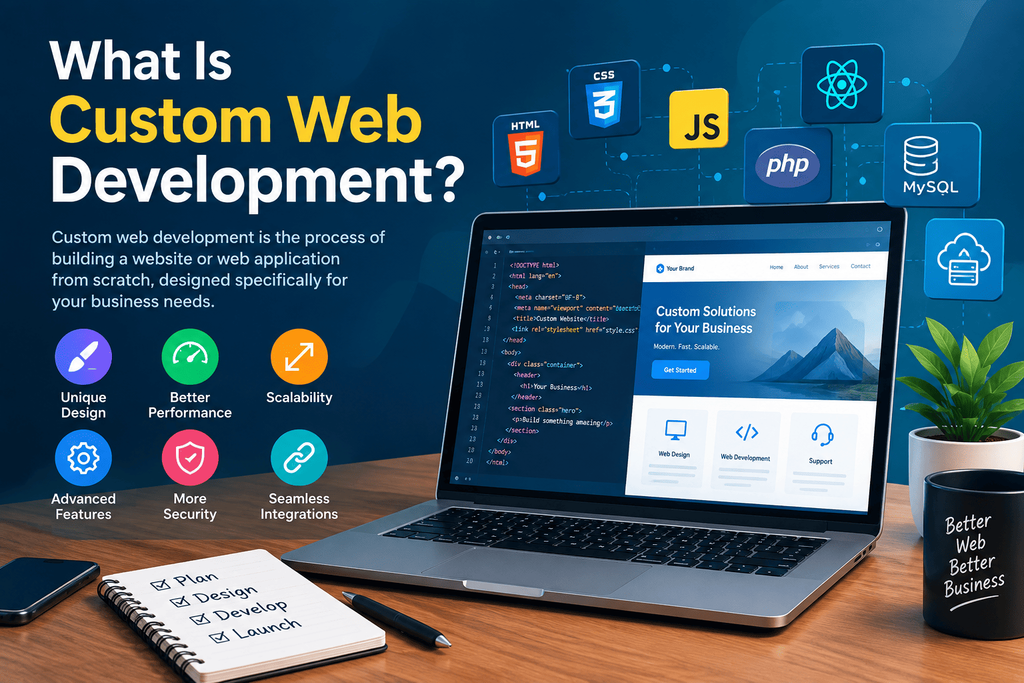
Custom web development is the process of designing and developing a website from the ground up to meet specific business needs. It can include everything from the website’s visual design and navigation to databases, APIs, security systems, and advanced web applications.
A custom website is developed around the requirements of the business rather than forcing the business to adapt to a pre-built website.
For example, an online store may require a customized product management system, advanced search, personalized customer accounts, multiple payment options, and inventory integration. A standard template may not provide all these features, while custom web development can create them specifically for the business.
Why Choose Custom Web Development?
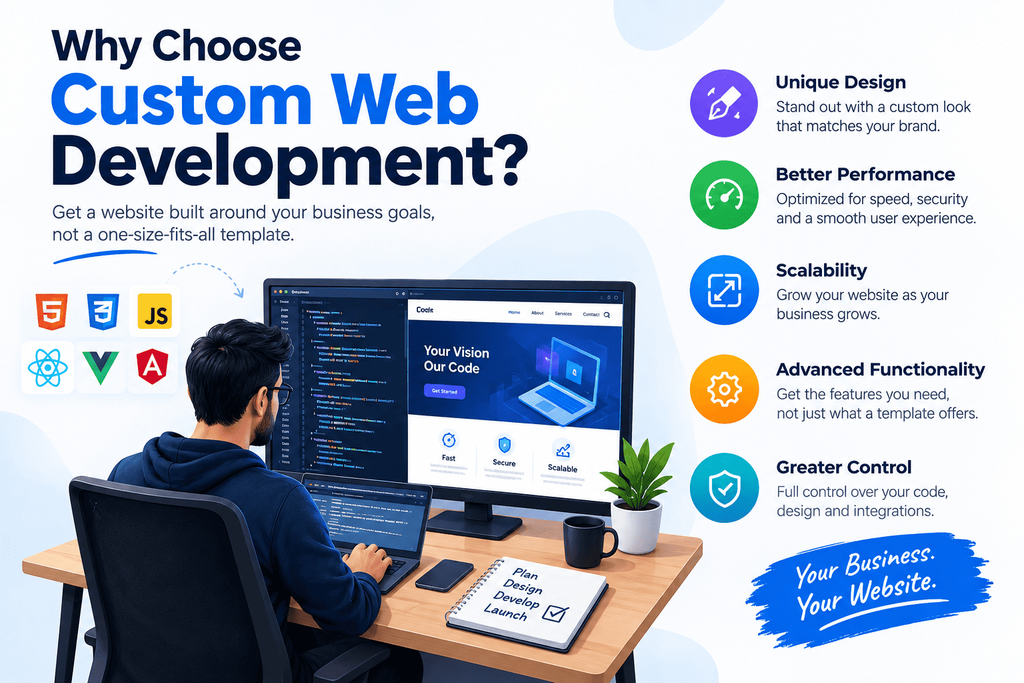
One of the biggest advantages of custom web development is flexibility. Businesses can decide exactly how their website should look and work.
1. Unique Website Design
A custom website can have a unique design that reflects a company’s brand, products, services, and target audience. Businesses are not restricted to the appearance of a standard template.
A professional and unique design can help a company stand out from competitors and create a stronger impression among visitors.
2. Better Performance
Custom websites can be developed with performance in mind. Developers can optimize code, images, databases, and other components to improve loading times.
Fast websites can provide a better user experience and may also support search engine optimization efforts.
3. Scalability
Businesses often grow over time. A website that works for a small company may not be sufficient when the company gains thousands of customers.
Custom web development allows developers to create a scalable architecture that can support additional features, users, products, and services as the business expands.
4. Advanced Functionality
Some businesses require features that are not available in standard website templates. Custom development can provide advanced functionality such as customer dashboards, booking systems, membership platforms, inventory management, automation, reporting systems, and third-party integrations.
Custom Web Development vs. Website Builders
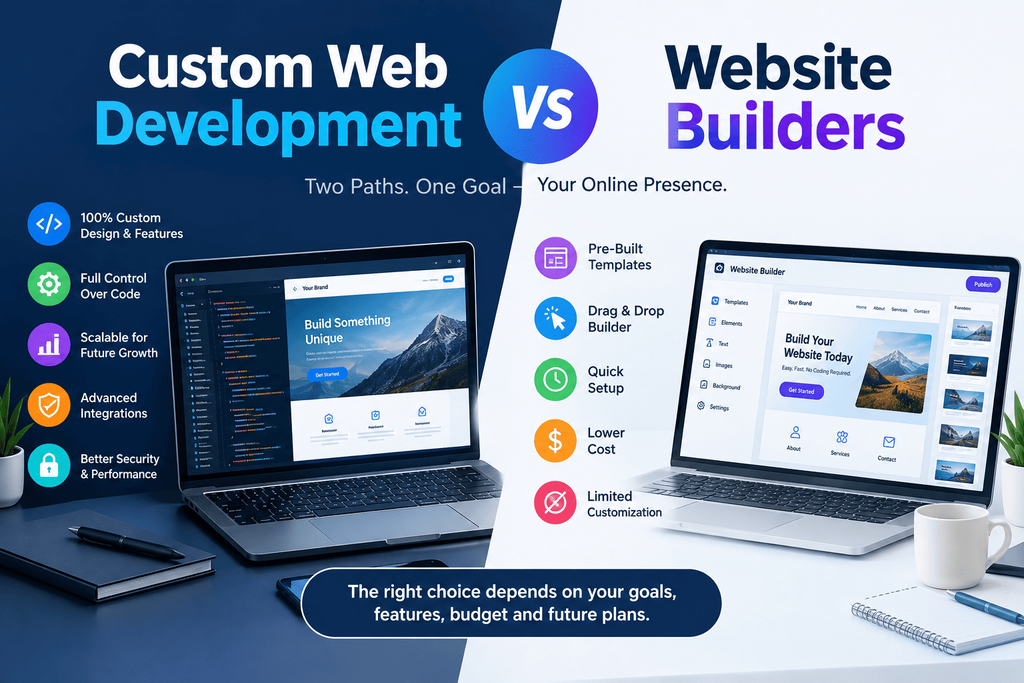
Website builders can be a convenient option for individuals and small businesses that need a simple website quickly. They usually provide pre-designed templates and drag-and-drop tools.
However, website builders may have limitations when a business needs complex functionality.
Custom web development provides greater control over the website’s code, design, functionality, integrations, and database structure. This makes it particularly useful for companies with specialized requirements.
The right choice depends on the project’s goals, budget, technical requirements, and expected future growth.
Important Technologies Used in Custom Web Development
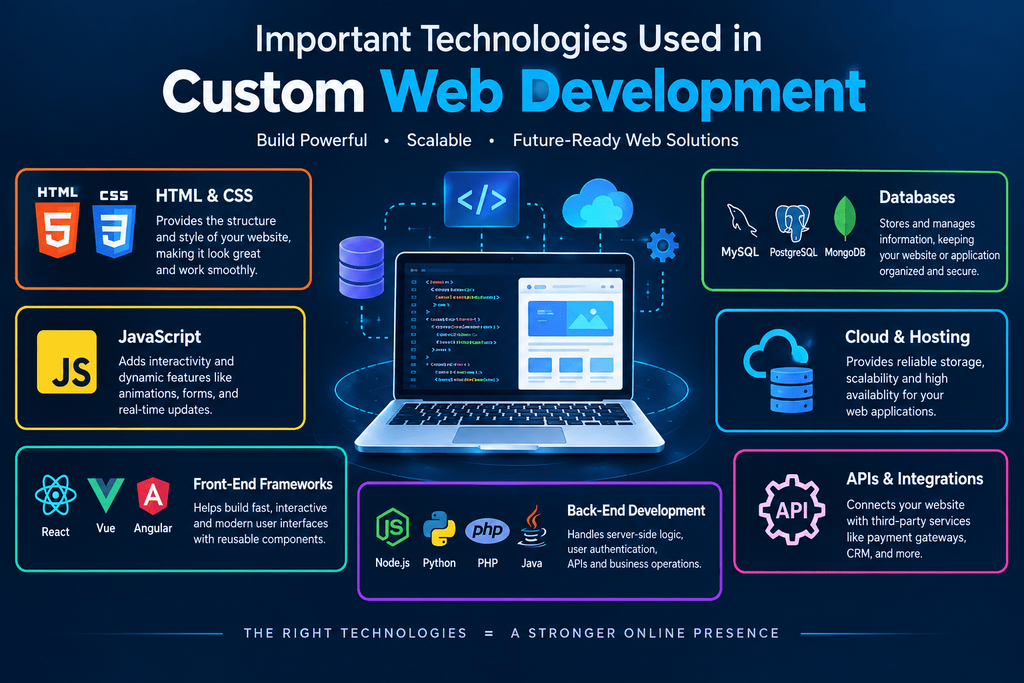
Custom websites can be developed using many different programming languages, frameworks, databases, and tools.
HTML and CSS
HTML provides the structure of a web page, while CSS controls its appearance and layout. These technologies are fundamental components of modern websites.
JavaScript
JavaScript allows developers to create interactive and dynamic web experiences. It can be used for menus, forms, animations, dashboards, interactive applications, and many other features.
Front-End Frameworks
Modern developers may use technologies such as React, Vue, or Angular to build interactive user interfaces.
Back-End Development
Back-end development handles server-side operations such as user authentication, databases, business logic, and APIs. Technologies such as Node.js, Python, PHP, Java, and other programming languages can be used depending on the project.
Databases
Web applications often require databases to store information. Common database technologies include MySQL, PostgreSQL, MongoDB, and other database systems.
Custom Web Application Development
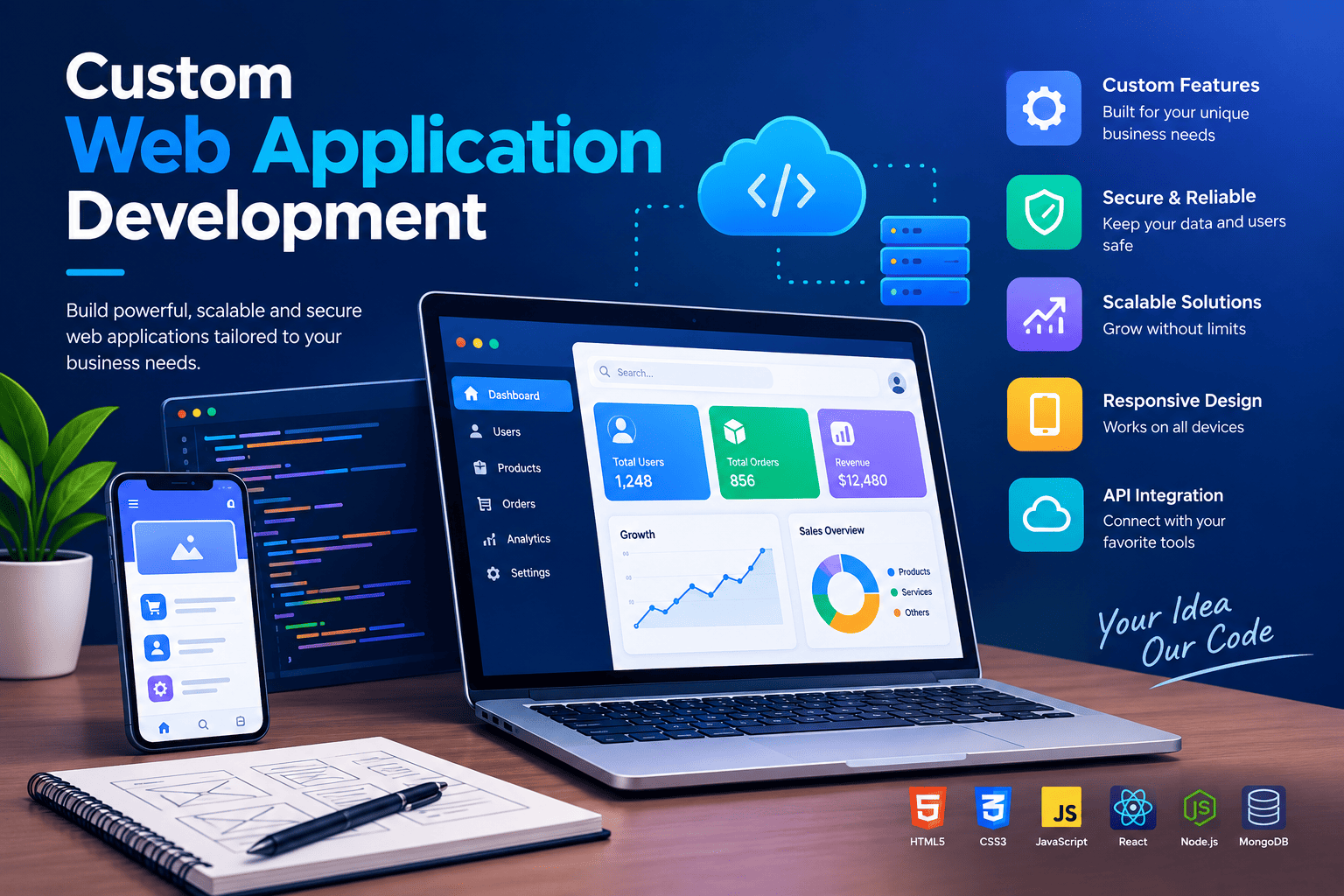
Custom web development is not limited to traditional websites. Developers can also create complete web applications.
A web application can allow users to log in, manage information, communicate with other users, make payments, create reports, or perform specialized tasks.
Examples include:
- Customer relationship management systems
- Online learning platforms
- Project management applications
- Booking systems
- E-commerce platforms
- Membership websites
- Business dashboards
- Inventory systems
- Financial management applications
These applications can be designed around the exact workflow of a business.
Benefits for Small Businesses

Small businesses can also benefit from custom web development. A professional website can help establish credibility and make it easier for potential customers to discover products and services online.
A custom website can also provide features that improve communication with customers, such as contact forms, live chat, appointment scheduling, customer accounts, and online ordering.
However, small businesses should consider their budget carefully. If their requirements are simple, a template-based solution may be more cost-effective.
Custom E-Commerce Development
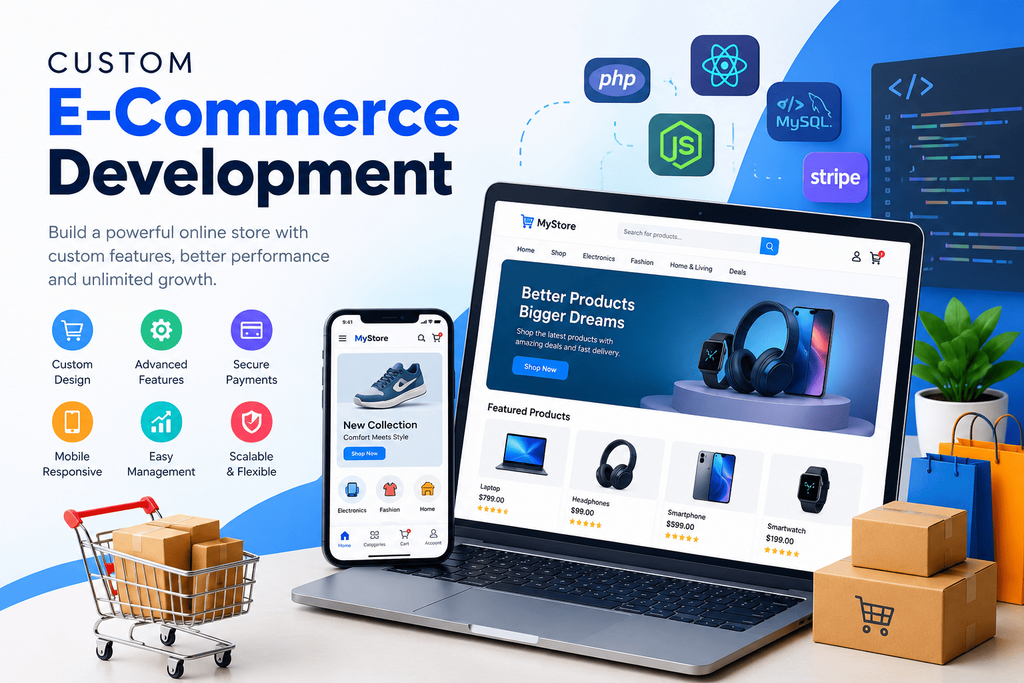
E-commerce is another major area where custom web development can provide significant benefits.
A custom e-commerce website can include customized product catalogs, shopping carts, payment systems, customer accounts, order tracking, inventory management, discount systems, and shipping integrations.
Businesses can also connect their websites with external services such as payment providers, shipping companies, accounting software, and inventory platforms.
A well-designed e-commerce website should make it easy for customers to search for products, compare options, complete purchases, and manage their orders.
Mobile-Friendly Custom Websites
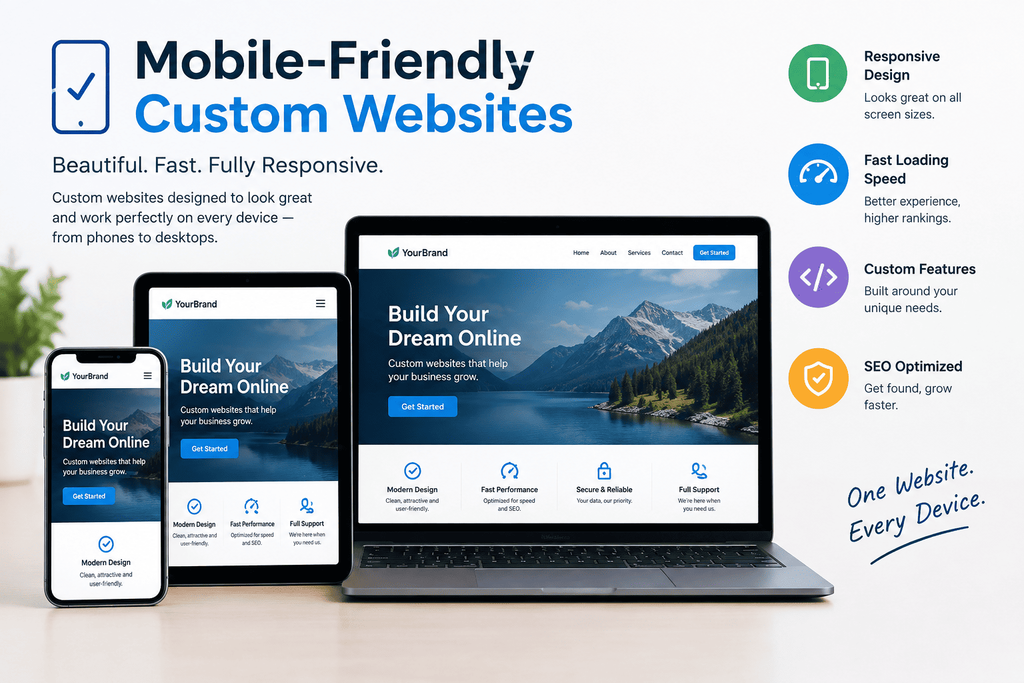
Most modern websites need to work properly on smartphones, tablets, laptops, and desktop computers.
Responsive web development allows website layouts to automatically adjust to different screen sizes. A custom development approach makes it possible to optimize the interface for different devices and user behaviors.
Mobile-friendly design can improve usability and help visitors navigate a website more comfortably.
SEO and Custom Web Development
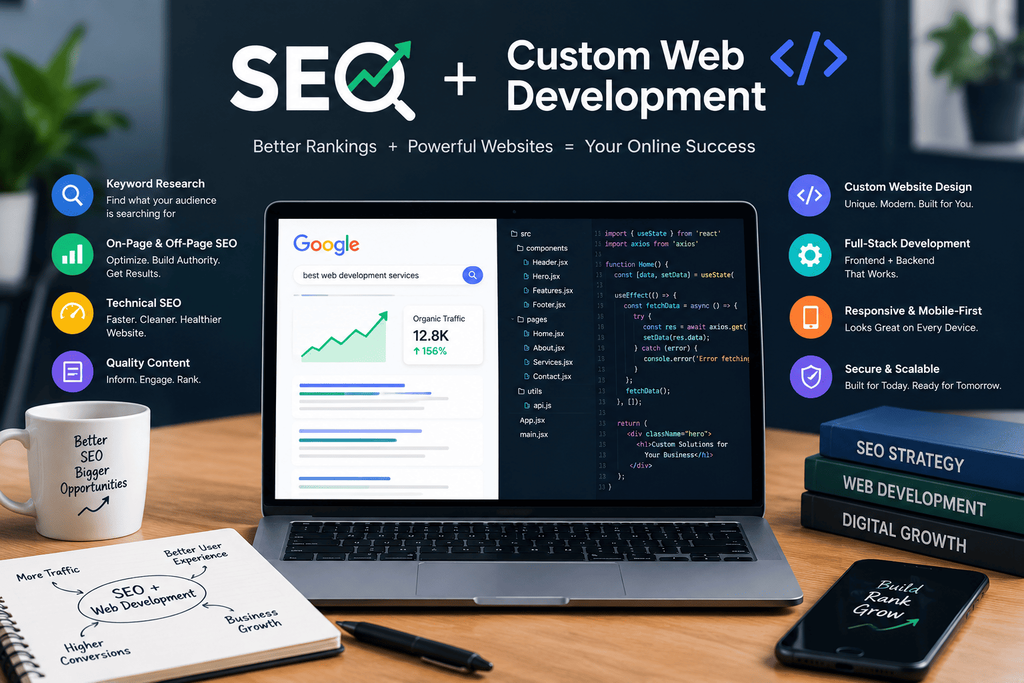
Search engine optimization, commonly known as SEO, can be considered during the development process.
A technically well-developed website can provide a strong foundation for SEO. Developers can implement clean website structures, mobile responsiveness, fast loading performance, accessible navigation, appropriate HTML elements, and other technical considerations.
However, custom development alone does not guarantee high search rankings. SEO also involves content quality, keyword research, backlinks, search intent, technical optimization, and ongoing improvements.
For a website targeting the keyword custom web development, useful supporting topics can include custom website design, web application development, responsive web development, e-commerce development, web development services, and software development.
Website Security
Security is an important part of modern web development. Websites may handle customer information, login credentials, payments, and other sensitive business data.
Custom development can include security practices such as secure authentication, data validation, access controls, encryption, secure APIs, regular updates, and monitoring.
Developers should also follow appropriate security standards and test applications for common vulnerabilities.
Custom API Integration
Many modern businesses rely on multiple software systems. APIs allow different applications to communicate with each other.
For example, an online store could connect with a payment provider, shipping platform, accounting system, email service, or customer management system.
Custom web development can create API integrations that automate information exchange and reduce manual work.
The Custom Web Development Process
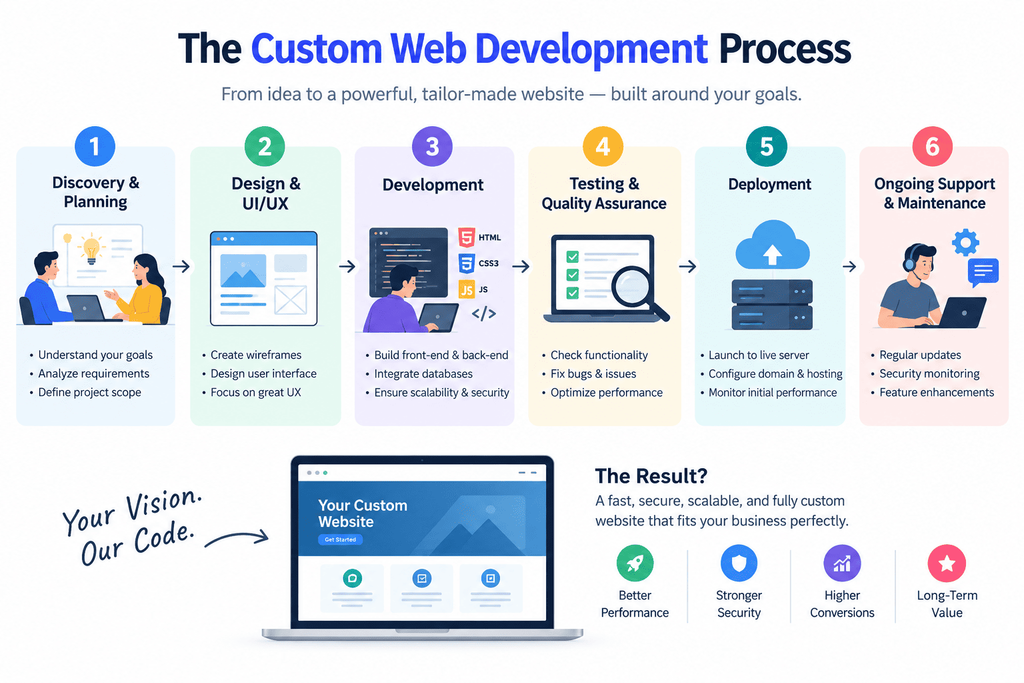
A successful project usually follows several stages.
1. Planning
The first step is understanding the business objectives, target audience, required features, budget, and project timeline.
2. Design
Developers and designers create the website structure, user interface, navigation, and visual elements.
3. Development
The development team builds the front end, back end, database, APIs, and required functionality.
4. Testing
The website is tested across different devices and browsers. Developers check functionality, performance, security, forms, links, and other important components.
5. Launch
After testing and approval, the website is deployed to a production server and made available to users.
6. Maintenance
Websites require ongoing maintenance. Updates, security improvements, performance monitoring, backups, and new features can help keep a website reliable.
How Much Does Custom Web Development Cost?
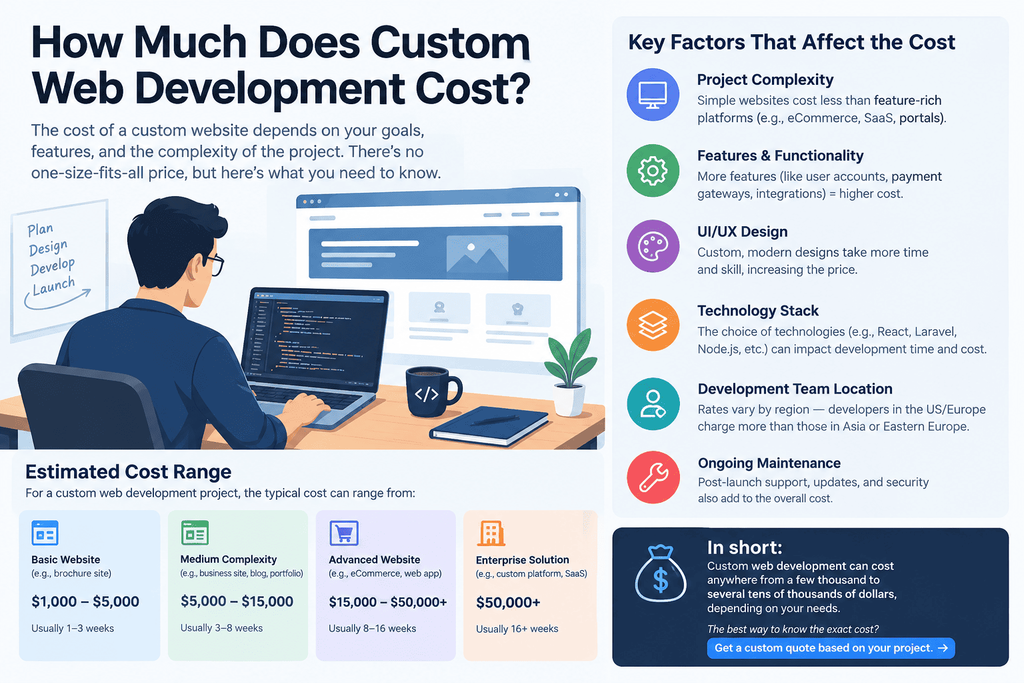
The cost of custom web development can vary significantly.
A simple custom website may cost considerably less than a complex web application with advanced integrations and user accounts. Factors that can affect cost include:
- Number of pages
- Design requirements
- Custom functionality
- E-commerce features
- Database complexity
- API integrations
- Security requirements
- Development time
- Maintenance needs
Businesses should focus on the value and requirements of the project rather than selecting a developer based solely on the lowest price.
How to Choose a Custom Web Development Company
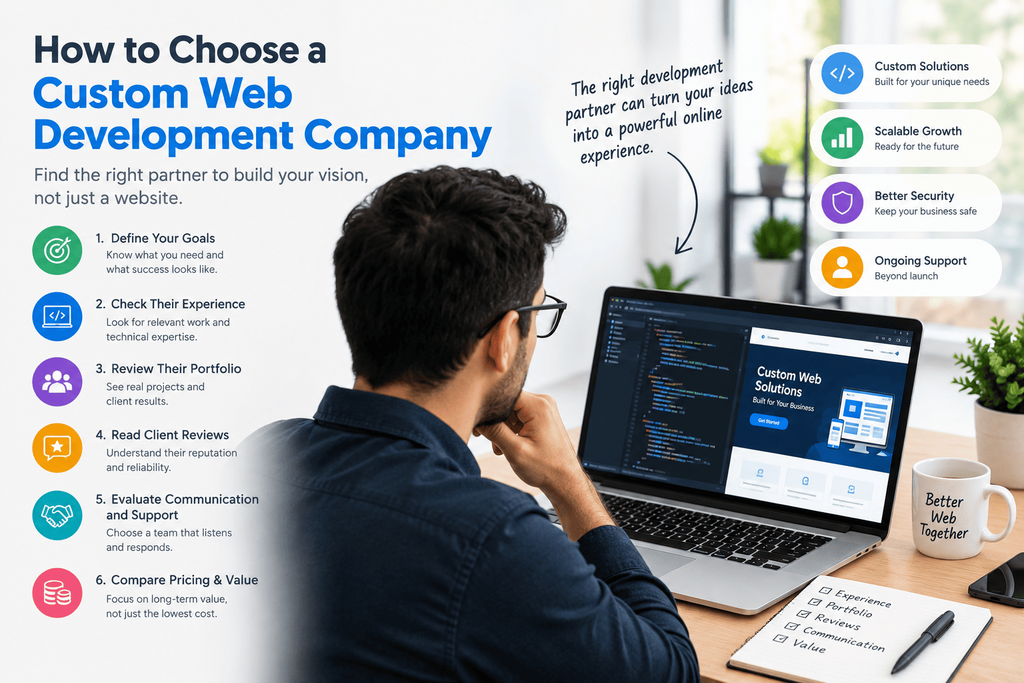
Choosing the right development partner is important. Businesses should review the developer’s previous projects, technical expertise, communication process, development approach, and support options.
It is also useful to clearly define project requirements before development begins. A detailed project plan can reduce misunderstandings and unexpected changes.
Ask potential developers about their experience with similar projects, security practices, testing process, maintenance services, and expected development timeline.
Future of Custom Web Development
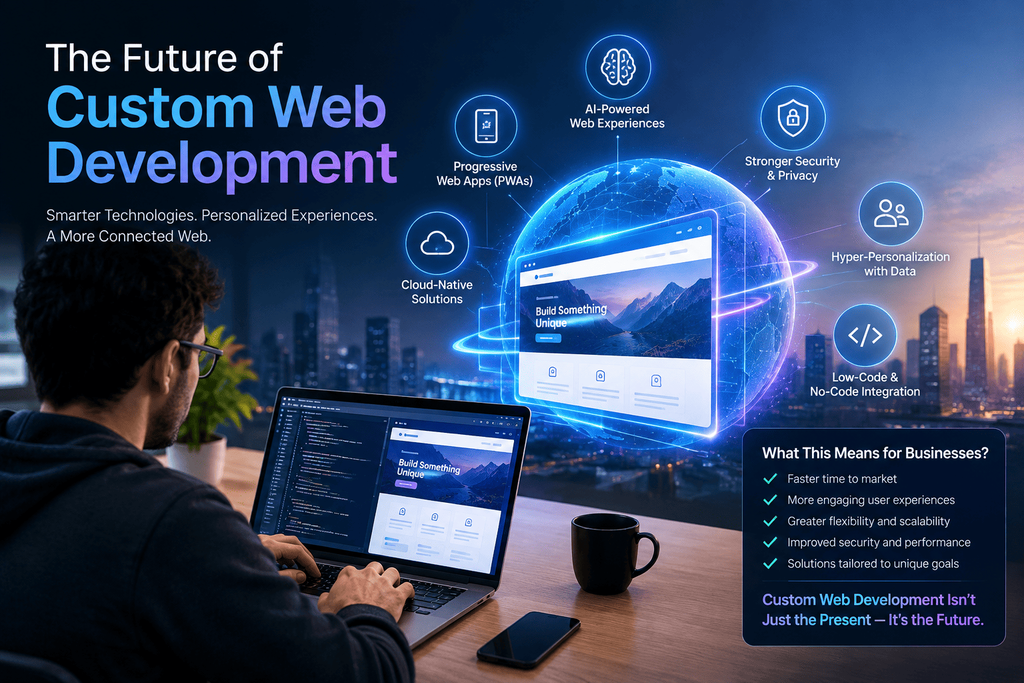
Web development continues to evolve as new technologies become available. Artificial intelligence, automation, cloud computing, progressive web applications, voice interfaces, and advanced web frameworks are changing the way websites and web applications are created.
AI-powered features can help businesses provide personalized recommendations, automated customer support, content assistance, data analysis, and intelligent search.
As businesses become more dependent on digital platforms, demand for flexible and scalable web solutions is likely to remain strong.
Conclusion
Custom web development provides businesses with the flexibility to create websites and web applications around their specific goals. Unlike standard templates, custom solutions can provide unique designs, advanced functionality, integrations, scalability, and greater control over the overall digital experience.
Whether a business needs a professional corporate website, an e-commerce store, a customer portal, or a complex web application, custom development can provide a solution tailored to its requirements.
Before starting a project, businesses should carefully define their goals, required features, target audience, budget, and long-term plans. Choosing the right development approach can help create a website that not only looks professional but also supports business growth and provides a better experience for customers.
Frequently Asked Questions (FAQs)
Q: What are custom web development services?
A: Custom web development services involve building a tailored website or web application from the ground up to match your specific business requirements, workflow, and branding. Unlike off-the-shelf templates, every feature, design element, and codebase is constructed specifically for your business goals.
Q: How does custom web development differ from using pre-built templates like WordPress or Wix?
A: Pre-built templates offer quick setups using standardized layouts, but they often come with unnecessary bloat, security vulnerabilities, and limited customization options. Custom web development gives you complete control over your site’s functionality, superior loading speeds, scalable architecture, and unique branding that adapts as your business grows.
Q: How much does custom web development cost?
A: The investment depends on project scope, functional complexity, third-party integrations, and design requirements. Simple corporate custom sites usually fall in a lower tier, while feature-rich e-commerce platforms or enterprise web applications require larger budgets. Detailed scope discovery yields precise, fixed-cost estimates before work begins.
Q: How long does it take to build a custom website?
A: Timeline depends directly on project scale:
- Basic Custom Business Sites: 4 to 8 weeks
- Complex E-Commerce Platforms: 8 to 16 weeks
- Enterprise Web Applications: 16+ weeks
This covers discovery, wireframing, UI/UX design, front-end and back-end development, testing, and launch.
Q: Will my custom website be mobile-friendly and optimized for search engines (SEO)?
A: Yes. Modern custom development uses a mobile-first approach, ensuring seamless performance across all screen sizes. Custom sites excel at technical SEO because clean code, fast load times, semantic HTML, and structured data schema are built natively into the architecture without template bloat.
Q: Do I own the source code and website assets once the project is finished?
A: Absolutely. Upon final payment, you retain 100% full ownership of all source code, design assets, and intellectual property. You won’t be locked into proprietary platforms or restricted by licensing limitations.
Q: What post-launch support and maintenance options do you offer?
A: Post-launch support includes ongoing technical maintenance, security monitoring, server optimization, content updates, and continuous feature updates to keep your web solution operating smoothly and securely.
Custom Web Development FAQs
What is custom web development, and why is it better than standard templates?
Custom web development involves building a website or web application from the ground up to fit your exact business workflows, security needs, and customer UX requirements. Unlike off-the-shelf templates (like standard WordPress or Wix setups), custom solutions offer superior site speed, tailored security features, seamless API integrations, and unlimited scalability as your business grows.
How much does custom web development cost?
Custom web app development generally ranges from $15,000 to $100,000+, depending on functional complexity, integrations, design requirements, and backend architecture. Basic custom websites start on the lower end, while complex SaaS platforms or multi-system enterprise portals fall into higher tiers.
How long does it take to design and launch a custom web application?
A typical custom web app project takes 12 to 24 weeks from discovery to deployment:
- Discovery & Wireframing: 2–4 weeks
- UI/UX Design & Architecture: 3–5 weeks
- Development & Backend Setup: 6–10 weeks
- Testing, QA & Deployment: 2–4 weeks
How does custom web development help my business outperform competitors?
Custom development gives you a competitive advantage through faster page load times (which boosts SEO rankings), zero dependency on rigid third-party plugins, custom automated workflows that cut operational costs, and a unique user experience tailored specifically to increase conversion rates.
What tech stack is typically used for custom web application development?
Modern custom web applications rely on fast, scalable technologies:
- Front-End: React, Next.js, Vue.js, or Angular
- Back-End: Node.js, Python (Django/FastAPI), Ruby on Rails, or Go
- Databases: PostgreSQL, MongoDB, or Redis
- Cloud & Hosting: AWS, Google Cloud, or Azure with CI/CD deployment pipelines
Will I own the code after the custom web development project is finished?
Yes. Upon final payment, you receive 100% full ownership of the intellectual property, source code, design assets, and database architecture, ensuring complete vendor independence.