
If you are searching for a “coding summer camp near me,” you are probably looking for more than a way to keep your child busy during summer break. A good coding camp can help children develop technology skills, creativity, problem-solving abilities, and confidence while giving them an opportunity to make friends and work on exciting projects.
Coding summer camps have become increasingly popular because they combine education with hands-on activities such as game development, robotics, web design, Python programming, Scratch, Minecraft coding, and artificial intelligence. Programs vary significantly by age, skill level, schedule, teaching style, and price, so choosing the right one requires some research.
This guide explains what to look for when searching for a coding summer camp near you and how to choose a program that fits your child’s interests and experience.
What Is a Coding Summer Camp?
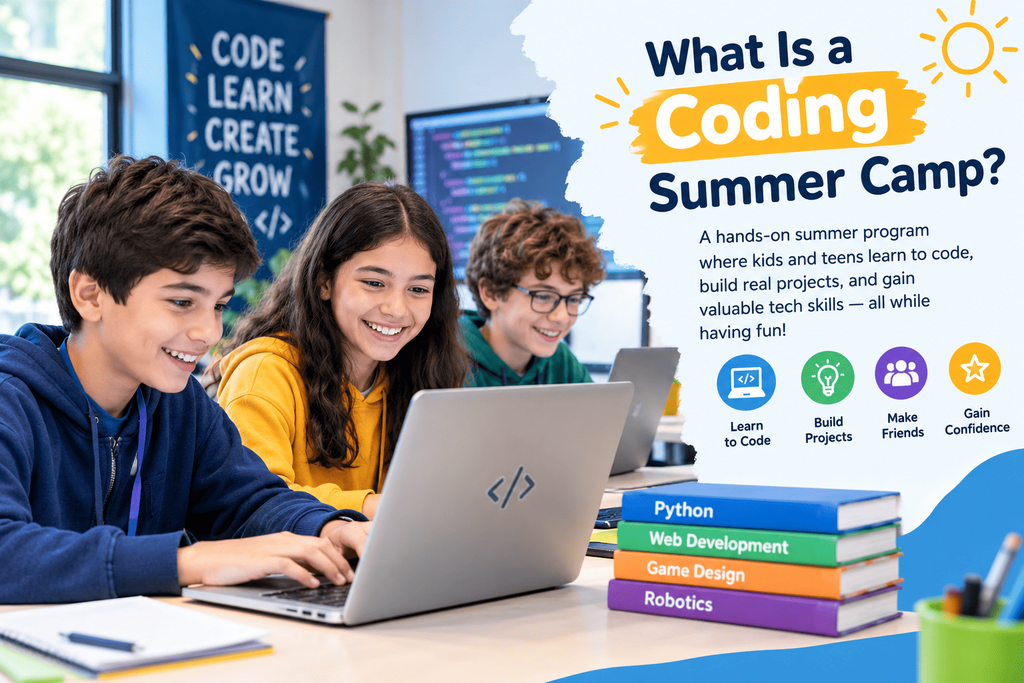
A coding summer camp is an educational summer program where children and teenagers learn computer programming and related technology skills in an interactive environment.
Instead of spending the entire day learning from textbooks, students typically learn through projects and challenges. Depending on the camp, they might create a video game, build a website, program a robot, develop a Minecraft project, or learn a programming language such as Python.
Some camps are designed specifically for beginners, while others offer intermediate and advanced courses. For example, current programs around the country may offer topics ranging from Scratch and game development to Python, robotics, JavaScript, AI, and web development.
The best programs make coding feel like an activity rather than traditional classroom work.
Why Choose a Coding Summer Camp?
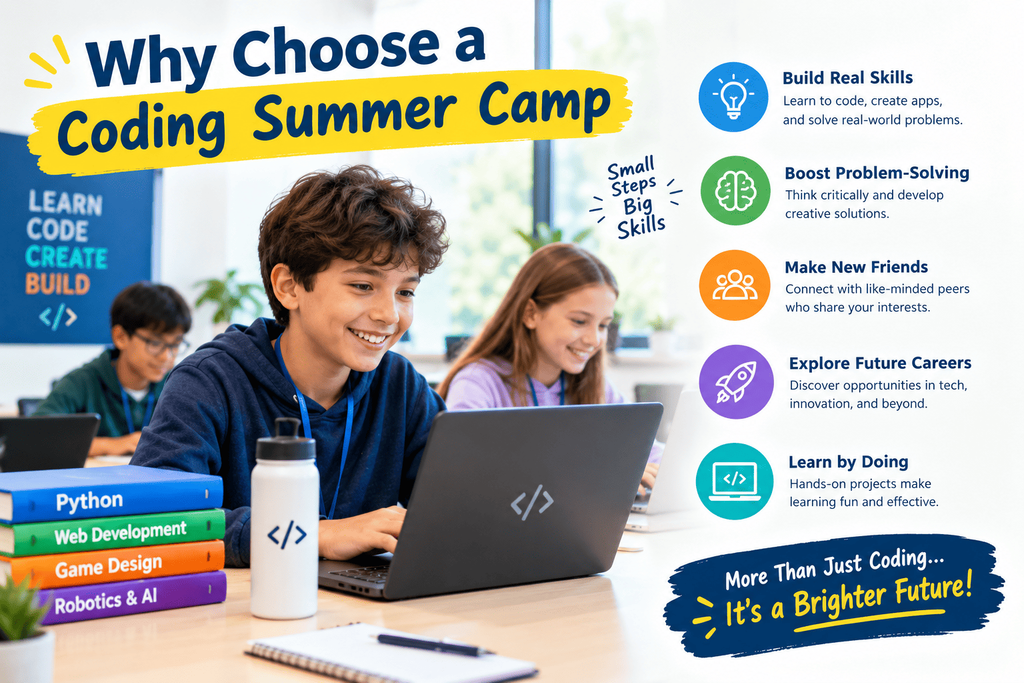
There are several reasons parents consider coding camps for their children.
1. Children Learn Valuable Technology Skills
Technology is an important part of modern education and many careers. Learning how software works can give students a useful foundation for future studies.
A coding camp introduces students to concepts such as:
- Variables
- Loops
- Conditional statements
- Problem-solving
- Algorithms
- Debugging
- Logical thinking
- Project design
- Computational thinking
Beginners may start with visual block-based programming, while older or more experienced students may move into text-based languages such as Python or JavaScript.
2. Coding Encourages Problem-Solving
Programming is essentially a process of solving problems. A student writes instructions, tests them, discovers mistakes, and changes the code until the program works.
That process teaches persistence.
For example, if a student’s game does not respond correctly when a player presses a button, the student has to investigate the problem. This encourages experimentation instead of simply memorizing information.
Many coding and robotics camps specifically emphasize logic, reasoning, perseverance, design thinking, and problem-solving.
3. Students Can Build Real Projects
One of the biggest advantages of a project-based coding camp is that students can create something they can actually see and use.
Depending on the program, projects may include:
- Video games
- Websites
- Mobile applications
- Animations
- Robots
- Minecraft modifications
- Interactive stories
- Digital art
- Python programs
- Arduino projects
For younger children, Scratch can provide an approachable introduction to programming through games, stories, and animations. Older students may work with Python or other text-based programming languages.
Completing a project can also give students a sense of accomplishment and motivate them to continue learning after camp ends.
What Can Children Learn at a Coding Summer Camp?
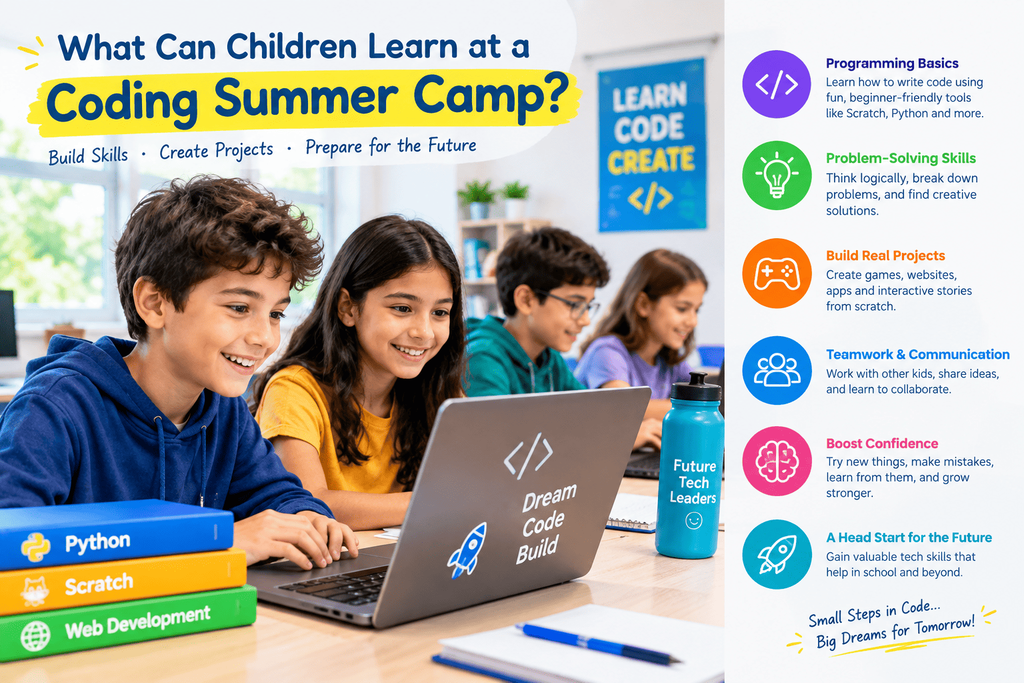
The curriculum depends on the camp, but there are several popular areas to consider.
Scratch Coding
Scratch is often used to introduce younger students to programming. Its visual block-based system allows children to create games, animations, and interactive stories without worrying about complicated syntax.
It can be a good choice for children who have never programmed before.
Python Programming
Python is another popular choice, particularly for older students and beginners ready for text-based programming.
Students can learn concepts such as variables, loops, functions, conditions, lists, and other programming fundamentals. Some camps use Python for game development or robotics projects.
Game Development
Game development can be an excellent way to make coding engaging.
Students may learn how characters move, how scoring works, how levels are designed, and how programming controls game behavior. Some programs combine programming with platforms such as Roblox or Minecraft. Current summer programs offer game-building activities alongside Python, robotics, and other technology subjects.
Robotics
Robotics combines programming with physical building.
Students may design, build, and program robots to complete challenges. This can make abstract programming concepts easier to understand because children can immediately see the physical results of their code.
Some programs combine Scratch or block coding with Python and robotics challenges.
Web Development
Older students may enjoy learning how websites are created. A web development camp might introduce HTML, CSS, JavaScript, and basic website design.
This can be particularly useful for students who are interested in creating their own websites or exploring technology as a future career.
How to Find a Coding Summer Camp Near Me
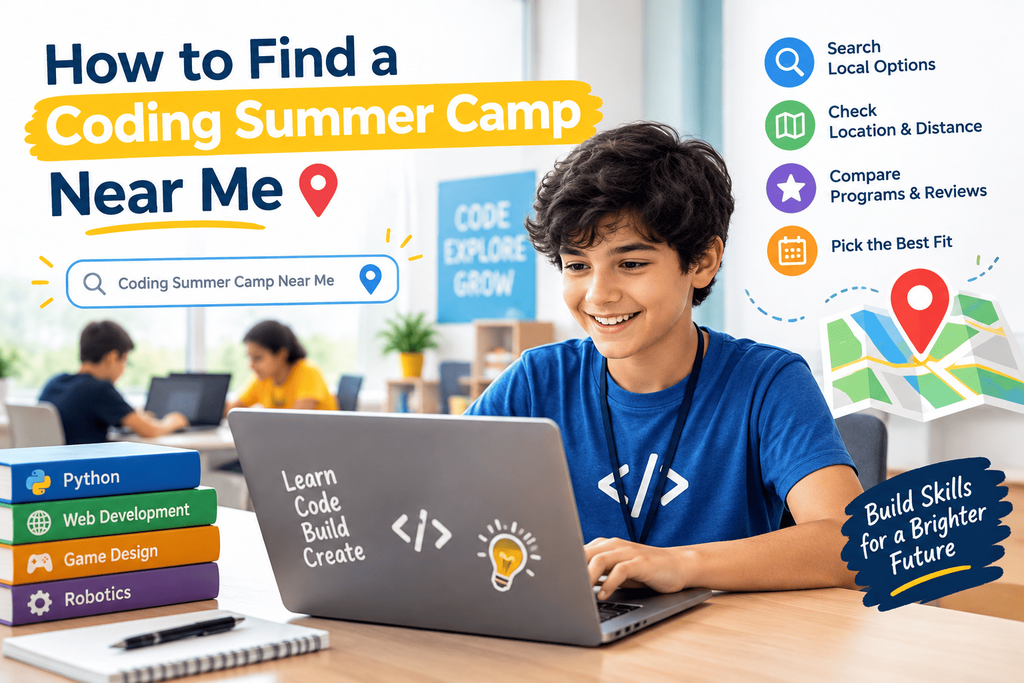
When searching online for a coding summer camp near me, start by identifying programs within a reasonable driving distance.
Search using phrases such as:
- Coding summer camp near me
- Kids coding camp near me
- Python summer camp near me
- Robotics and coding camp near me
- Computer science summer camp near me
- STEM coding camp near me
- Game development summer camp near me
- Teen coding camp near me
You can also search by your city, ZIP code, or neighborhood.
Several directories allow parents to compare coding camps by location, age, skill level, schedule, and price.
Local universities, community centers, schools, technology organizations, and specialized coding schools may also offer summer programs.
In-Person vs. Online Coding Camps
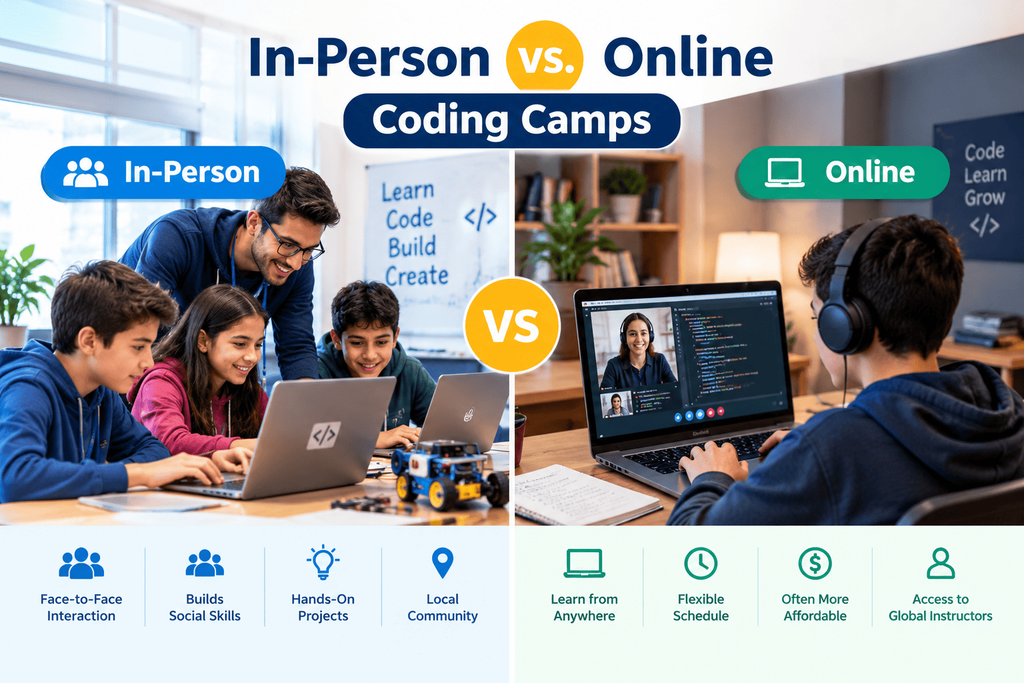
Another important decision is whether your child should attend an in-person or online camp.
In-Person Camps
In-person programs allow students to interact directly with instructors and other children.
Benefits can include:
- Face-to-face instruction
- Group projects
- Social interaction
- Hands-on robotics
- Structured daily schedules
- A dedicated learning environment
For children who enjoy teamwork and hands-on activities, an in-person camp may be a great choice.
Online Camps
Online coding camps can be more convenient for families who do not have a suitable local program.
Students can learn from home and may have access to instructors and specialized courses that are not available nearby. Some providers offer live online programs covering Scratch, Python, game development, robotics, AI, and other subjects.
The right choice depends on your child’s learning style and your family’s schedule.
What Age Is Best for Coding Camp?
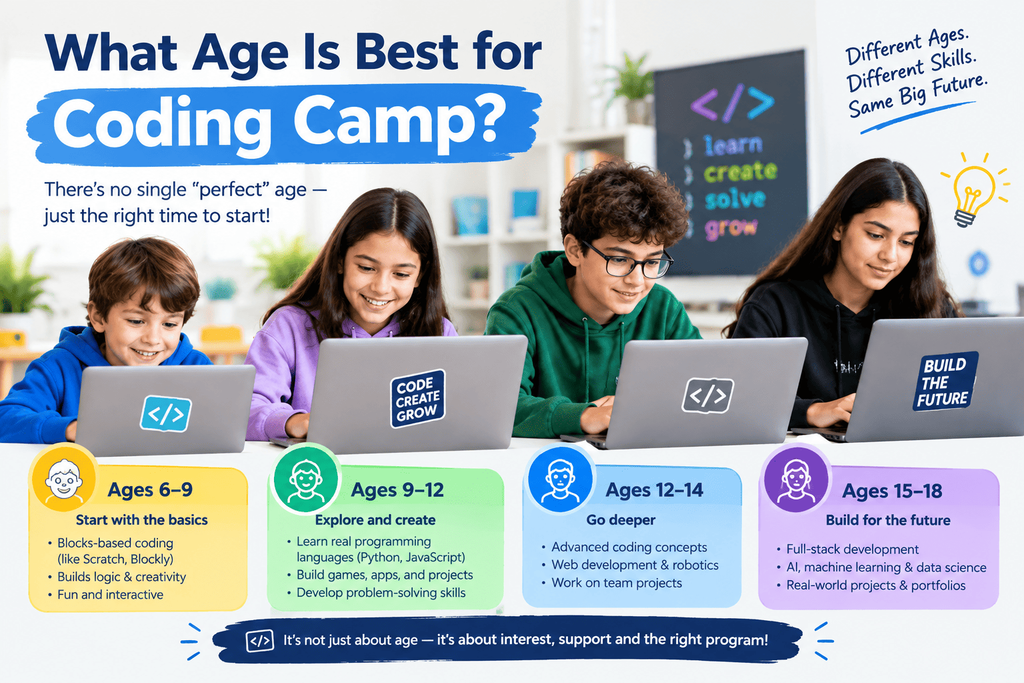
There is no single best age to start coding.
Some programs introduce programming to children as young as 6 or 7 using visual tools such as Scratch. Other programs are designed for teenagers and focus on Python, JavaScript, robotics, web development, or advanced computer science.
For younger children, look for programs that emphasize creativity and simple projects rather than complicated programming concepts.
For middle-school students, game development, robotics, Minecraft coding, and beginner Python can be attractive options.
Teenagers may benefit from more advanced courses involving Python, JavaScript, artificial intelligence, web development, data science, or competitive robotics.
The most important factor is not simply age—it is whether the curriculum matches the student’s current ability.
What Should Parents Look for in a Coding Camp?
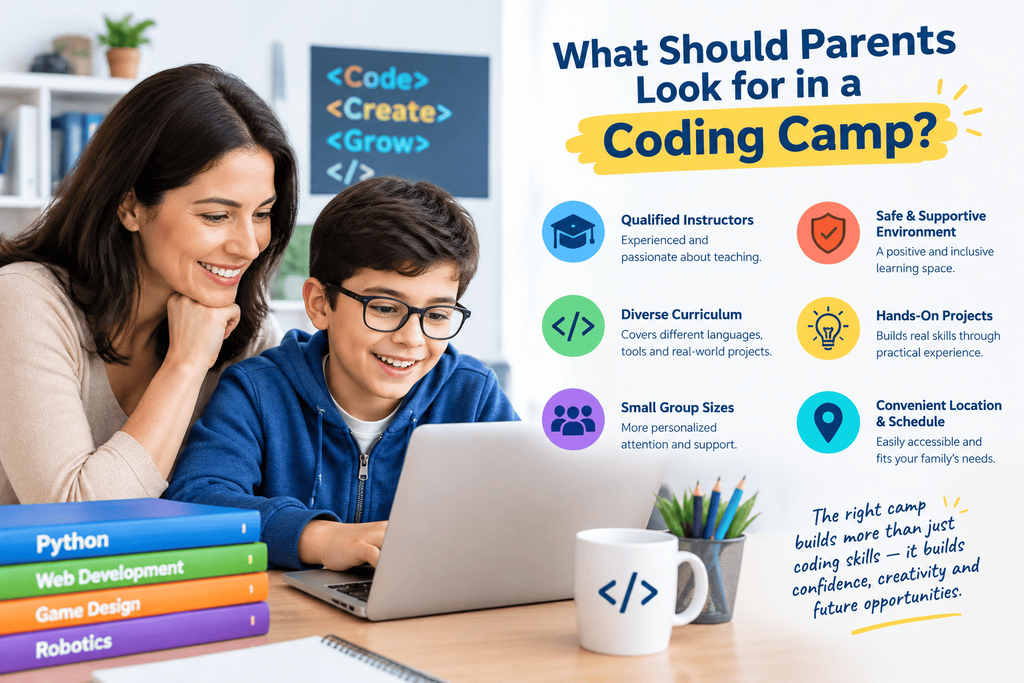
Before registering, consider several factors.
Curriculum
Look at exactly what students will learn. A camp with an attractive title may not necessarily teach the skills your child wants.
Check whether the program includes hands-on projects, programming practice, and age-appropriate instruction.
Instructor Experience
Find out who teaches the students. Experienced instructors can make a significant difference, especially when children encounter difficult programming problems.
Class Size
Smaller classes may provide more opportunities for individual assistance. Some coding programs specifically advertise small-group instruction so instructors can provide more personalized attention.
Schedule
Check the start and end times carefully.
Some camps run for half a day, while others operate as full-day programs. Some offer before- and after-care options for working parents.
Cost
Prices vary widely depending on location, duration, curriculum, and facilities.
Do not automatically choose the cheapest camp. Instead, compare what is included, such as instruction, equipment, projects, meals, extended care, and materials.
Beginner-Friendly Programs
If your child has never coded before, make sure the camp accepts beginners.
A program designed for advanced students could be frustrating for a complete beginner.
Questions to Ask Before Registering
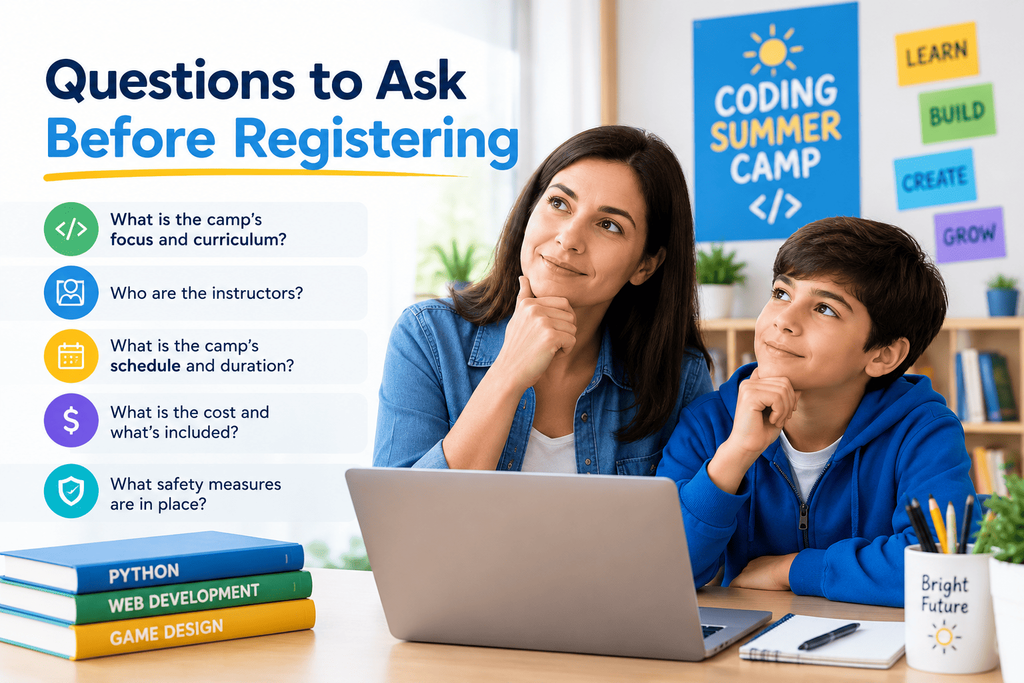
Before choosing a camp, parents can ask:
- What age groups do you accept?
- Is previous coding experience required?
- What programming languages will students learn?
- How many students are in each class?
- Who teaches the program?
- What projects will students complete?
- Is the program full-day or half-day?
- Are computers or other equipment provided?
- What happens if my child needs additional help?
- Is there an online option?
- What is included in the registration fee?
- What are the cancellation and refund policies?
Getting answers to these questions can help you avoid choosing a camp that does not match your child’s needs.
Making Coding Fun During Summer
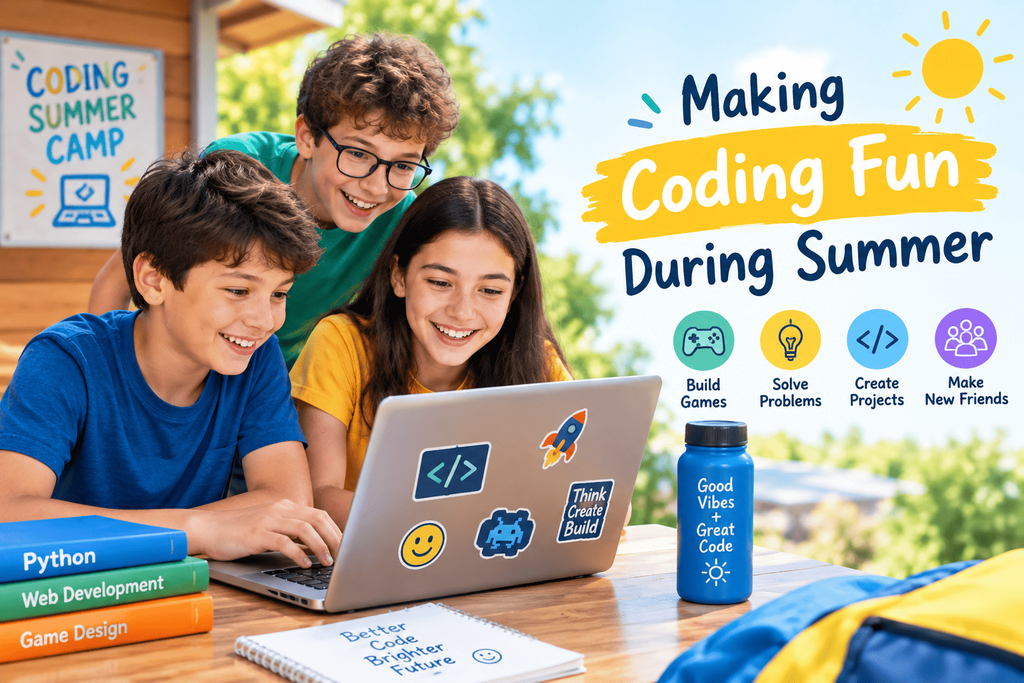
The best coding summer camps do not make students feel like they are simply attending another school.
Instead, they connect programming with activities children already enjoy.
A child who loves video games might enjoy game development. A child interested in building things might prefer robotics. Someone who enjoys creative storytelling might love Scratch animation. A student interested in computers may want to explore Python or web development.
Project-based learning can make the experience more meaningful because students have a goal to work toward.
Some camps also combine coding with robotics, science, art, engineering, and other STEM activities.
Final Thoughts
Searching for a coding summer camp near me is an excellent starting point for parents who want their children to spend summer learning useful technology skills.
The right camp should match your child’s age, experience, interests, learning style, schedule, and budget. Whether your child wants to create games, program robots, learn Python, design websites, or simply discover what coding is all about, there are many types of programs available.
Most importantly, look for a camp where students are encouraged to experiment, solve problems, collaborate, and create. A positive first experience with coding can turn a summer activity into a long-term interest in technology and computer science.
Before registering, compare several nearby programs, review their curriculum, check instructor qualifications, understand the schedule and cost, and make sure the activities are appropriate for your child’s skill level.
With the right program, a coding summer camp can be much more than something to do during school vacation—it can be an enjoyable introduction to creativity, technology, and the possibilities of programming.
Kids Coding Summer Camp FAQs
What age groups can participate in coding summer camps?
Coding camps cater to ages 5 to 18, separated by skill level:
- Ages 5–7: Visual block coding (ScratchJr, basic logic).
- Ages 8–12: Game development, robotics, Python, and Minecraft/Roblox modding.
- Ages 13–18: Full-stack web development, Python, C++, Java, and AI applications.
Does my child need prior coding experience to attend?
No prior experience is required. Camps offer beginner, intermediate, and advanced tracks. Beginners learn core logic and fundamentals, while experienced coders work on advanced projects.
How do I find the best coding summer camp near me?
Look for these key factors when choosing a local program:
- Student-to-Teacher Ratio: Ideal ratios range from 5:1 to 9:1 for personalized guidance.
- Hands-on Projects: Ensure kids build real games, apps, or websites to take home.
- Balanced Schedule: Quality camps pair screen time with outdoor breaks and team activities.
- Flexible Hours: Check for extended morning/afternoon drop-off options.
Are kids sitting at a computer all day during camp?
No. Balanced tech camps split the day between hands-on instruction on computers and screen-free activities, including outdoor games, recreation, team problem-solving, and lunch breaks.
What equipment or hardware does my child need to bring?
Requirements vary by location:
- In-Person Camps: Most centers provide laptops, tablets, and robotics kits. Some locations ask campers to bring a personal Windows/Mac laptop.
- Camp Essentials: Campers typically bring a packed lunch, snacks, and a water bottle.
How much does a kids’ coding summer camp cost?
In-person day camps generally cost $300 to $800 per week, depending on session duration (half-day vs. full-day) and specialized equipment (e.g., robotics or AI modules). Virtual or half-day options often start at lower rates.