
Delta Computer Systems is a name associated with technology solutions designed to help organizations improve performance, reliability, and efficiency. As businesses become increasingly dependent on digital systems in 2026, computer technology is playing a larger role in communication, data management, automation, cybersecurity, and everyday operations. Modern organizations need solutions that can handle growing workloads while remaining secure, flexible, and easy to manage.
The technology landscape has changed significantly in recent years. Cloud computing, artificial intelligence, advanced networking, automation, and cybersecurity are no longer limited to large technology companies. Businesses of different sizes are adopting these technologies to improve productivity and compete in a rapidly changing digital environment.
Delta Computer Systems represents the broader movement toward smarter and more connected technology solutions. From computer infrastructure and networking to data protection and intelligent automation, modern technology providers can help businesses build systems that are more reliable and prepared for future demands.
In this article, we explore five game-changing tech solutions associated with the modern computer systems landscape in 2026 and explain how these technologies can benefit businesses, organizations, and professional users.
1. Advanced Computer Infrastructure
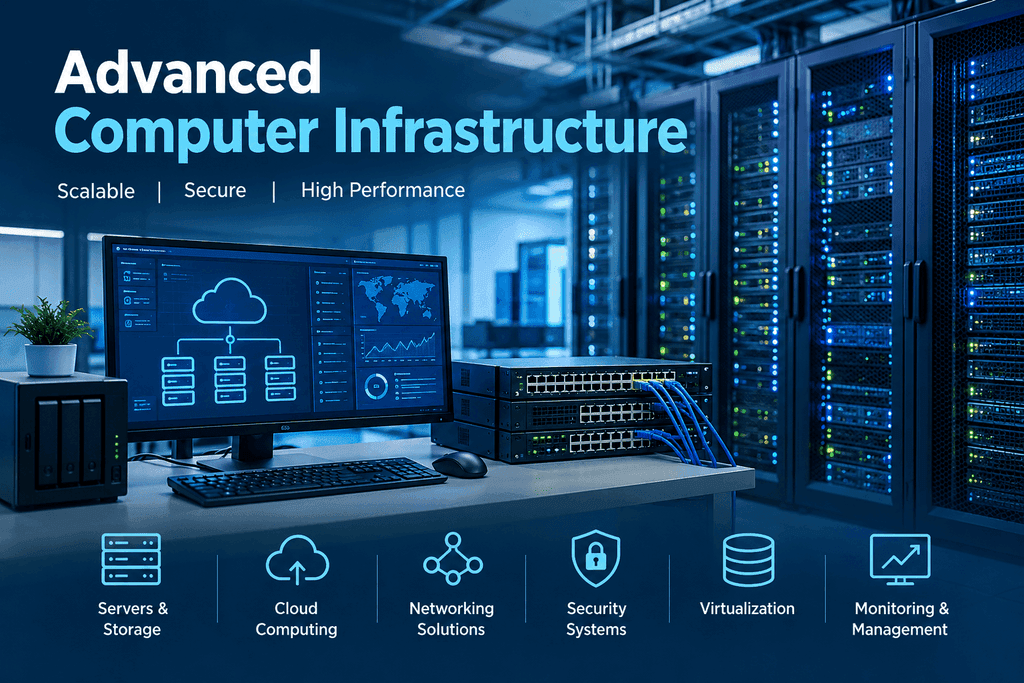
Reliable computer infrastructure is the foundation of modern digital operations. Every organization depends on computers, servers, storage systems, networking equipment, and software to perform everyday tasks.
In 2026, computer infrastructure is becoming more powerful and flexible. Organizations are no longer relying only on traditional desktop computers and physical servers. Modern environments can combine local computing systems with cloud resources, remote devices, virtual machines, and specialized hardware.
This approach allows businesses to select computing resources according to their specific requirements. For example, an organization handling large amounts of data may need powerful processors and high-capacity storage, while a small business may benefit from a simpler and more affordable infrastructure setup.
Performance is another important factor. Modern processors and storage technologies allow applications to run faster and handle larger workloads. Solid-state storage, high-speed networking, and improved memory technologies can reduce delays and improve the overall user experience.
A well-designed computer infrastructure can also make maintenance easier. Centralized management allows IT teams to monitor devices, identify problems, apply updates, and maintain system performance.
For businesses planning their technology strategy in 2026, building reliable infrastructure is an important first step toward digital transformation.
2. Artificial Intelligence and Intelligent Automation
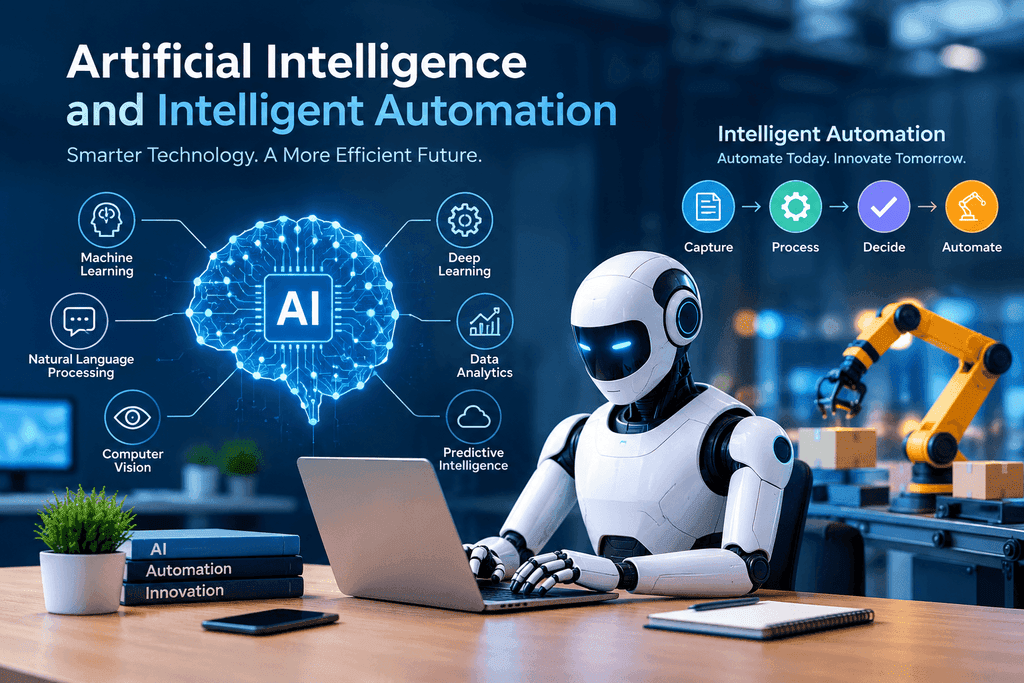
Artificial intelligence is one of the biggest technology developments influencing computer systems in 2026. AI is increasingly being used to analyze information, automate repetitive tasks, improve customer service, and support business decisions.
For computer systems, AI can provide useful automation capabilities. Instead of requiring employees to perform every repetitive task manually, intelligent software can handle certain processes automatically.
For example, AI-powered systems can help organize large amounts of information, detect unusual activity, analyze business data, and provide recommendations. This can allow employees to spend more time on creative and strategic work.
AI is also becoming increasingly important in IT management. Intelligent monitoring systems can analyze system behavior and identify potential problems before they become major failures. This type of predictive approach can help organizations reduce downtime.
Another major development is AI-powered assistants. Businesses can use intelligent assistants to help employees find information, summarize documents, generate content, answer questions, and perform routine digital tasks.
However, organizations must implement AI responsibly. Data privacy, security, accuracy, and human oversight remain important considerations.
The biggest advantage of AI is not simply automation. Its real value comes from helping people make better use of their time and information.
3. Advanced Networking and Connectivity
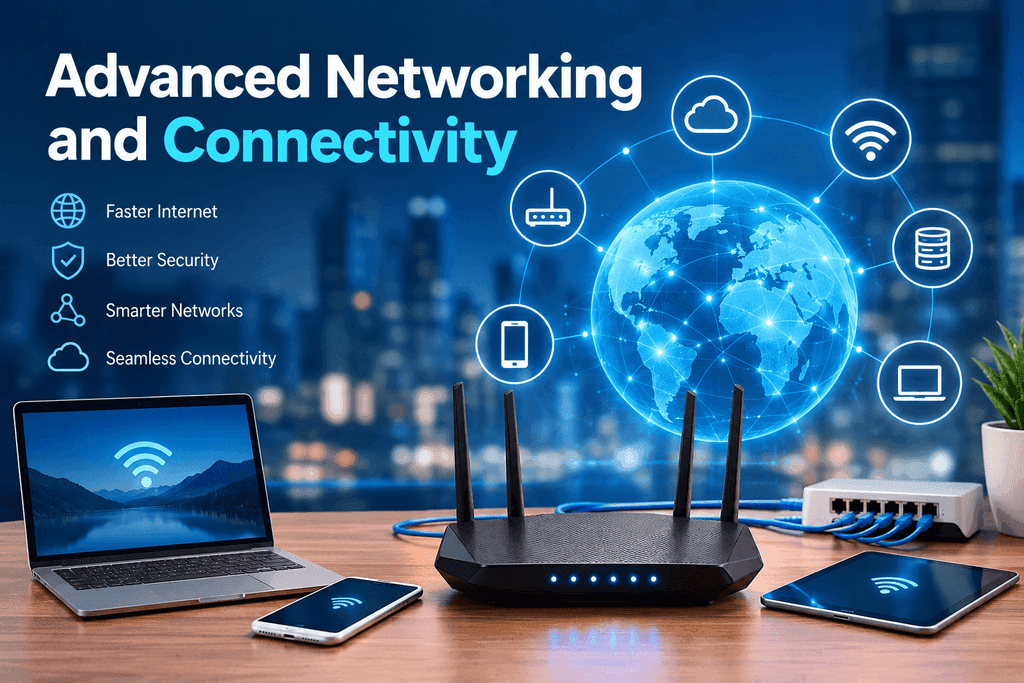
Modern businesses depend heavily on fast and reliable networks. Employees need connectivity to access applications, communicate with colleagues, share files, use cloud services, and connect to remote systems.
Advanced networking technologies are therefore another important part of the modern computer systems environment.
In 2026, organizations are increasingly supporting hybrid work environments in which employees may work from offices, homes, or other locations. This creates new networking requirements.
A modern network needs to provide reliable access while also protecting sensitive information. Wireless networking, high-speed internet connections, secure remote access, and network monitoring can all contribute to better connectivity.
Network management is also becoming more intelligent. Automated monitoring can help IT teams identify unusual traffic patterns, connection problems, and potential security issues.
Modern networking is not only about speed. Reliability, scalability, security, and management are equally important.
For example, a business that grows from 20 employees to 100 employees needs a network capable of handling increased devices and traffic. A scalable network infrastructure can make this growth easier without requiring the organization to completely replace its technology environment.
Reliable connectivity also supports cloud computing and other digital services. As more applications move online, network performance becomes increasingly important to everyday productivity.
4. Cybersecurity and Data Protection

As technology becomes more important, cybersecurity becomes equally important. Businesses store valuable information on computers, servers, cloud platforms, and other digital systems.
Cyberattacks can result in data loss, financial damage, operational interruptions, and reputational problems. This makes cybersecurity a critical part of modern computer systems.
In 2026, cybersecurity strategies are becoming more comprehensive. Instead of relying on a single security product, organizations are using multiple layers of protection.
These layers can include firewalls, endpoint security, identity management, encryption, secure authentication, backups, monitoring, and employee security training.
Strong authentication is particularly important. Organizations need to make sure that only authorized users can access sensitive systems and information.
Data backups are another essential component. Even when an organization has strong security controls, unexpected events can still occur. A reliable backup strategy can help organizations recover important information after hardware failures, accidental deletion, or security incidents.
Employee education also plays an important role. Phishing attacks and social engineering can target people rather than technical systems. Teaching employees how to recognize suspicious emails, links, and requests can reduce security risks.
Modern cybersecurity should therefore combine technology, policies, monitoring, and user awareness.
For companies developing their technology strategy, security should not be treated as an optional feature. It should be built into the infrastructure from the beginning.
5. Cloud Computing and Scalable Digital Solutions
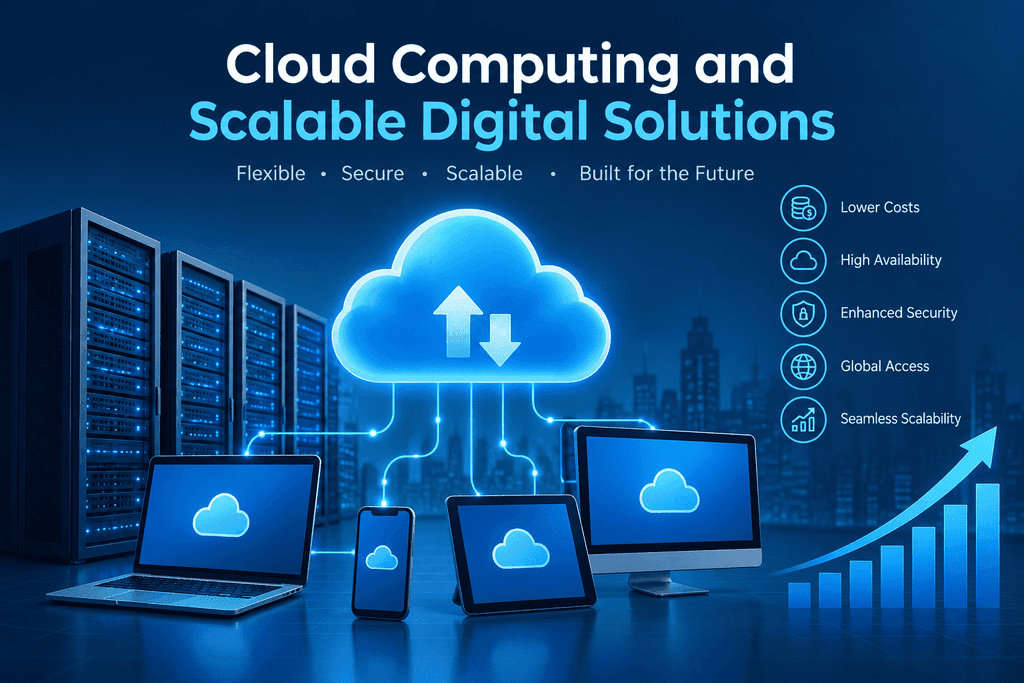
Cloud computing has transformed the way organizations use computer resources. Instead of purchasing and maintaining every server and application locally, businesses can access computing resources through cloud platforms.
This can provide flexibility and scalability. Organizations can increase or decrease resources according to their needs rather than relying entirely on fixed hardware.
Cloud solutions can also support remote work. Employees can access applications and information from different locations, provided they have appropriate authorization and a secure internet connection.
Another advantage is collaboration. Cloud-based applications can allow multiple users to work with shared documents, data, and business systems.
However, cloud computing also requires careful planning. Organizations need to consider security, access controls, data privacy, performance, and costs.
A good cloud strategy does not necessarily mean moving everything to the cloud. Some organizations may benefit from a hybrid approach that combines local infrastructure with cloud services.
This approach can provide flexibility while allowing businesses to keep certain workloads or sensitive information within their own infrastructure.
In 2026, cloud computing is becoming less about simply storing files online and more about building flexible digital environments that can support applications, data, AI, collaboration, and business operations.
Why These Technologies Matter in 2026
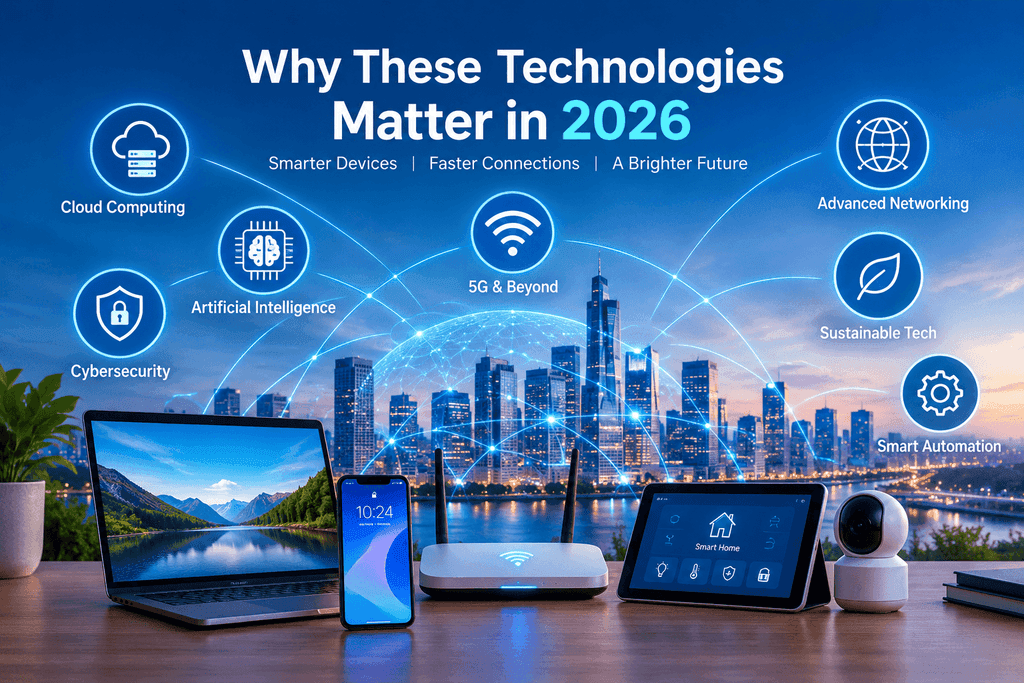
The five technologies discussed above are connected. Advanced computer infrastructure provides the foundation, while networking connects users and systems. Cloud computing provides scalability, AI adds intelligent capabilities, and cybersecurity protects the entire environment.
Businesses that adopt these technologies strategically can improve their ability to respond to changing requirements.
For example, a company could use cloud computing to provide employees with remote access, AI to automate repetitive tasks, advanced networking to connect locations, and cybersecurity tools to protect data.
The result is a more connected and flexible technology environment.
However, organizations should avoid adopting technology simply because it is popular. Every technology investment should solve a real problem or provide measurable value.
Before implementing a new system, businesses should evaluate their current infrastructure, identify weaknesses, define their goals, and determine which technologies can provide the greatest benefit.
Benefits of Modern Computer Solutions
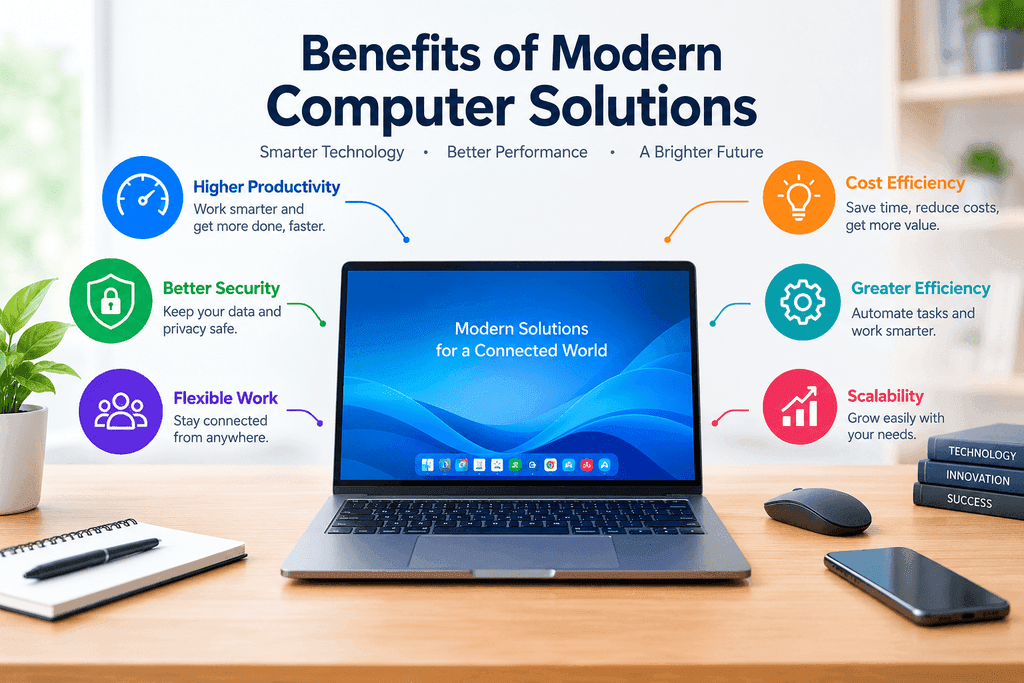
Modern computer systems can provide several advantages for organizations.
One major benefit is productivity. Faster computers, automated processes, and reliable applications can help employees complete tasks more efficiently.
Another benefit is scalability. Cloud services and flexible infrastructure allow organizations to expand their technology resources as their needs grow.
Security is another major advantage when modern systems are properly designed. Advanced monitoring, authentication, backups, and endpoint protection can help reduce digital risks.
Modern technology can also improve decision-making. Data analytics and AI can transform large amounts of information into useful insights.
Finally, modern computer solutions can improve flexibility. Employees can work from different locations, access digital resources remotely, and collaborate using connected applications.
How to Choose the Right Technology Solution
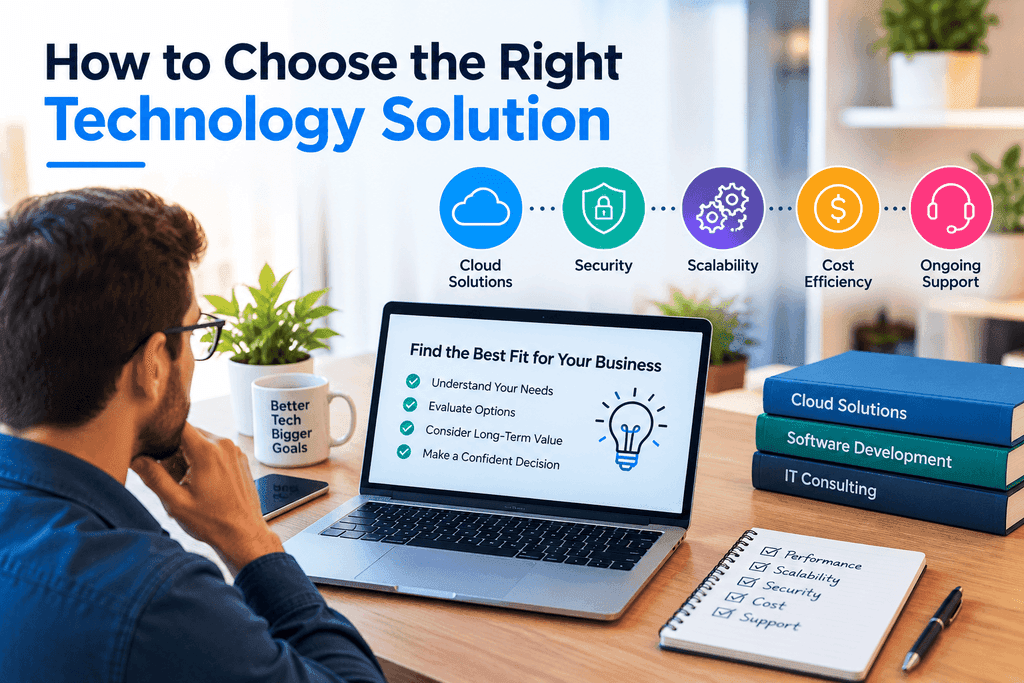
Choosing the right technology requires more than looking at specifications. Businesses should first identify their goals.
A small organization may prioritize affordability and simple management, while a larger organization may need advanced security, scalability, and centralized administration.
Compatibility is also important. New technology should work effectively with existing hardware, software, and network infrastructure.
Organizations should also consider long-term maintenance. A solution that is inexpensive initially may become expensive if it requires frequent repairs or complicated management.
Security should always be part of the evaluation process. Businesses should understand how their data will be stored, accessed, protected, and backed up.
Finally, organizations should consider future growth. A technology solution that works today may not be sufficient several years from now. Choosing scalable systems can help businesses prepare for changing requirements.
Final Thoughts
The technology landscape in 2026 is changing rapidly, and computer systems are at the center of this transformation. Delta Computer Systems represents the broader importance of reliable and innovative computer technology in an increasingly digital world.
Advanced infrastructure provides the foundation for modern operations. Artificial intelligence can automate tasks and support decision-making. Advanced networking keeps people and systems connected. Cybersecurity protects valuable information, while cloud computing provides flexibility and scalability.
These technologies can work together to create smarter, more secure, and more efficient digital environments.
However, successful technology adoption requires planning. Organizations should identify their specific needs, evaluate available solutions, consider security requirements, and select technologies that can grow with their operations.
For businesses and professionals looking toward the future, understanding these five technology areas can provide a strong starting point for building a modern computer environment in 2026 and beyond.
Frequently Asked Questions
Delta Computer Systems is a technology and engineering provider known for high-performance motion controllers, specialized computing solutions, and industrial automation technology. They design hardware and software tailored for precise position, velocity, and pressure control in heavy-duty machinery and complex processing applications.
Delta Computer Systems motion controllers process real-time feedback from sensors to regulate industrial hydraulic, electric, and pneumatic actuators. Using specialized software like RMCTools, they deliver high-speed closed-loop control to optimize precision, energy efficiency, and operational speed.
Delta Computer Systems products are widely used across demanding industries including aerospace testing, automotive manufacturing, forest products, metal forging, plastics processing, and entertainment stage hydraulics—where precise, high-speed movement is critical.
Delta Computer Systems utilizes RMCTools, a comprehensive software suite designed for setting up, tuning, diagnosing, and monitoring their RMC motion controller family. It simplifies complex motion profiling and real-time data plotting.
Delta Computer Systems stands out due to its ultra-fast loop times, robust multi-axis synchronization, and dedicated hydraulic control algorithms. Their products significantly reduce cycle times, minimize machine wear, and offer seamless integration with major PLCs via standard industrial fieldbus networks.