

The internet has become an essential part of modern life. People use it every day to find information, communicate with others, study, work, shop online, watch entertainment, and manage many everyday activities. The phrase “surf internet” simply means browsing or exploring the internet by visiting websites, searching for information, reading online content, watching videos, and using web-based services.
Internet surfing can be useful and enjoyable when you know how to use it properly. However, it is also important to understand online safety, privacy, and responsible browsing. This guide explains what it means to surf the internet, how it works, what people use it for, and how you can browse safely.
What Does Surf Internet Mean?

To surf the internet means to browse different websites and online resources using an internet-connected device. The term “surf” is similar to moving from one place to another, but instead of traveling physically, you move between websites and online pages.
For example, you might open a search engine and look for information about computers. You could visit several websites, read articles, watch a tutorial, and then move to another website. This activity is known as surfing the internet.
Today, people can surf the internet using computers, laptops, smartphones, tablets, and other connected devices.
How Does Internet Surfing Work?
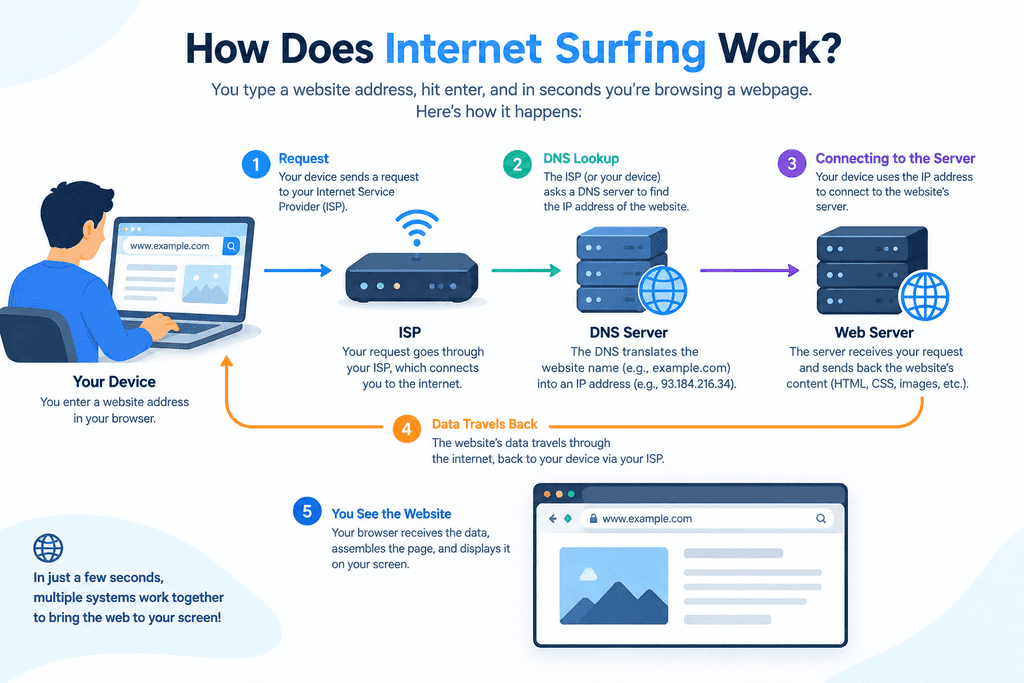
Internet surfing requires a few basic things. First, you need an internet connection. This may come from Wi-Fi, mobile data, broadband, or another internet service.
Next, you need a web browser. Popular browsers include Chrome, Microsoft Edge, Firefox, and Safari. A browser allows you to open websites and interact with online content.
When you enter a website address into the browser, your device communicates with servers on the internet. The server sends information back to your device, and the browser displays the website.
Search engines also make internet surfing easier. Instead of remembering individual website addresses, you can type a question or keyword into a search engine and receive relevant results.
Why Do People Surf the Internet?
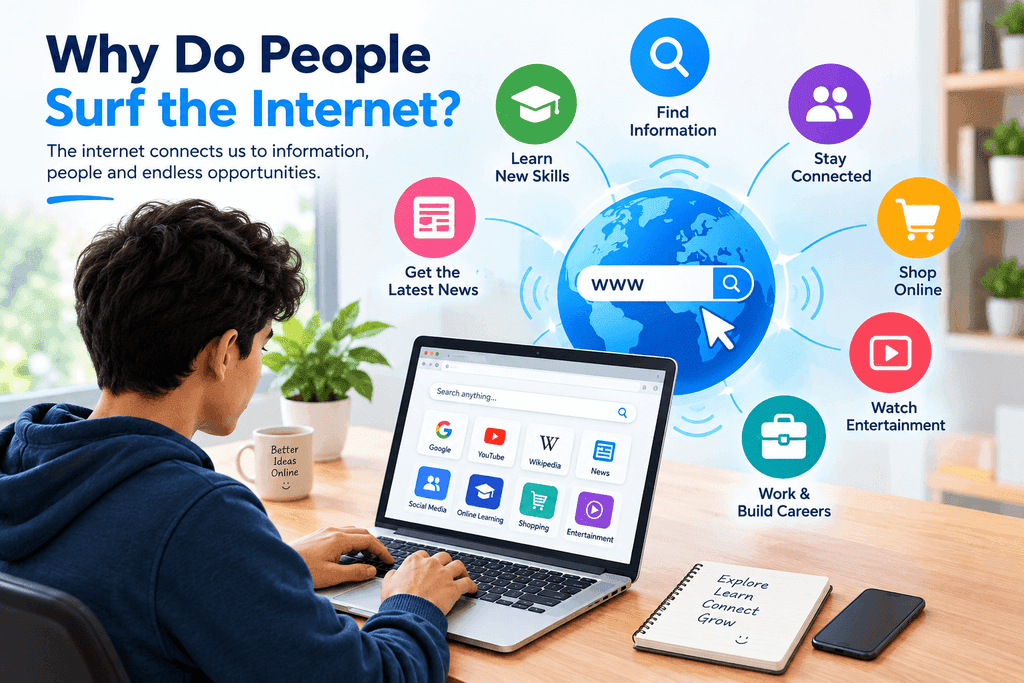
There are many reasons people browse the internet. One of the most common reasons is to find information. Students, professionals, researchers, and everyday users can search for answers to questions within seconds.
People also use the internet for communication. Email, messaging platforms, social networks, and video calls allow people to communicate with friends, family members, customers, teachers, and colleagues.
Another major use is entertainment. Users can watch videos, listen to music, read articles, play games, and explore online communities.
Online shopping is another popular reason for internet browsing. Consumers can compare products, read reviews, check prices, and place orders without visiting a physical store.
Surf Internet for Education

The internet has transformed education by providing access to a huge amount of learning material. Students can search for explanations, tutorials, educational videos, online courses, digital books, and research resources.
For example, someone learning computer programming can search for programming tutorials and practice exercises. A student studying science can find educational articles, diagrams, and videos that explain difficult concepts.
Online education also allows people to learn at their own pace. Instead of depending entirely on traditional classrooms, learners can use internet resources to develop new skills from home.
However, students should check the reliability of online information. Not everything published on the internet is accurate.
Surf Internet for Work
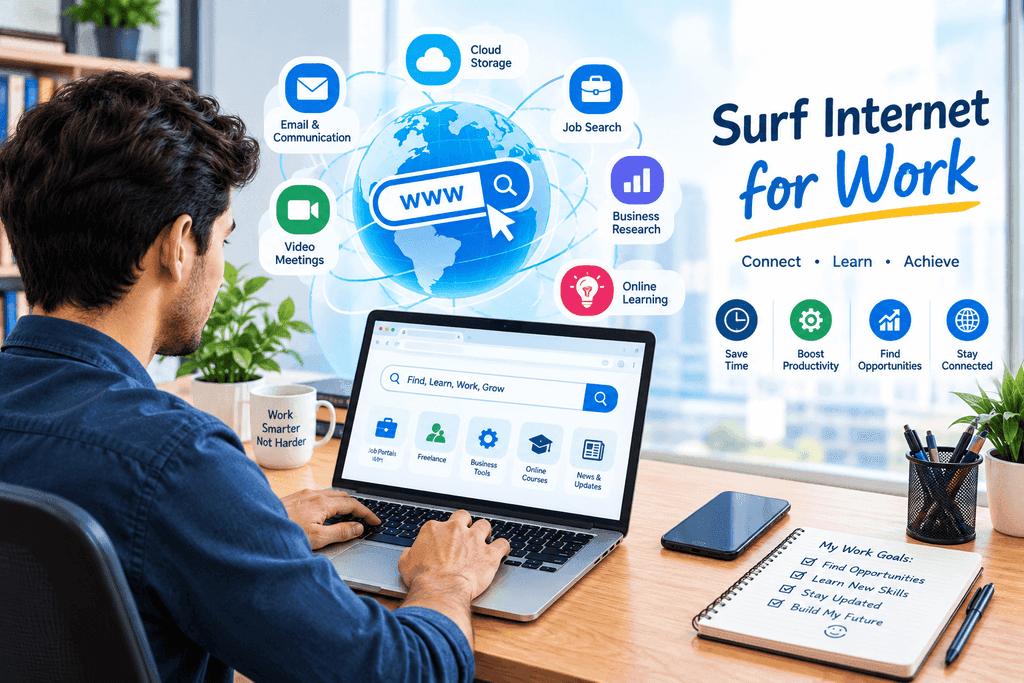
The internet is also an important tool for modern businesses and professionals. Employees can use it to communicate, research information, attend virtual meetings, manage projects, and access cloud-based applications.
Freelancers and remote workers depend heavily on internet connectivity. They can communicate with clients, submit projects, receive payments, and collaborate with teams located in different countries.
Businesses also use websites and online platforms to promote their products and services. Digital marketing, social media, search engines, and email marketing have created many new opportunities for companies.
Surf Internet for Entertainment

Entertainment is one of the most popular activities on the internet. Users can access videos, music, games, podcasts, digital books, and many other forms of entertainment.
Streaming services allow people to watch movies and television programs online. Music platforms provide access to millions of songs and podcasts.
Online gaming has also become a major part of internet culture. Players can enjoy games individually or connect with people around the world.
Although online entertainment can be enjoyable, users should manage their screen time. Spending excessive amounts of time online can reduce time available for sleep, exercise, work, study, and face-to-face interaction.
Surf Internet for Communication

The internet has made communication faster and easier. In the past, communicating with someone in another country could take days or even weeks. Today, messages can be sent almost instantly.
Email is widely used for professional and personal communication. Social media platforms allow users to share posts, photographs, videos, and messages.
Video conferencing has also become important for education and business. People can participate in meetings and classes without being physically present in the same location.
Safe Internet Surfing

While the internet offers many benefits, users should also understand online safety. Cybercriminals may attempt to steal passwords, financial information, or personal data.
One important safety practice is using strong and unique passwords. Avoid using simple passwords that are easy to guess. Where available, enable multi-factor authentication for important accounts.
Users should also be careful when clicking links in emails or messages. Unexpected links may lead to phishing websites designed to collect sensitive information.
It is also important to keep your operating system, browser, and security software updated. Software updates often include security improvements that help protect devices from new threats.
Protecting Your Privacy Online

Privacy is another important part of internet surfing. Websites and online services may collect information about users, including browsing activity, preferences, and account information.
Avoid sharing unnecessary personal information online. Be especially careful with information such as home addresses, passwords, financial details, and private identification documents.
Review privacy settings on social media accounts and other online services. Understanding what information you are sharing can help you maintain better control over your digital presence.
How to Identify Reliable Information

The internet contains an enormous amount of information, but not all of it is trustworthy. Anyone can publish content online, so users need to evaluate information carefully.
When reading an article, consider who published it and whether the source has relevant expertise. Look for supporting evidence and check important claims against multiple reliable sources.
Be cautious of headlines that appear designed only to create fear, anger, or excitement. A dramatic headline does not necessarily mean that the information is accurate.
For educational, medical, financial, or other important topics, it is especially useful to consult authoritative sources.
Useful Internet Surfing Tips
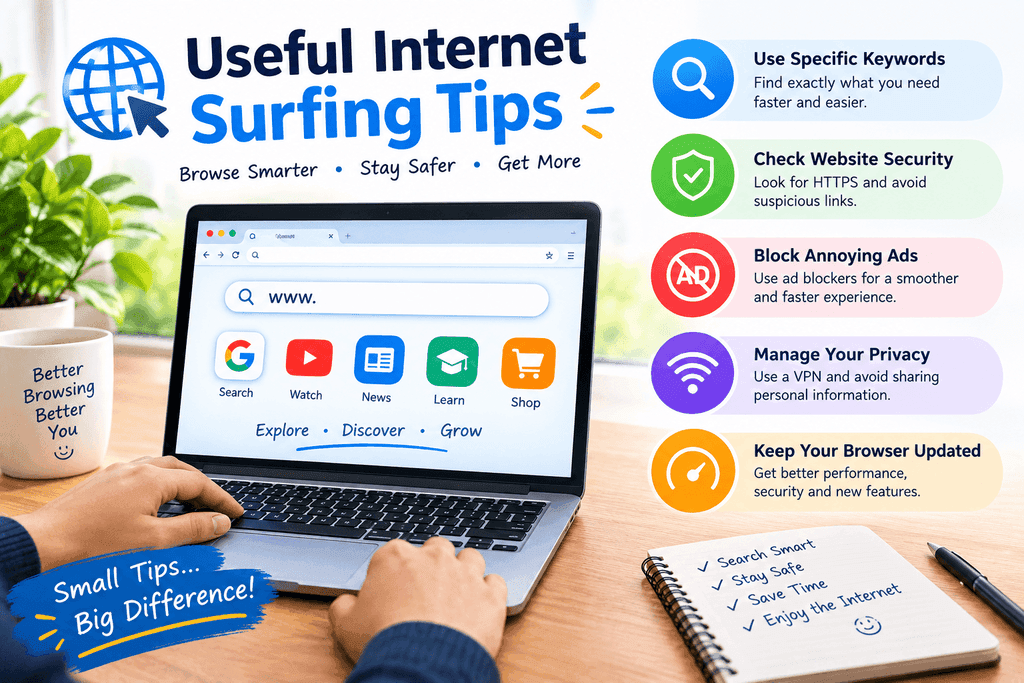
You can improve your browsing experience by following a few simple practices.
First, use specific search terms. Instead of searching for a very broad phrase, add details to your query. This can help search engines provide more relevant results.
Second, organize useful websites with browser bookmarks. This makes it easier to return to websites you frequently use.
Third, close unnecessary browser tabs when you are finished with them. Too many open tabs can make browsing confusing and may use additional system resources.
Fourth, avoid downloading files from unknown or suspicious websites. Malicious downloads can potentially harm your device.
Finally, remember to log out of important accounts when using shared or public computers.
Surfing the Internet on a Smartphone
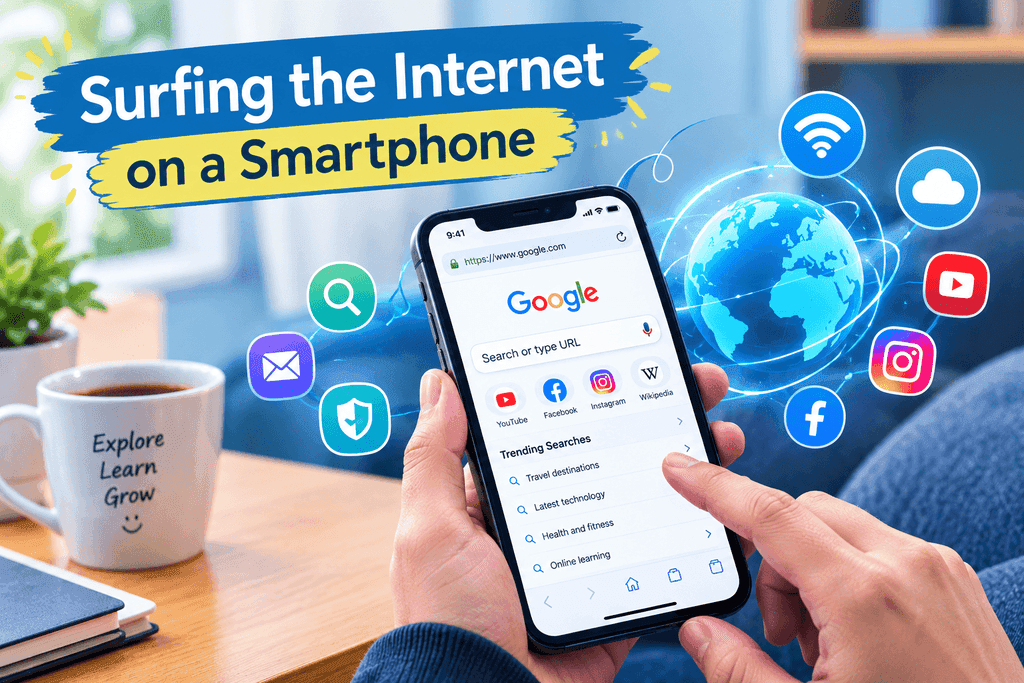
Smartphones have made internet access available almost everywhere. Users can browse websites, search for information, watch videos, communicate, shop, and use online services while traveling or away from home.
Mobile browsers are designed to work on smaller screens, while many websites also provide mobile-friendly designs.
When using mobile internet, users should pay attention to their data usage. Streaming high-quality videos and downloading large files can consume significant amounts of mobile data.
Using secure Wi-Fi networks and keeping smartphone software updated are also important security practices.
Advantages of Surfing the Internet

Internet surfing provides many advantages. It gives people quick access to information and educational resources. It makes communication faster and provides convenient access to online services.
Other advantages include:
- Easy access to educational content
- Fast communication
- Online shopping convenience
- Remote work opportunities
- Digital entertainment
- Access to global news and information
- Online banking and services
- Opportunities to learn new skills
- Connection with global communities
These benefits make the internet an important technology for modern society.
Disadvantages of Excessive Internet Surfing
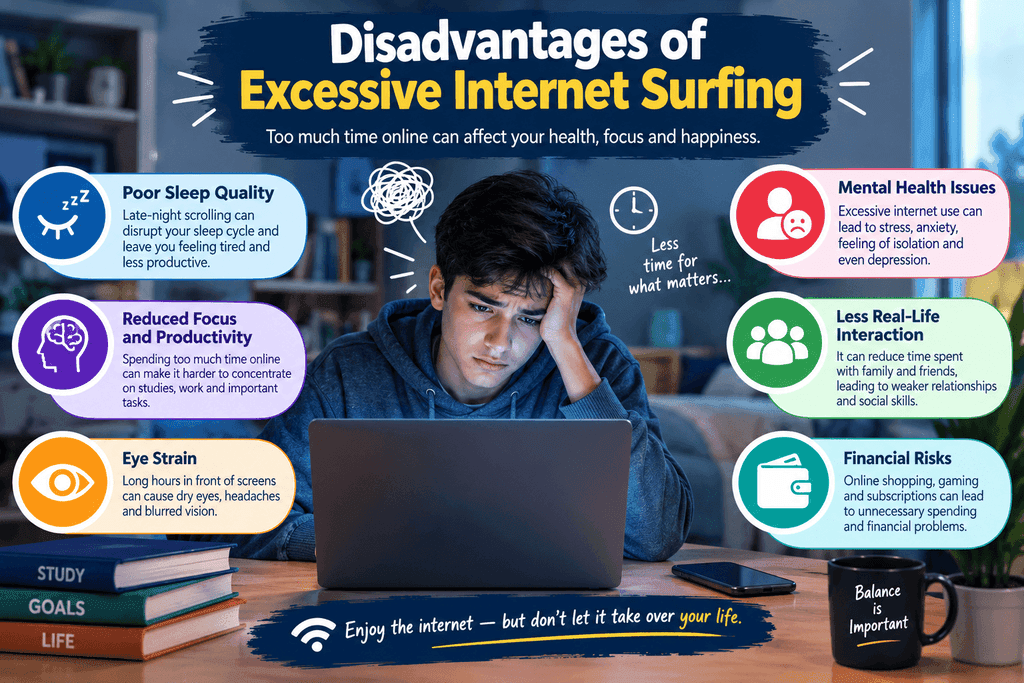
Although internet browsing has many benefits, excessive use can create problems. Spending too much time online may reduce productivity and interfere with sleep or other daily activities.
Users may also encounter misinformation, scams, inappropriate content, cyberbullying, privacy risks, and malicious software.
Another concern is distraction. Social media notifications, videos, games, and other online content can make it difficult to concentrate on work or study.
The solution is not necessarily to avoid the internet, but to use it responsibly and maintain a healthy balance between online and offline activities.
The Future of Internet Surfing

Internet technology continues to develop rapidly. Faster networks, artificial intelligence, cloud computing, smart devices, and improved browsers are changing the way people interact with online information.
Artificial intelligence can help users find information, summarize content, translate languages, and complete various digital tasks. Voice search and intelligent assistants are also making internet access more convenient.
In the future, internet browsing may become even more personalized and interactive. However, online privacy, security, and responsible technology use will remain important issues.
Conclusion
To surf the internet means to browse websites and explore online information and services. From education and work to communication, shopping, and entertainment, the internet provides countless opportunities for users around the world.
However, effective internet surfing requires more than simply opening a browser. Users should learn how to search efficiently, evaluate information, protect their privacy, recognize suspicious websites, and maintain good online security habits.
By using the internet responsibly and safely, people can take advantage of its many benefits while reducing common online risks. Whether you are a student, professional, business owner, or casual user, learning how to surf the internet effectively can help you make better use of today’s digital world.
Frequently Asked Questions (FAQs)
Where is Surf Internet available?
Surf Internet primarily serves communities across Indiana, Michigan, and Illinois. Coverage is rapidly expanding in both suburban and rural areas across the Great Lakes region. You can check availability for your specific address by visiting the official Surf Internet availability tool.
How much does Surf Internet cost per month?
Surf Internet fiber plans generally start around $30 to $35 per month for basic high-speed tiers and go up to $85 to $95 per month for multi-gigabit speeds. Rates vary depending on the tier you select and active regional promotions.
What internet speeds does Surf Internet offer?
Surf Internet offers high-speed fiber plans ranging from 100 Mbps up to 1,000 Mbps (1 Gig) and 2,000 Mbps (2 Gig) symmetrical download and upload speeds. They also provide fixed wireless options in select rural locations where fiber is not yet deployed.
Are there data caps or contracts with Surf Internet?
No, Surf Internet fiber plans do not require long-term contracts, and there are no restrictive data caps or overage fees.
Does Surf Internet provide a Wi-Fi router?
Yes, most fiber plans include equipment like an eero Wi-Fi mesh router to ensure full home coverage.
How do I check if Surf Internet is available at my address?
To verify coverage, head to the Surf Internet website, enter your street address and ZIP code into their coverage checker, or contact their customer service team directly.